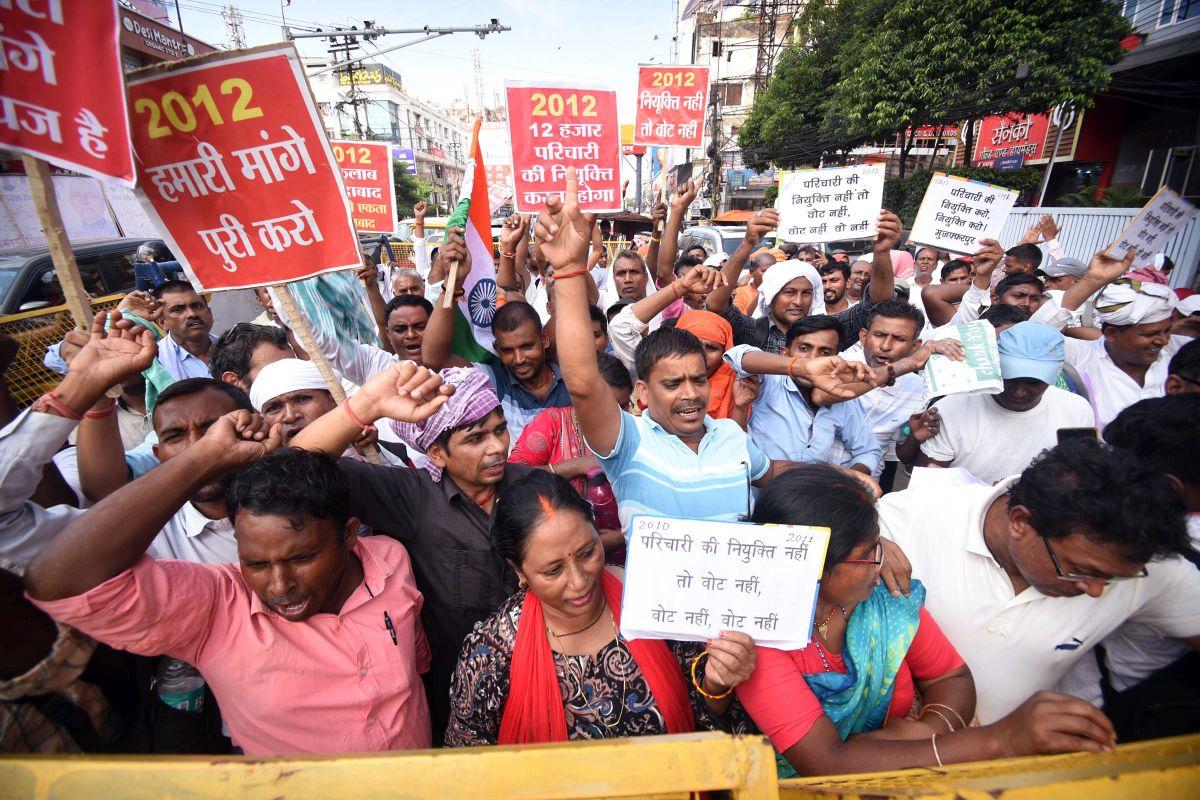
Archive · 2 Nov 2025
Bihar Youth Angry Over Corruption, But Caste Politics May Dampen Electoral Impact
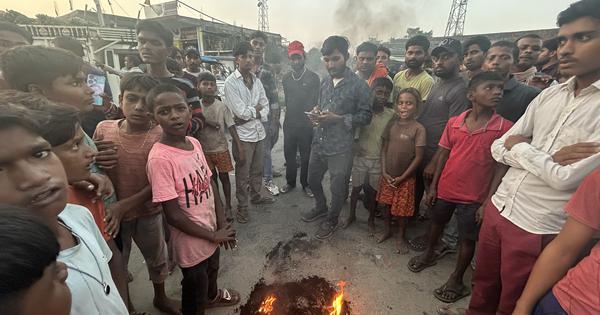
Imagine you have a favorite toy, but it’s broken and the grown-ups who are supposed to fix it don’t listen.
That’s how many young people in a part of India called Bihar feel about their government.
They see their neighbors in Nepal, another country, get really upset and demand new leaders, and they think, ‘Hey, we are angry too!’
They are tired of unfairness, like people asking for bribes, and not having enough jobs.
They wish things were different and hoped that voting could bring about a big change, just like in Nepal.
But here’s the tricky part: in Bihar, people often vote based on which family group (called caste) they belong to, not just on what issues are important.
This makes it hard for everyone to agree and vote for the same changes.
So, even though many young people are very angry, they aren’t sure if their votes will actually lead to the big changes they want.

Young voters in Bihar's border regions are expressing significant anger over corruption and lack of opportunities, inspired by Nepal's recent revolution.
Despite widespread discontent with the ruling government, many young people are doubtful that voting will lead to substantial change due to entrenched caste politics.
Issues like unfulfilled government schemes and unvisited local representatives are contributing to voter frustration.
Caste considerations are identified as a major barrier preventing young people from uniting on common issues and influencing electoral outcomes.
Some young individuals are disillusioned with the political process, feeling that personal struggles for livelihood leave them with little time or hope for political engagement.
- Who
- Young voters in Bihar's border regions, including Anuj Kumar, Uday Kumar Yadav, Kamlesh Kumar, Deepak Kumar, Manish Kumar, Hasan Ansari, and Bharosh Yadav.
- What
- Expressing anger and frustration over corruption, lack of jobs, and unfulfilled promises, drawing parallels with the recent revolution in Nepal. However, many are skeptical about the impact of their votes due to entrenched caste politics.
- When
- Leading up to the state elections in Bihar, with comparisons drawn to the recent revolution in Nepal.
- Where
- Bordering regions of Bihar, specifically Sitamarhi district, including towns and villages like Sitamarhi's Coaching Mandi, Chhotki Bhitha, Bindhi, and Sutihari village.
- Why
- Frustration stems from perceived corruption, a lack of government jobs, migration, and a belief that caste considerations override other issues, preventing meaningful political change.
- Region Focus
- North Bihar border regions, including Sitamarhi district
- Key Issues Mentioned
- Corruption, lack of jobs, migration, caste politics, unfulfilled government schemes
- Nepal Revolution Comparison
- Youth in Nepal tired of corruption, leading to change; similar sentiment in Bihar
- Electoral Sentiment
- Restlessness for change, but doubt on electoral impact due to caste and lack of viable options
- Current Ruling Coalition
- BJP-JDU alliance
- Opposition Party
- Rashtriya Janata Dal (RJD)