Archive · 7 Oct 2026
Francis Halzen Wins Physics Nobel for IceCube Neutrino Observatory
Neutrinos are tiny particles that usually pass through people and planets without being noticed.
That is why they are sometimes called “ghost particles.”
Francis Halzen thought scientists could use the dark ice near the South Pole to spot the rare times a neutrino interacts with matter.
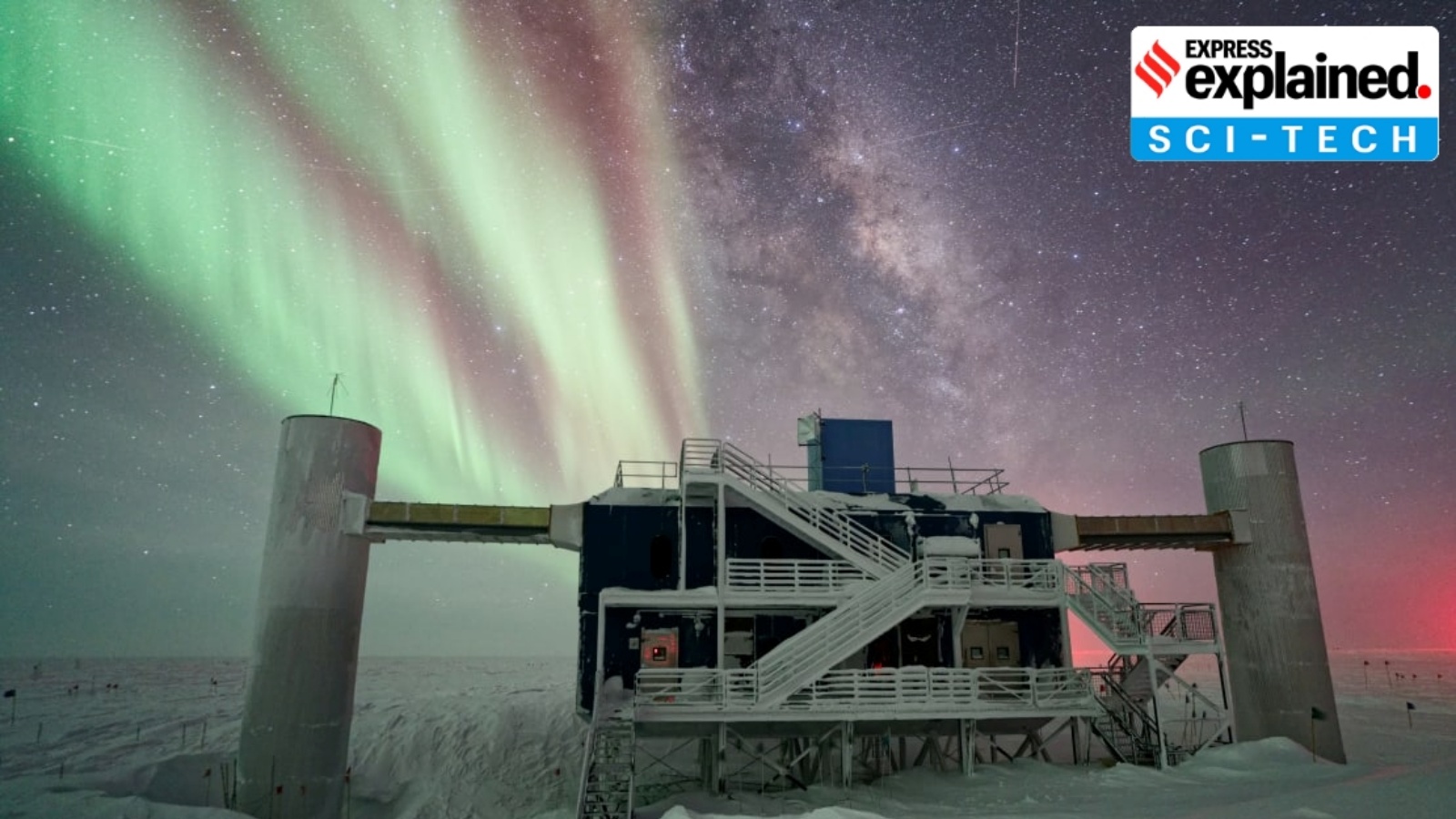
His idea helped create IceCube, a detector with thousands of light sensors deep in Antarctic ice.
When a neutrino hits something in the ice, it can make a faint flash that the sensors detect.
Scientists use these flashes to learn about high-energy neutrinos and distant events in space.
IceCube began operating in 2011.
Halzen won the 2026 Nobel Prize in Physics for his work.
He was in Italy when he received the call and said the news surprised him.

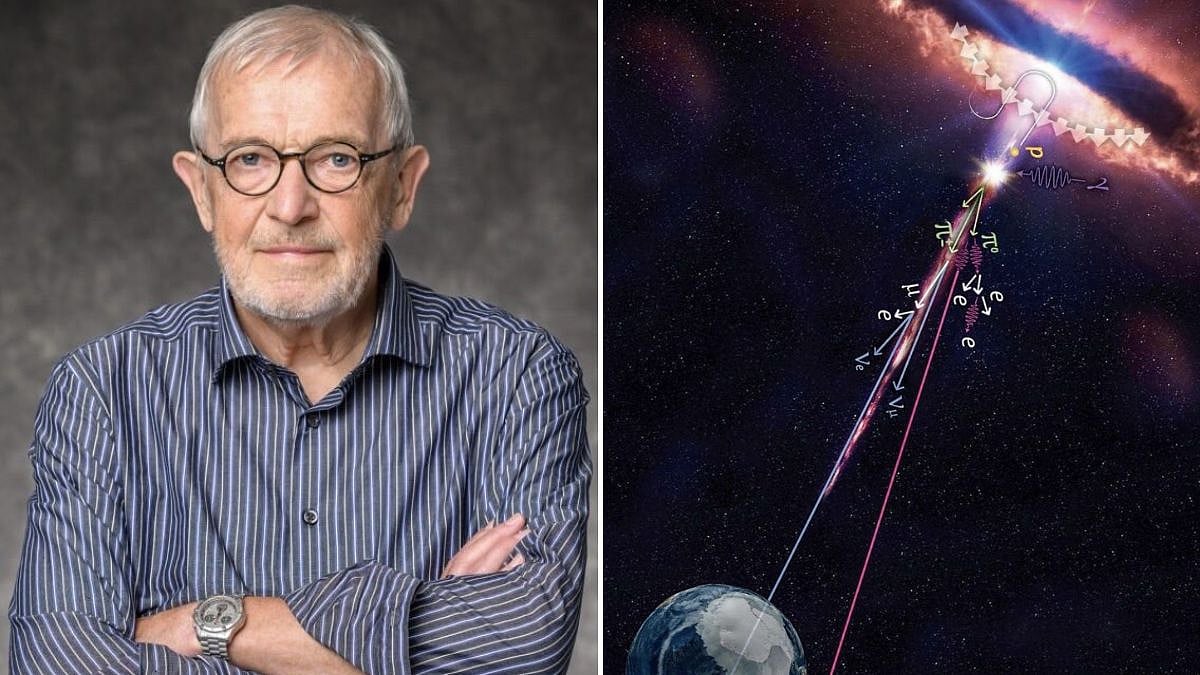
Belgian-American physicist Francis Halzen won the 2026 Nobel Prize in Physics for work on high-energy neutrinos and the IceCube observatory.
Halzen proposed using light sensors in Antarctic ice to detect neutrinos; he presented his South Pole idea in 1988.
IceCube, operational since 2011, uses more than 5,000 sensors across a cubic kilometre of ice near the South Pole.
IceCube detects rare neutrino interactions, including high-energy particles from beyond Earth, helping scientists investigate distant cosmic events.
Halzen was in Italy when the Nobel Committee called on Tuesday; he said the award came as a surprise.
- Who
- Francis Halzen, a Belgian-American physicist affiliated with the University of Wisconsin–Madison.
- What
- He won the 2026 Nobel Prize in Physics for work on high-energy neutrinos and the IceCube Neutrino Observatory.
- When
- The Nobel Committee called Halzen on Tuesday; IceCube became operational in 2011.
- Where
- IceCube is located in Antarctic ice near the South Pole; Halzen was in Italy when he received the call.
- Why
- His work helped enable detection of high-energy neutrinos, offering scientists information about distant cosmic events.
Scientific Promise
Practical Limits
What neutrino detection can reveal
Scientific Promise
The Nobel Academy and researchers say neutrinos can carry information from distant galaxies and energetic events, adding a new way to study the universe.
Practical Limits
Neutrinos interact with matter extremely rarely, so detection depends on very large observatories and only a small number of high-energy events.
Prospects for neutrino research
Scientific Promise
IceCube has detected high-energy neutrinos from beyond Earth, and its observations may help explain how they are produced and reveal new phenomena.
Practical Limits
Halzen recalled that, when the project began, few people thought it would work, and he said he was unsure himself.
India’s proposed detector
Scientific Promise
A former project director described the proposed India-based Neutrino Observatory as an effort to build a neutrino detector.
Practical Limits
The project has faced opposition over land acquisition and environmental grounds, and its new location has not been finalised.
- Award
- 2026 Nobel Prize in Physics
- Recipient
- Francis Halzen
- Observatory
- IceCube Neutrino Observatory
- Original proposal
- Halzen presented his idea for detecting neutrinos at the South Pole in 1988.
- Operational since
- 2011
- Detector scale
- More than 5,000 sensors in a cubic kilometre of Antarctic ice, extending to about 2,500 metres below the surface.
- Detection
- IceCube can expect to register about one high-energy neutrino per day.
- First evidence reported
- IceCube presented its first evidence of very high-energy neutrinos in 2013.