

Archive · 28 Sep 2026
Why Athletes Wear Protective Tape Around Their Joints
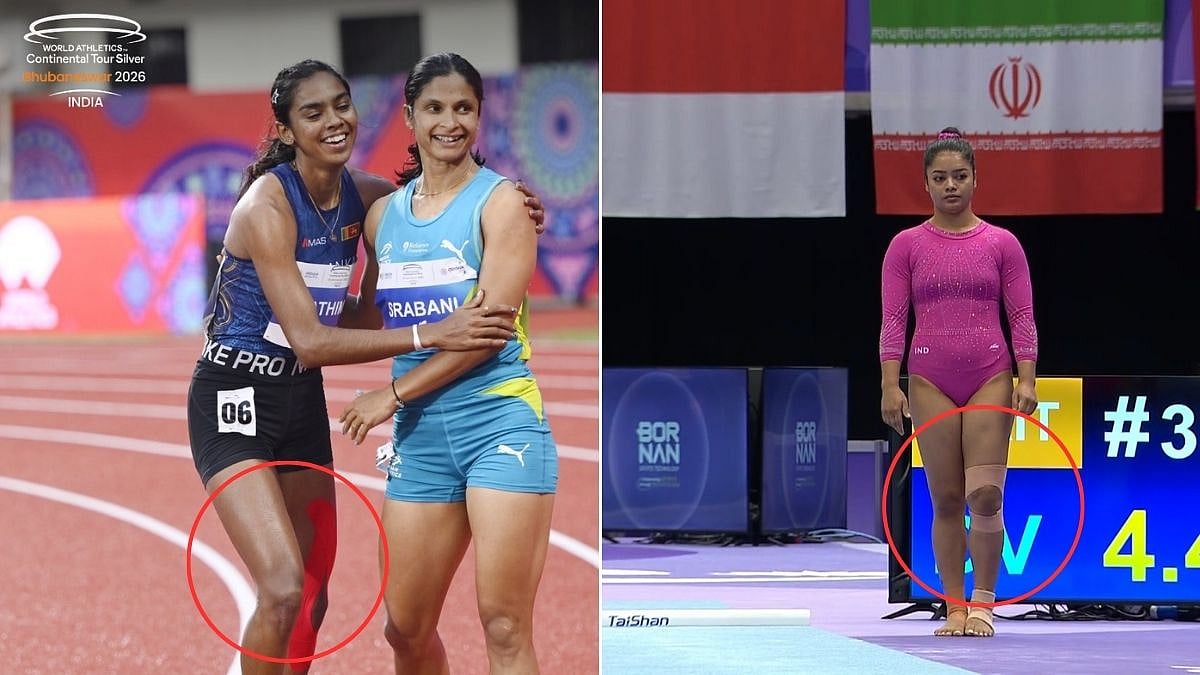
Athletes sometimes put stretchy tape around joints such as their knees and ankles.
These joints work hard during running, jumping, and quick turns.
The tape moves with the body instead of holding the joint stiffly.
It can make athletes feel more supported and aware of their movements.
Physiotherapists may use it while an athlete is recovering from an injury.
Studies have not clearly shown that the tape prevents injuries or makes athletes perform better.
The tape can irritate the skin if it is applied incorrectly.
It also should not be used to hide serious pain or replace proper medical care.

Athletes commonly tape stressed joints such as knees and ankles.
Elastic kinesiology tape stretches with movement while providing a sensation of support.
Physiotherapists may use taping during rehabilitation or an athlete’s return from injury.
Research has found limited evidence that taping consistently prevents injuries or improves performance.
Taping may increase movement awareness, but it cannot replace rehabilitation, strength training, or medical assessment.
- Who
- Athletes competing at the Asian Games 2026, with physiotherapists sometimes applying the tape.
- What
- They wear elastic kinesiology tape around joints to provide sensory feedback and a feeling of support.
- When
- During the ongoing Asian Games 2026 and, in some cases, during rehabilitation or a return from injury.
- Where
- At the Asian Games 2026; the specific host location is not stated.
- Why
- To increase awareness of movement and provide perceived support around repeatedly stressed joints, although it does not prevent injuries.
- Commonly taped joints
- Knees and ankles
- Type of tape
- Elastic kinesiology tape
- Main purpose
- Sensory feedback and a sensation of support
- Typical use
- During repeated movement, rehabilitation, or a return from injury
- Research findings
- Limited evidence that taping consistently prevents injuries or significantly improves performance
- Potential risk
- Incorrect application may cause skin irritation
- Important limitation
- Taping is not a substitute for rehabilitation, strength training, medical assessment, or injury prevention