

2 weeks ago
India's Dollar Deposit Target Likely Reached, SBI Research Says

India asked banks to collect dollars through a special deposit scheme.
About $57 billion has reportedly already come in.
SBI Research thinks another $25-30 billion may arrive before the scheme ends.
That could make the total close to $85 billion.
The Reserve Bank of India decided to end the scheme earlier than planned.
This surprised some market participants because the governor had previously said there was no plan for an early closure.
SBI Research says the cost of exchanging the deposits was probably not the main problem.
It also suggested that India could buy more gold to diversify its foreign-exchange reserves.

Inflows into the FCNR(B) deposit scheme have reached about $57 billion, according to SBI Research.
Another $25-30 billion could arrive by the end of August, bringing total mobilisation to roughly $85 billion.
The Reserve Bank of India decided to close the scheme one month before its scheduled September 30, 2026, closure.
SBI Research estimates India’s balance of payments could show a surplus of about $50 billion, with the current account deficit at 1% of GDP.
The report says swap costs are unlikely to have driven the decision and recommends further diversification of foreign-exchange reserves through gold purchases.
- Who
- The Reserve Bank of India, SBI Research, and market participants are involved; depositors contributed the foreign currency.
- What
- The Reserve Bank of India decided to close the FCNR(B) deposit scheme one month ahead of schedule.
- Where
- India.
- When
- The scheme was scheduled to close on September 30, 2026; the article says the remaining inflows could arrive during August.
- Why
- SBI Research believes the dollar mobilisation target has already been achieved, with total collections potentially reaching about $85 billion; the RBI’s stated reason for early closure is not provided.
SBI Research’s assessment
Market participants’ concern
Reason for early closure
SBI Research’s assessment
SBI Research says the likely reason is that the dollar mobilisation target has already been met, with collections potentially reaching about $85 billion.
Market participants’ concern
The early closure surprised market participants, particularly because the RBI governor had previously indicated that there was no intention to end the scheme early.
Role of swap costs
SBI Research’s assessment
SBI Research says swap costs were unlikely to be a constraint, estimating the five-year cost at $10.5 billion, or about 1.45% of current foreign-exchange reserves.
Market participants’ concern
The article does not provide a separate official explanation confirming or rejecting the report’s assessment of swap costs.
Key facts
- Current inflows
- About $57 billion
- Potential additional inflows
- $25-30 billion during the remaining days of August
- Estimated total collection
- Around $85 billion
- Scheduled closure
- September 30, 2026
- Estimated balance-of-payments surplus
- About $50 billion
- Estimated current account deficit
- 1% of GDP
- Estimated cumulative swap cost
- Around 15% of the corpus, or $10.5 billion
Quotes
SBI Research report
Research firm analyzing RBI policy
“"we don’t believe that the cost of swap could have been a constraining factor. Our estimates show that the cumulative cost would amount to around 15 per cent of the corpus, or $10.5 billion. While this appears sizeable in absolute terms, it needs to be viewed against the scale of India’s foreign‑exchange reserves rather than the FCNR(B) corpus alone."”
 thehansindia.com
“"We believe that the impact on rupee post the announcement of FCNR(B) measures has been surprisingly minimal."”
thehansindia.com
Sources
Related news

RBI shortens FCNR(B) swap scheme as inflows hit $56.8 billion

RBI Forex Swap Draws $136.37 Billion, Led by FCNR(B)
RBI Advances FCNR(B) Scheme Closure to August 31
India Draws Record $127 Billion Through Special FCNR Window

SBI Research: RBI swap closure shifts focus to rupee risks

RBI's Special FCNR(B) Deadline Nears as NRIs Weigh Opportunity
India's FY27 Balance of Payments Set for Large Surplus

Bank deposits hit record high on RBI's FCNR push
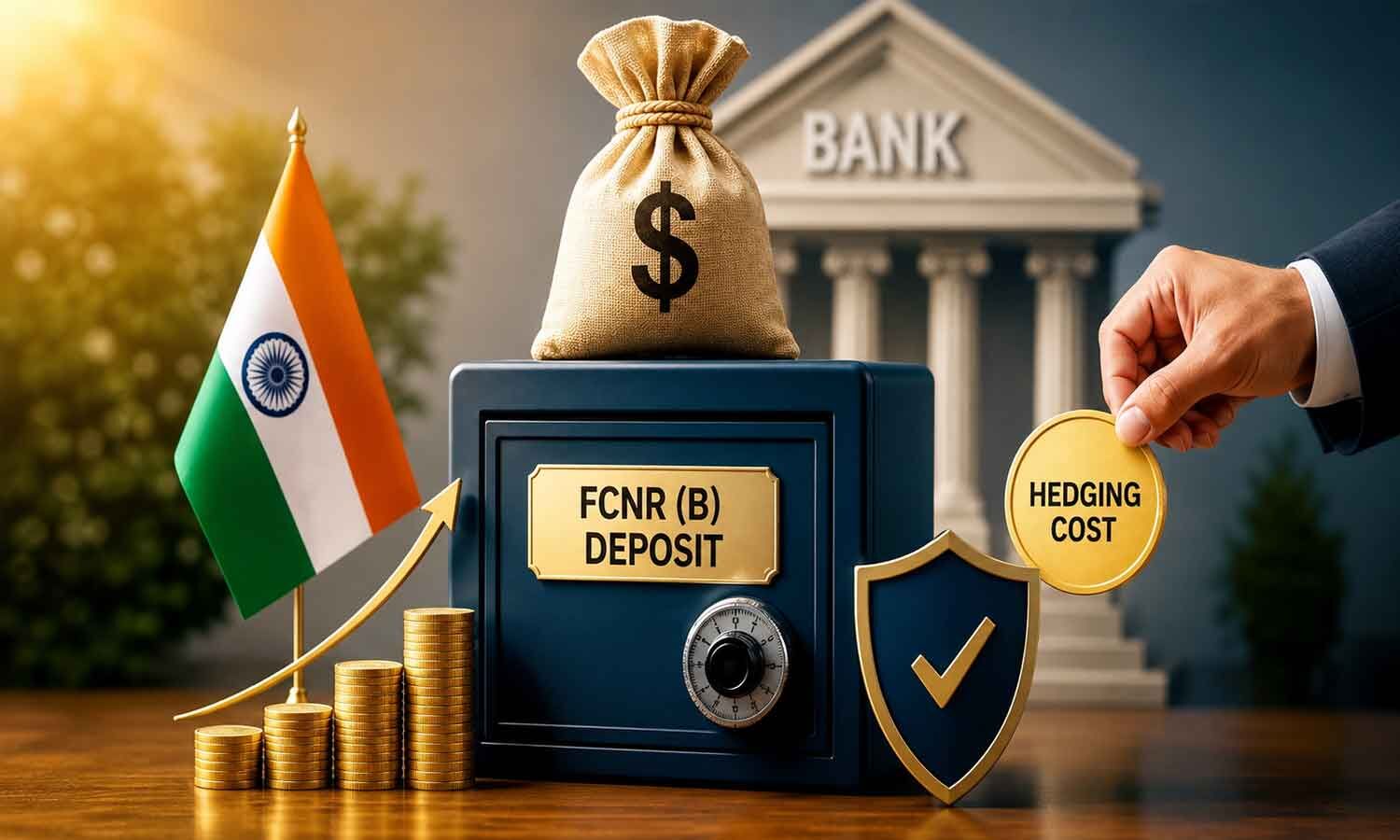
RBI Measures Set to Pull $90-95 Billion into India
