

Archive · 30 Dec 2025
Teachers' Evolving Role in AI-Driven Education
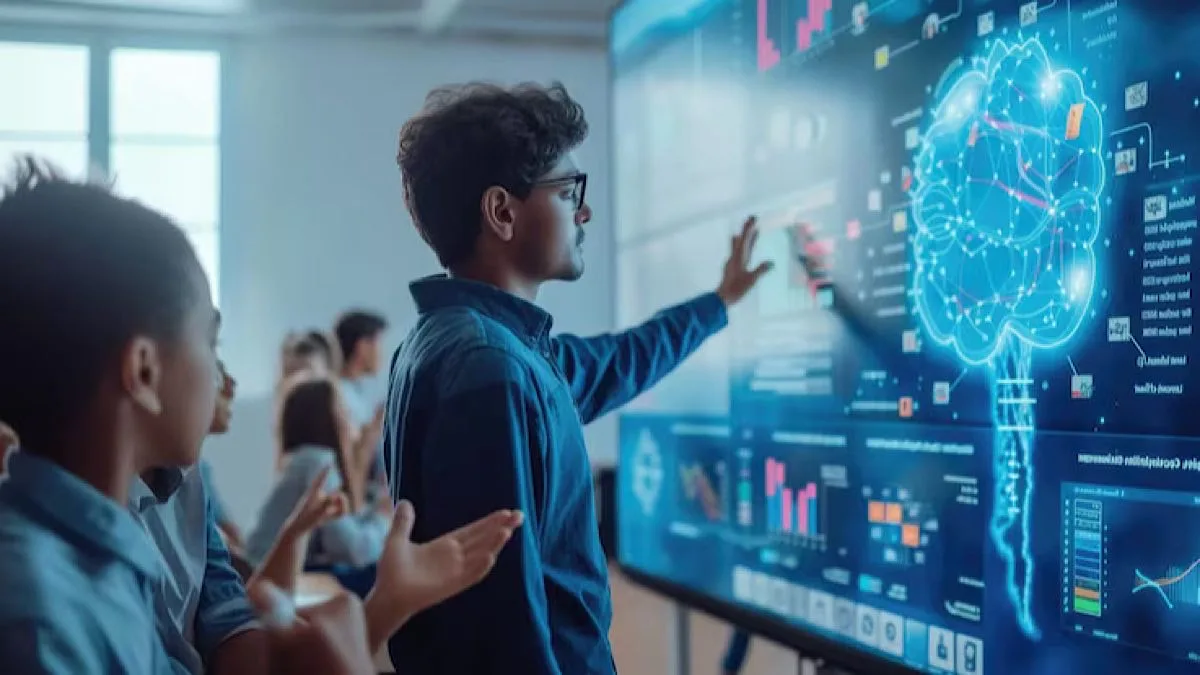
Schools are changing because of artificial intelligence (AI).
AI can explain things and help with learning, but it can't replace the important human connections that teachers provide.
Teachers need to focus on being supportive and helping students with their emotions and well-being.
They should also encourage hands-on activities like farming, painting, and music to keep students connected to the real world.
Even though AI can write essays and do research quickly, teachers should still help students develop their own thinking and writing skills.
The goal is to use AI in education while keeping the human aspects that make learning meaningful and help students grow emotionally and intellectually.

AI is transforming education, making it essential for teachers to rethink their roles.
92% of students globally used AI in 2025, up from 66% in 2024.
Positive student-teacher relationships are crucial for better learning outcomes.
Hands-on experiences like farming, woodwork, and music are important for students' development.
Teachers must guide students in developing critical thinking and writing skills despite AI's capabilities.
- Who
- Teachers and students globally
- What
- Transformation in education due to AI
- When
- Ongoing, with significant changes in 2024-2025
- Where
- Classrooms worldwide
- Why
- To adapt to the increasing use of AI and maintain human connection in learning
- AI Usage Among Students
- 92% in 2025, up from 66% in 2024
- Generative AI for Assessments
- 88% in 2025, up from 53% in 2024
- Key Teacher Skills
- Intuition, emotional awareness, trust, mentorship
- Important Learning Experiences
- Hands-on activities like farming, woodwork, painting, weaving, theatre, music, and craft
- Core Academic Skills
- Reading, writing, critical thinking, emotional investment
