1 week ago
Modi-Xi Meeting Signals Managed Rivalry Amid Asia’s Return
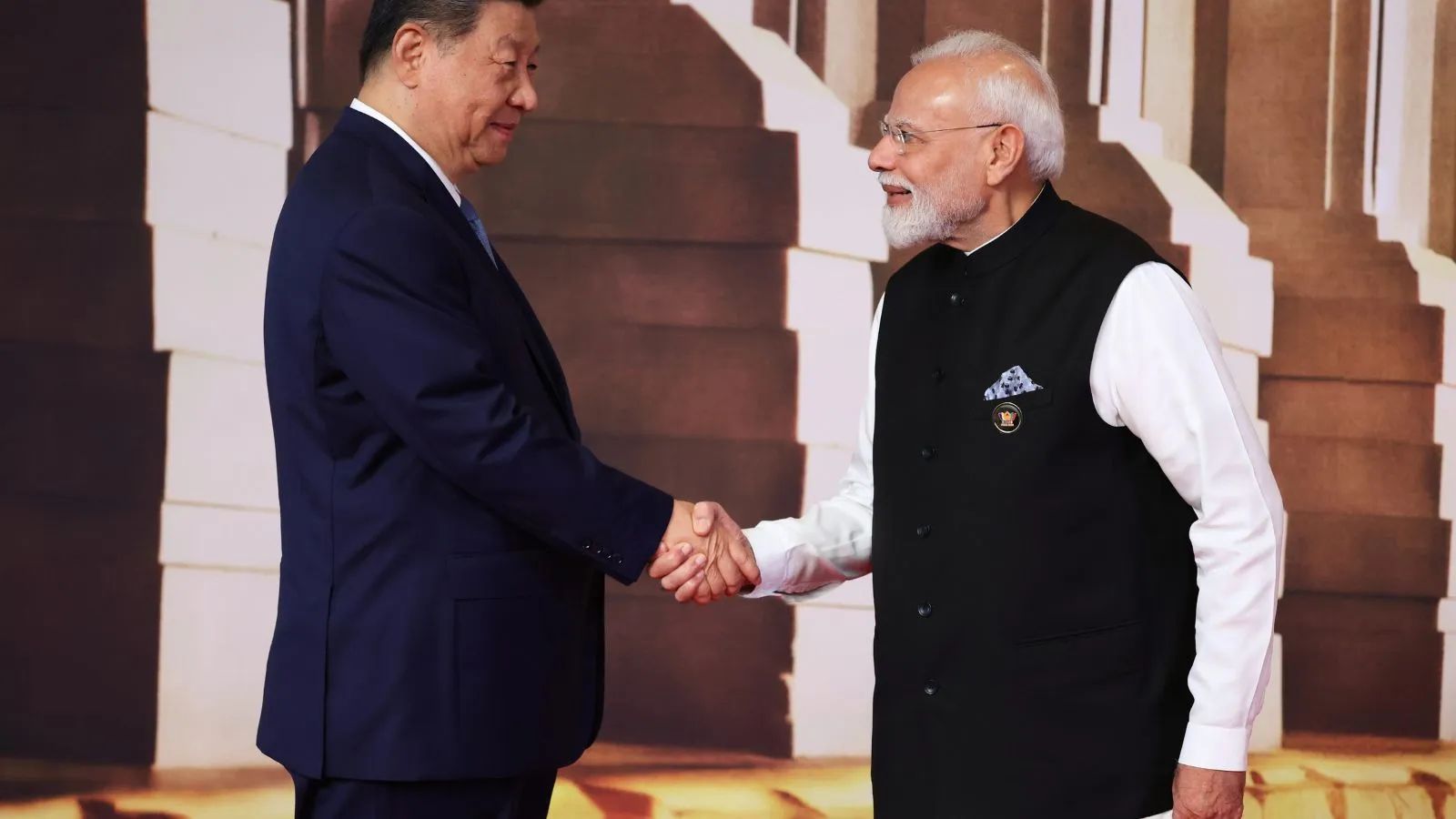
India and China are very large countries that compete in several areas.
They still disagree about their border and have different views about how Asia should be organized.
At the same time, their leaders, Narendra Modi and Xi Jinping, met during the BRICS Summit in New Delhi.
They said disagreements should not turn into fights.
They also discussed finding a fair solution to the border problem.
This does not mean the countries have become close allies or solved all their disagreements.
It means they are trying to manage their competition and cooperate where possible.
The article says this matters because Asia is becoming more important in technology, business, and world politics.

Narendra Modi and Xi Jinping agreed that differences should not become disputes and supported a mutually acceptable approach to the boundary issue.
The meeting indicated an effort to stabilize India-China relations without ending their rivalry over borders, trade, strategic influence, and regional partnerships.
Institutional contact has resumed, while bilateral trade has reached a new peak despite structural imbalances in market access, supply chains, and mobility.
India’s strategic autonomy means it can maintain ties with China, the United States, and other powers without treating those relationships as exclusive.
The leaders linked bilateral stabilization with wider cooperation as Asia gains economic, technological, and geopolitical importance.
- Who
- Indian Prime Minister Narendra Modi and Chinese President Xi Jinping.
- What
- They held a sidelines meeting focused on managing bilateral differences, stabilizing relations, and expanding cooperation.
- Where
- New Delhi.
- When
- During the BRICS Summit; the article does not provide a specific date.
- Why
- Both countries face changing global power relations and have an interest in preventing their rivalry from becoming permanently adversarial.
Reset Optimists
Rivalry Cautious
Meaning of the meeting
Reset Optimists
The renewed contact, trade growth, and leaders’ language could support a meaningful stabilization or accommodation in India-China relations.
Rivalry Cautious
The meeting does not amount to a dramatic reconciliation; unresolved borders, strategic competition, economic asymmetries, and outside partnerships remain.
Future of Asian cooperation
Reset Optimists
India and China may find greater common ground as Asia’s economic, technological, and geopolitical importance increases.
Rivalry Cautious
Cooperation should not be interpreted as an India-China condominium, an Asian alliance against the West, or acceptance of a China-led hierarchy.
Strategic alignment
Reset Optimists
Compartmentalizing competition could allow both countries to cooperate in regional and global forums.
Rivalry Cautious
India’s engagement with China does not mean distancing itself from the United States or abandoning its strategic autonomy.
Key facts
- Meeting
- Narendra Modi and Xi Jinping met on the sidelines of the BRICS Summit in New Delhi.
- Border issue
- Both leaders supported a fair, reasonable, and mutually acceptable way forward.
- Core principle
- They agreed that differences should not become disputes.
- India’s position
- India emphasized mutual respect, sensitivity, interest, and peace and tranquillity along the border.
- Economic relations
- Institutional contact has resumed and bilateral trade has reached a new peak.
- Strategic context
- The relationship is shaped by China’s ties with Pakistan and India’s ties with the United States, its allies, and other regional projects.
- Regional significance
- The leaders linked bilateral cooperation with multilateral coordination and the growing economic and technological importance of Asia.
Sources
Related news
Xi and Modi Seek Stronger India-China Ties at BRICS Summit

BRICS Summit Signals India-China Rapprochement, But No Reset

Xi Modi Meeting Signals Cautious Thaw Ahead of BRICS Summit
India and China Urged to Reset Ties Through Cooperation
Xi and Modi Say China and India Should Be Partners

Xi and Putin’s India BRICS Visit Tests New Delhi’s Balance
Owaisi urges Telangana to name Warangal airport after Allauddin
Adhikari Signals Bengal Investments, Adani Hospital Groundbreaking Nears

Modi Praises India’s Rhino Conservation Efforts on World Rhino Day
Kerala Government Orders Probe Into CMRL Case, CPI(M) Objects

Nikhil Kamath’s WTF Discourse Faces Ideological Diversity Backlash