

Archive · 20 May 2025
WII Team Begins Prey & Predator Study in Tiger Reserves
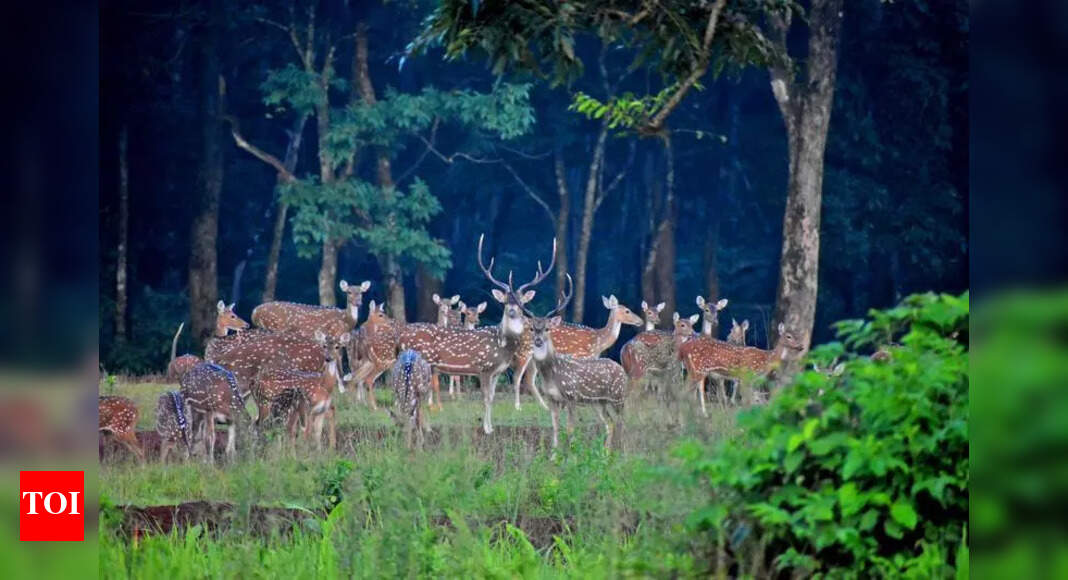
A team of scientists is starting a five-year study in two tiger reserves to help protect the animals there.
They will count the animals that predators eat, like deer, and study where the predators live.
They will also teach local people how to help protect the wildlife.
The scientists want to understand how many animals are in the area and how to keep them safe.
They hope to teach young people to become nature guides.
The goal is to make sure there are enough animals for tigers and leopards to survive.
Before, there weren't many deer, but now their numbers are growing because of conservation efforts.

A WII team began a five-year research program in Similipal and Satkosia tiger reserves.
The research aims to monitor prey and predator animals, study habitats, and engage local communities.
The study will assess prey density and analyze predator habitats.
The initiative seeks to improve wildlife conservation knowledge among forest-dependent communities.
Similipal saw an increase in prey density, including chital, since 2014.
- Who
- A six-member team from the Wildlife Institute of India (WII).
- What
- A five-year research program focusing on prey and predator animals, habitat studies, and community engagement.
- When
- Started on Monday.
- Where
- Similipal and Satkosia tiger reserves.
- Why
- To guide conservation management and evolve new approaches.
- Team
- Six-member team from Wildlife Institute of India (WII)
- Location
- Similipal and Satkosia tiger reserves
- Duration
- Five-year research program
- Focus
- Prey and predator animal monitoring, habitat study, community engagement
- Prey Density in 2022
- Around 31 animals per sq km
- Chital Population
- Around 10 per sq km