Archive · 8 Oct 2026
Pakistan, Saudi Arabia and Turkey Activate Mecca Defence Pact
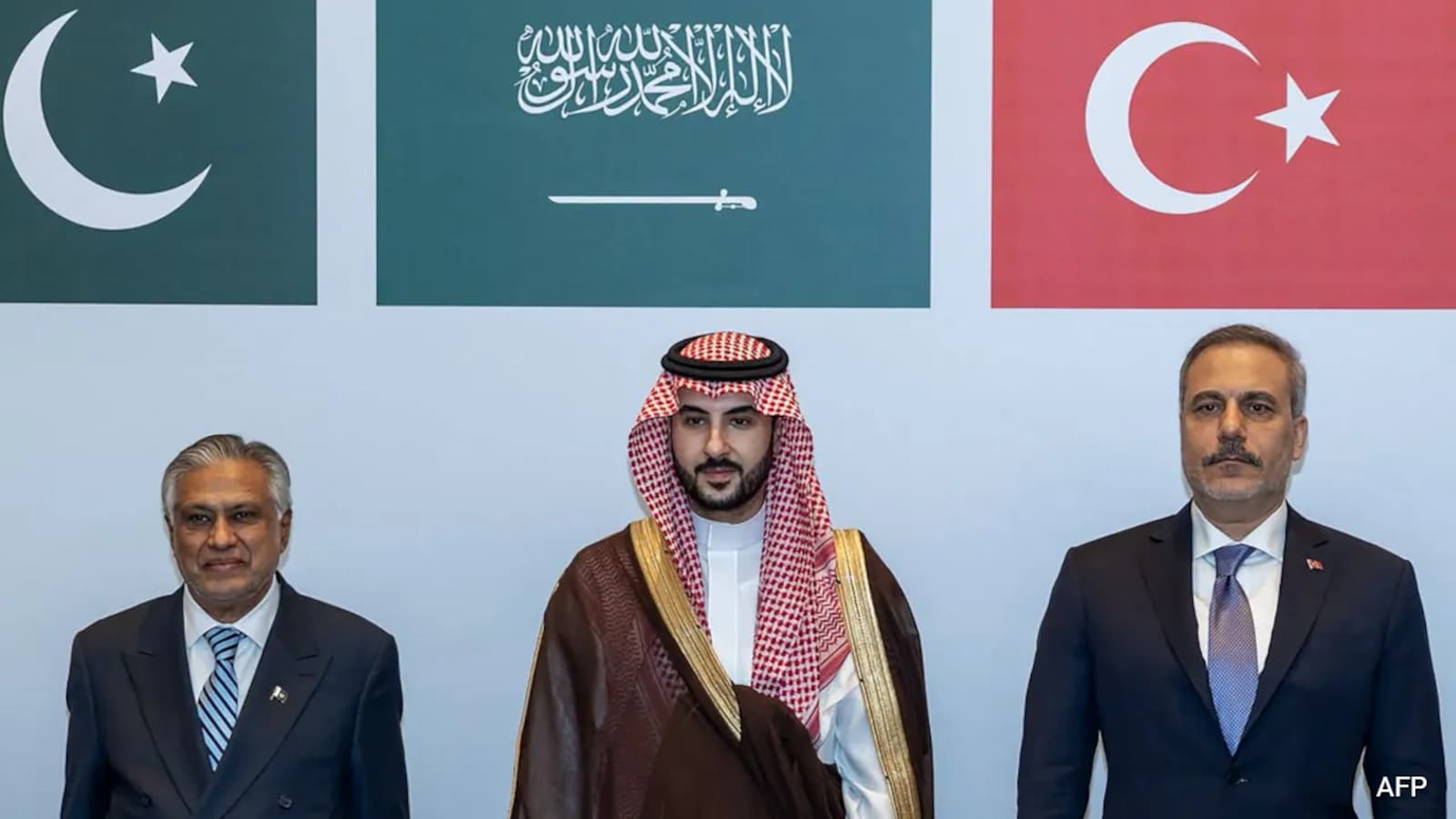
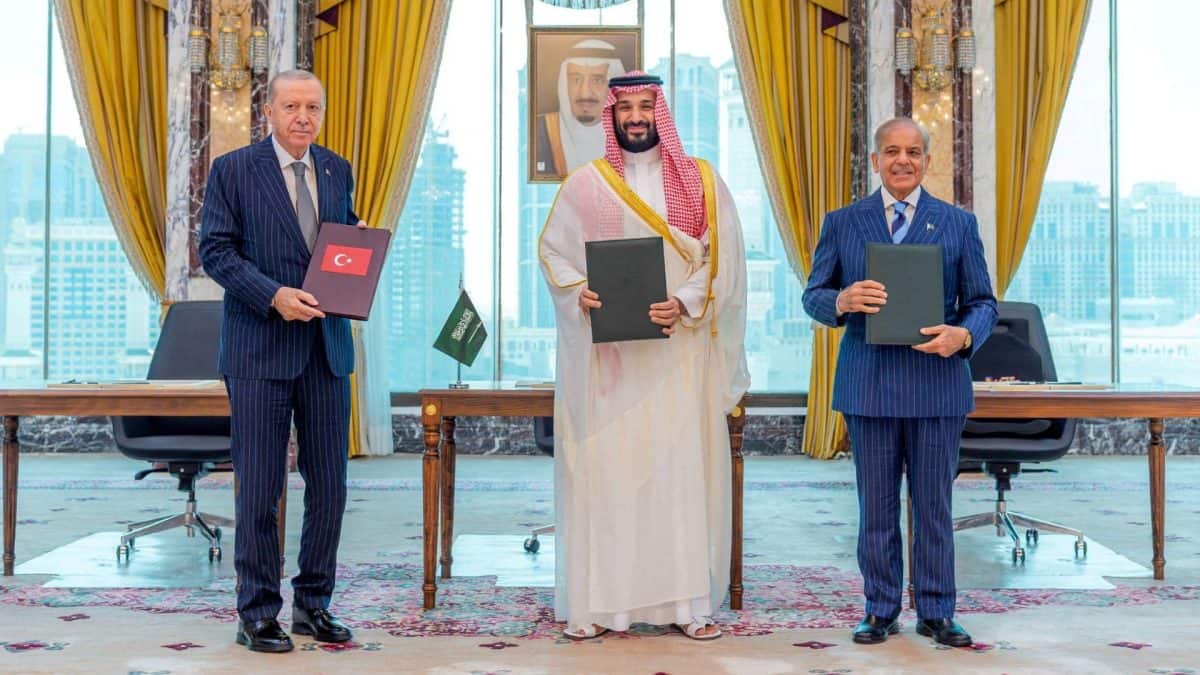
Saudi Arabia, Turkey and Pakistan have started putting their shared defence agreement into action.
Their officials met in Riyadh on October 5.
One report says the decision followed a Houthi strike on a power facility in Medina and other attacks on Saudi targets.
The countries agreed to provide military help and defensive capabilities, but have not announced how many troops will be involved.
The agreement says an attack on one member should be treated as an attack on all.
An opinion article says Pakistan may try to keep its role focused on protecting Saudi Arabia rather than attacking the Houthis.
That could be difficult because Pakistan also has tensions and security concerns closer to home.
The United Nations has urged restraint and a return to political dialogue.

Saudi Arabia, Turkey and Pakistan agreed on October 5 in Riyadh to begin practical implementation of their Makkah Joint Defence Agreement.
One report links the move to an October 1 Houthi strike on a Medina power facility; the opinion article cites sustained Houthi attacks on Saudi targets.
The reports describe defensive cooperation and deployments, but do not provide troop numbers or a detailed public deployment plan.
The pact was signed in August and includes a commitment to treat an armed attack on one member as an attack on all.
Pakistan faces competing pressures: supporting Saudi Arabia while avoiding deeper involvement in Yemen and managing tensions on its own borders.
- Who
- Saudi Arabia, Turkey and Pakistan; the reports attribute attacks on Saudi targets to Houthi forces.
- What
- The three countries agreed to begin implementing the Makkah Joint Defence Agreement.
- When
- The emergency meeting took place on October 5; the agreement was signed in August.
- Where
- The emergency meeting was held in Riyadh, Saudi Arabia. One report says a power facility in Medina was struck on October 1.
- Why
- The reports connect the decision to attacks on Saudi Arabia and escalating fighting around Yemen; the opinion article also describes the move as the pact's first major test.
Arguments for the pact
Concerns and limitations
Collective defence
Arguments for the pact
Supporters frame the agreement as a way to strengthen deterrence and protect Saudi territory, people and critical infrastructure through cooperation.
Concerns and limitations
The opinion article says the pact remains ambiguous, has limited institutional foundations and may be constrained by the members' differing threat perceptions.
Pakistan's military role
Arguments for the pact
Pakistan has committed to the agreement and, according to the opinion article, has deployed forces and air assets in a defensive position in Saudi Arabia.
Concerns and limitations
The opinion article argues Pakistan is likely to avoid offensive operations against the Houthis, given its domestic and regional concerns and the risk of being drawn into a wider conflict.
Regional consequences
Arguments for the pact
The second article presents the pact as a means of coordinating defence and responding to threats against Saudi targets.
Concerns and limitations
Iran-aligned media and regional groups cited in that article condemn the foreign-force deployment as an escalation; the United Nations has called for restraint and renewed political dialogue.
- Agreement
- Makkah Joint Defence Agreement (MJDA), also called the Mecca Pact
- Member countries
- Saudi Arabia, Turkey and Pakistan
- Signing
- August; one report gives August 7 as the signing date
- Emergency meeting
- October 5 in Riyadh
- Reported trigger
- Houthi attacks on Saudi targets; one article specifically reports an October 1 strike on a Medina power distribution facility
- Deployment details
- The reports describe agreed or ongoing defensive deployments, but provide no troop numbers or specific public deployment plan
- Pakistan's stated challenge in the opinion article
- Balancing its commitment to Saudi Arabia with domestic and regional security concerns, including tensions involving Afghanistan and Iran