Archive · 4 Jan 2026
Ancient ape fossils reveal clues to early bipedalism
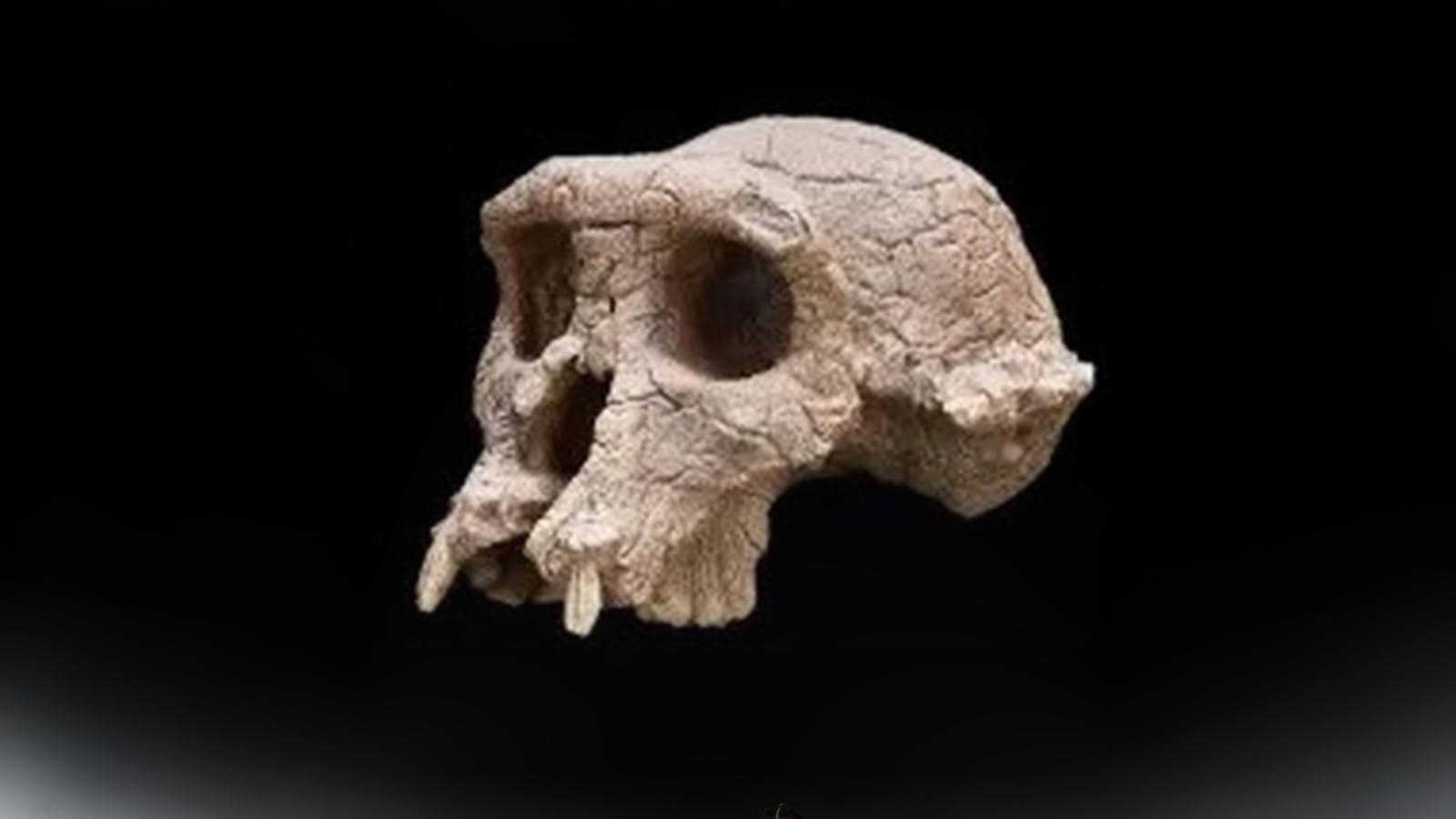
Scientists have been studying old bones from an ancient ape-like species called Sahelanthropus tchadensis.
This species lived in Africa about 7 million years ago and is one of the oldest known relatives of humans.
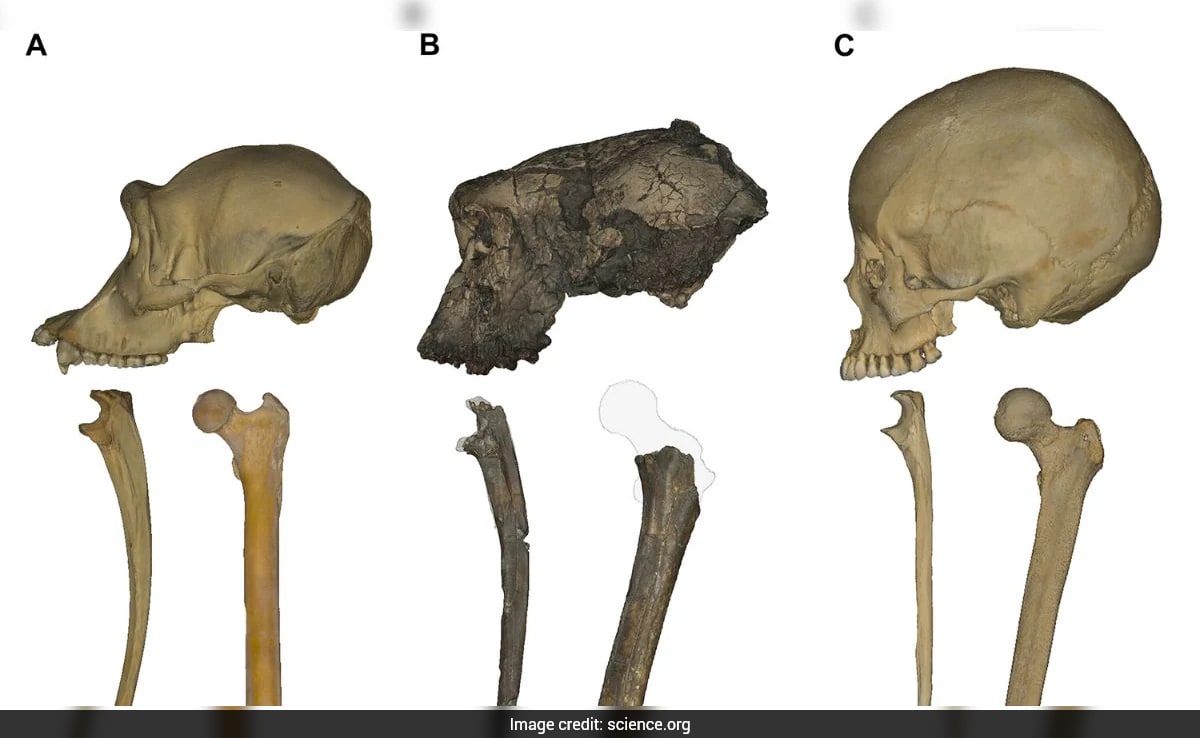
The researchers found that even though Sahelanthropus looked like a modern ape, its bones suggest it could walk on two legs at least some of the time.
This is important because it helps us understand when and how our ancestors started walking upright.
Some scientists agree with this idea, while others think there isn't enough evidence yet.
They all agree that more fossils are needed to solve this mystery.
Excavations in Chad might find more clues to help us understand when and how humans first started walking on two legs.

Sahelanthropus tchadensis, a 7-million-year-old ape-like species, shows signs of upright movement.
Researchers found a small projection on the thigh bone linked to bipedalism.
The species likely walked upright part-time and spent time in trees.
Debate continues over whether the fossil evidence is sufficient to confirm bipedalism.
Further excavations in Chad’s Djurab Desert are expected to provide more insights.
- Who
- Researchers led by Scott Williams from New York University
- What
- Re-examined fossils of Sahelanthropus tchadensis to study early bipedalism
- When
- The study was conducted recently, with fossils dating back 7 million years
- Where
- Fossils were found in Chad’s Djurab Desert
- Why
- To understand the evolutionary transition to upright walking in early hominins
- Species
- Sahelanthropus tchadensis
- Age
- 7 million years old
- Location
- Chad’s Djurab Desert
- Key Feature
- Thigh bone with a small projection
- Research Lead
- Scott Williams, New York University
- Debate Duration
- More than two decades
- Fossil Discovery Year
- 2001