Archive · 8 Jan 2026
ISRO Detects Cosmic Dust Particle Every 16 Minutes
The Indian Space Research Organisation (ISRO) has discovered that a tiny dust particle from space enters Earth's atmosphere every 16 minutes.
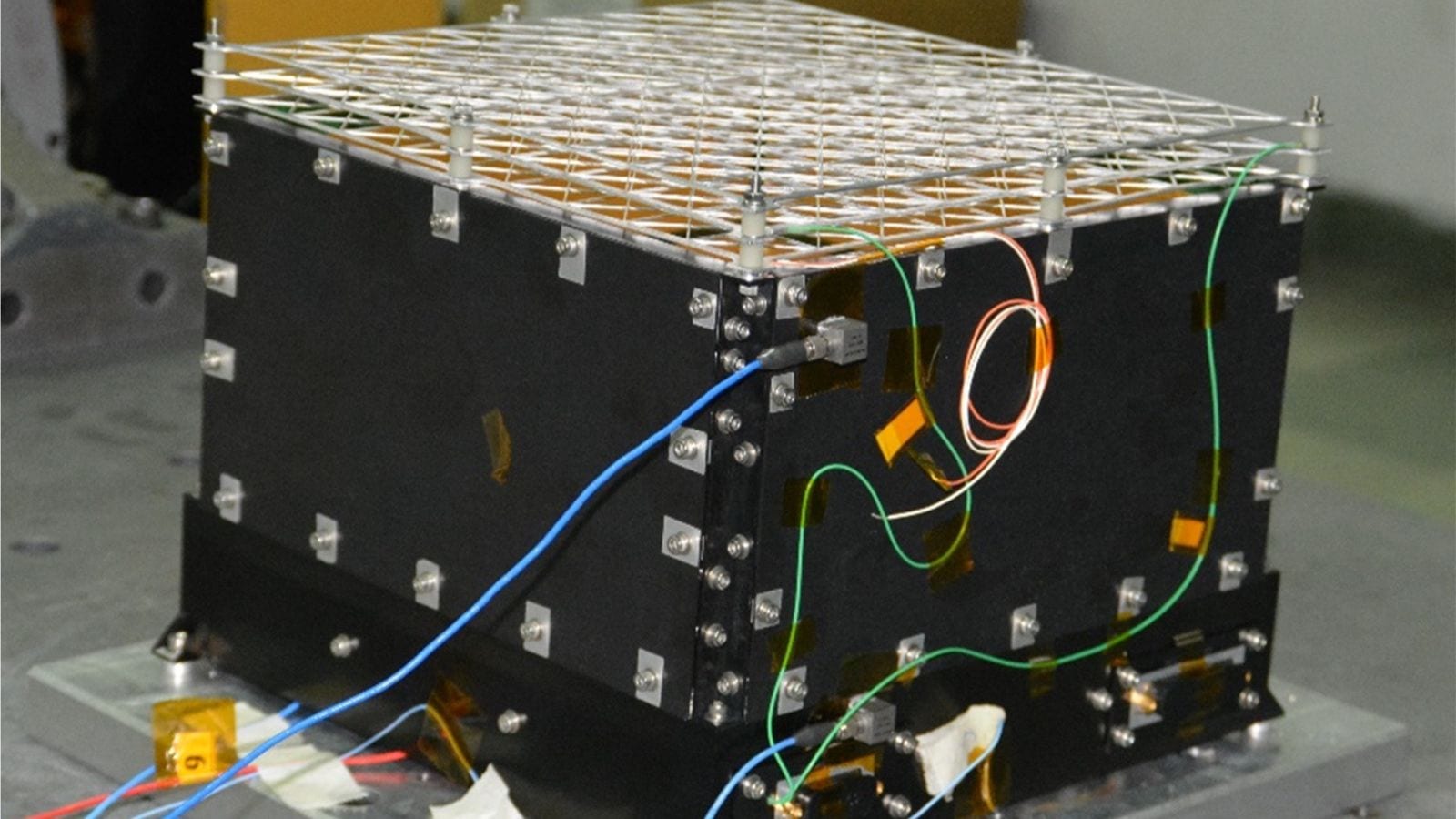
They used a special tool called DEX, which was sent into space on January 1, 2024.
DEX is designed to detect these fast-moving dust particles.
These particles can be dangerous because they can damage spacecraft and satellites.
Understanding these particles is important for future space missions, like the Gaganyaan mission, which will send humans to space.
The data collected will also help in studying the atmosphere of other planets and the moon.
This discovery is crucial for protecting space equipment and ensuring the safety of future space missions.

ISRO's Dust EXperiment (DEX) detected interplanetary dust particles entering Earth's atmosphere every 16 minutes.
DEX was launched on January 1, 2024, aboard the XPoSat mission and is the first of its kind to detect high-transient particles.
The detector registered several hits during the experiment period from January 1 to January 9, 2024.
Interplanetary dust particles can interfere with spacecraft operations and affect space weather, making their study critical for safeguarding space assets.
The data collected is valuable for planning future missions, including the Gaganyaan mission, and for understanding the atmospheric compositions of other celestial bodies.
- Who
- Indian Space Research Organisation (ISRO)
- What
- Detection of interplanetary dust particles entering Earth's atmosphere every 16 minutes
- When
- January 1 – 9, 2024
- Where
- Earth's atmosphere
- Why
- To study the impact of interplanetary dust on space assets and missions, including the Gaganyaan mission
- Experiment Name
- Dust EXperiment (DEX)
- Launch Date
- January 1, 2024
- Mission
- XPoSat
- Detector Type
- 140° wide-view detector
- Detection Period
- January 1 – 9, 2024
- Dust Flux Measured
- 6.5 × 10⁻³ / m−2 s−1
- Power Consumption
- 4.5 Watts
- Inclination
- 9.5°