Archive · 17 Sep 2026
Tamil Nadu Temple Preserves Rare Human-Faced Ganesha Idol

Ganesha is usually shown with an elephant’s head.
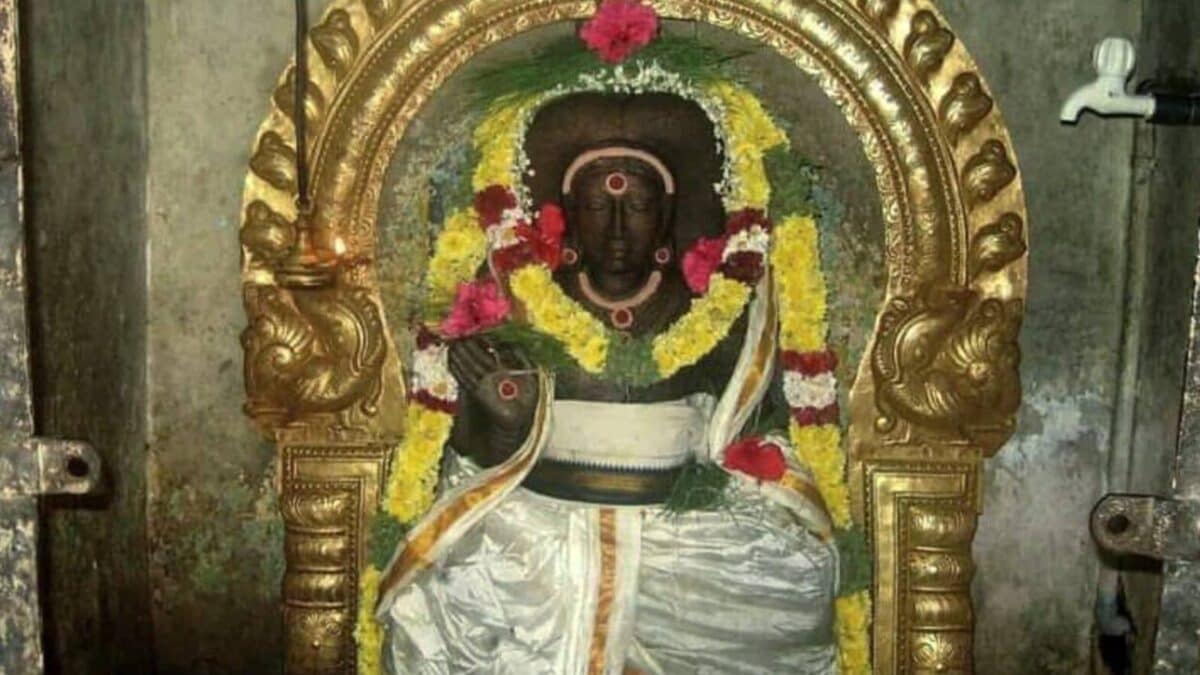
But one temple in Tamil Nadu has a statue with a human face.
The statue is called Nara Mukha Vinayakar.
It is about five feet tall and has a snake ornament around its waist.
Hindu stories say Parvati first created Ganesha as a human.
Shiva later gave him an elephant’s head.
People believe this statue shows Ganesha before that change.
The temple is also in a place where people perform rituals to remember ancestors.
Visitors cannot photograph the main statue, so a printed picture is displayed outside the sanctum.

The Adhi Vinayagar Temple near Koothanur houses a human-faced Ganesha idol called Nara Mukha Vinayakar.
The five-foot-tall idol wears a Naghabharanam, or serpent ornament, around its waist.
Hindu tradition says Parvati created Ganesha in human form before Shiva replaced his head with an elephant’s head.
The shrine, also called Nara Mukha Vinayagar Temple or Nara Mukha Pillaiyar, stands within the Muktheeswarar Temple complex.
The temple is traditionally dated to around the seventh century, and its location is associated with tharpanam rituals honoring ancestors.
- Who
- Devotees worship Nara Mukha Vinayakar, a human-faced form of Ganesha, at the Adhi Vinayagar Temple.
- What
- The temple houses a rare five-foot-tall human-faced Ganesha idol with a serpent ornament around its waist.
- When
- The temple is traditionally believed to date to around the seventh century; the article was updated September 16, 2026.
- Where
- At Thilatharpanapuri near Koothanur in Tamil Nadu’s Thiruvarur region, within the Muktheeswarar Temple complex.
- Why
- The idol is traditionally believed to represent Ganesha’s original human form before Shiva gave him an elephant head; the area is also associated with ancestral rituals.
- Temple
- Adhi Vinayagar Temple, also known as Nara Mukha Vinayagar Temple and Nara Mukha Pillaiyar
- Location
- Thilatharpanapuri, near Koothanur, in Tamil Nadu’s Thiruvarur region
- Idol
- Nara Mukha Vinayakar, a human-faced form of Ganesha
- Height
- Five feet
- Distinctive feature
- A Naghabharanam, or serpent ornament, around the waist
- Traditional date
- Around the seventh century
- Visitor access
- Photography of the main idol is not allowed; a printed image is displayed outside the sanctum
- Local significance
- Thilatharpanapuri is associated with tharpanam, a Hindu ritual honoring ancestors