

1 hr ago
BRICS Reaches Reported Consensus After India-Led Talks Until 4 AM

BRICS countries reportedly agreed on a shared statement after very long talks.
The discussions continued until 4 a.m.
on Saturday.
India helped the countries find words they could all accept.
This was difficult because Iran, Saudi Arabia and the UAE have different interests and positions.
The talks happened while conflicts and tensions were continuing in West Asia.
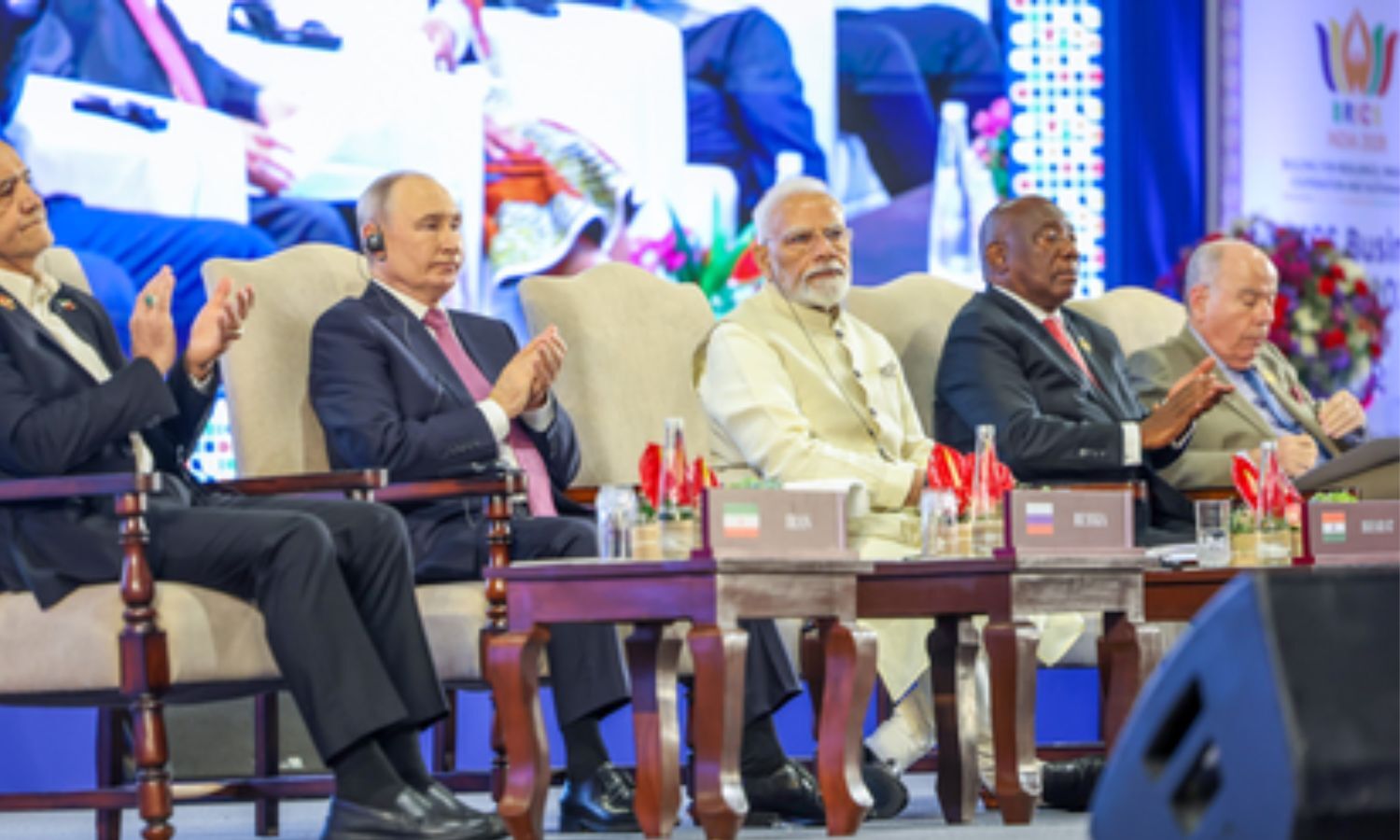
The statement is expected to be released at the BRICS Summit in New Delhi.
Earlier, a BRICS ministerial meeting in May could not produce a joint statement.
India instead issued a chair’s statement and an outcome document.
The reported agreement is being described as an important diplomatic success for India.

BRICS members reportedly agreed on a joint statement after negotiations continued until 4 a.m. Saturday.
India led consultations aimed at reconciling differences among members, including Iran, Saudi Arabia and the UAE.
The negotiations took place amid conflicts and heightened tensions in West Asia, including disagreements related to the Iran war.
The joint statement is expected to be released during the 18th BRICS Summit in New Delhi on Saturday, 12 September.
The reported agreement follows a May BRICS ministerial meeting that ended without a customary joint statement because of divisions between Iran and the UAE.
- Who
- BRICS members, with India leading consultations; Iran, Saudi Arabia and the UAE were among the countries whose differences complicated negotiations.
- What
- The countries reportedly reached consensus on a joint statement, which is expected to be released at the summit.
- Where
- The negotiations were linked to the 18th BRICS Summit at Bharat Mandapam in New Delhi, India.
- When
- Negotiations continued from Friday until about 4 a.m. Saturday; the statement is expected on Saturday, 12 September.
- Why
- India sought to reconcile competing positions on contentious regional and geopolitical issues and prevent disagreements from derailing the BRICS process.
Economic and Reform-Oriented BRICS
Geopolitical BRICS
Purpose of the grouping
Economic and Reform-Oriented BRICS
India and Brazil largely view BRICS as an economic platform focused on development, global governance and shared priorities.
Geopolitical BRICS
China and Russia largely view BRICS as a geopolitical platform with a stronger strategic role.
India’s international approach
Economic and Reform-Oriented BRICS
India presents itself as a reformist power seeking greater influence in global governance while preserving the international system that supported its rise.
Geopolitical BRICS
The expansion and differing strategic priorities of BRICS members have made the grouping contested terrain and consensus more difficult.
Response to global conflicts
Economic and Reform-Oriented BRICS
India has backed dialogue and diplomacy, saying conflicts should not be resolved through war or the battlefield.
Geopolitical BRICS
Members hold sharply divergent positions on regional conflicts and wider West Asia tensions, complicating a common statement.
Key facts
- Event
- 18th BRICS Summit
- Host
- India
- Venue
- Bharat Mandapam, New Delhi
- Negotiation duration
- Talks reportedly continued until 4 a.m. Saturday
- Expected announcement
- A BRICS Joint Statement
- Key divisions
- Differences involving Iran, Saudi Arabia and the United Arab Emirates, amid West Asia tensions
- Earlier setback
- The May BRICS ministerial summit ended without a customary joint statement
Quotes
An unnamed source
A source familiar with the BRICS negotiations
“Against the backdrop of ongoing conflicts and heightened tensions in West Asia, securing consensus among countries such as Iran, Saudi Arabia and the UAE presented a particularly complex diplomatic challenge. India’s diplomatic prowess ensured that these differences did not derail the BRICS process, paving the way for a consensus Joint Statement despite sharply divergent geopolitical positions among member countries.”
 thehansindia.com
“The negotiations saw differences on several contentious issues. India led sustained consultations to bridge competing positions and build consensus among members. The breakthrough assumes particular significance given that Iran, Saudi Arabia and the UAE are all part of the same forum, despite deep differences and competing positions on several regional and geopolitical issues.”
thehansindia.com
Sources
Related news

Iran-UAE Rift Clouds BRICS Summit as India Seeks Consensus

BRICS Nations Reach Consensus on Iran War, Declaration Nears

BRICS Sherpas Seek Consensus as West Asia War Deepens
India Seeks BRICS Consensus Amid West Asia War, Sanctions Pressure

BRICS Reaches Draft Declaration Ahead of New Delhi Summit
India Seeks Consensus Before Expanded BRICS New Delhi Summit

Xi Jinping’s Hongqi N701 Limousine Draws Attention in Delhi

Modi Urges BRICS to Make Global South a Rule-Shaper
India's Zero-Casualty Goal Faces Himalayan Glacial Lake Risks

Prashant Kishor Attacks JD(U) Renaming Bid and BJP Influence
