

Archive · 8 Sep 2026
Boarding Pass Zones Set Flight Boarding Order, Not Seats
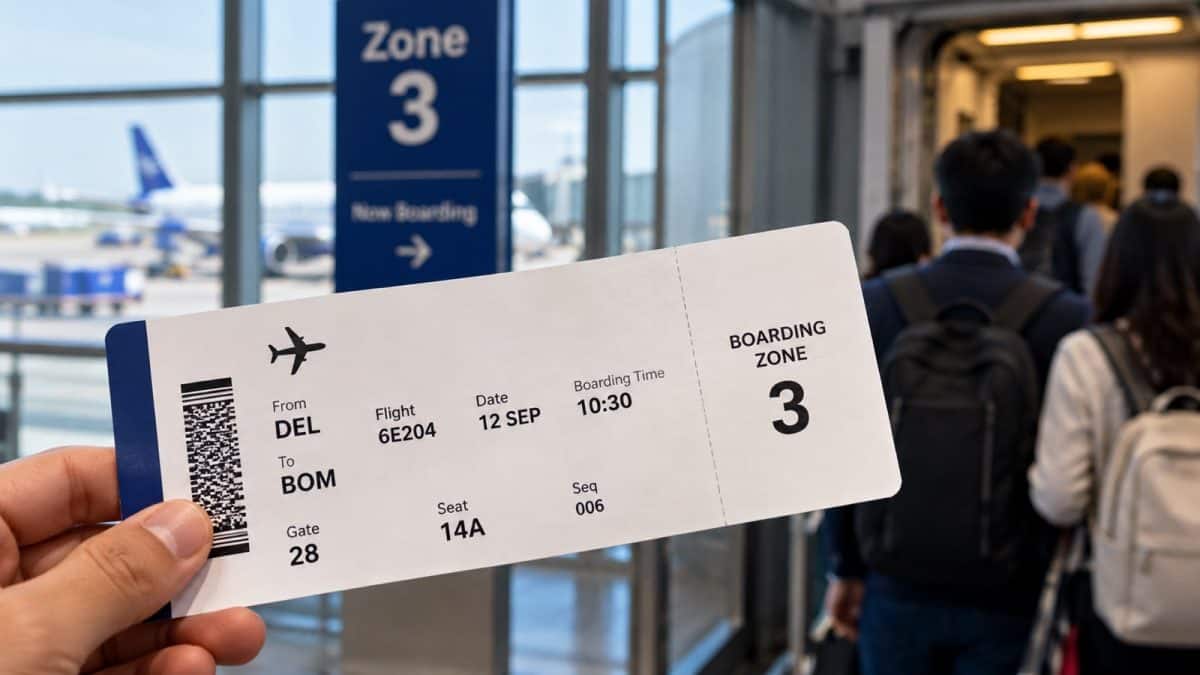
A boarding zone is a group of passengers who board an airplane at a certain time.
It tells you when to board, not where to sit.
Airlines call zones one at a time instead of letting everyone board together.
This helps reduce crowds and keeps the aisle less busy.
First- or business-class passengers often board early.
Frequent flyers and people who pay for priority boarding may also board earlier.
Some airlines consider seat location when choosing the order.
Families with young children or passengers needing help may receive special boarding arrangements.

A boarding zone identifies the group and sequence in which passengers may board.
Lower-numbered zones typically board before higher-numbered zones.
Airlines use zones to reduce gate queues, aisle congestion and boarding delays.
Ticket class, loyalty status, seat location and paid priority can affect zone assignments.
Families with young children and passengers needing assistance may receive special boarding treatment.
- Who
- Airlines assign boarding zones to passengers.
- What
- Boarding zones organize the order in which passengers board an aircraft.
- When
- During the aircraft boarding process.
- Where
- At the airport gate and inside the aircraft.
- Why
- To reduce queues, aisle congestion, delays and problems with cabin-baggage space.
- Meaning
- A zone is a passenger group assigned to a particular boarding sequence.
- Seat impact
- The zone does not determine a passenger’s seat.
- Typical order
- Zone 1 or other lower-numbered zones usually board first.
- Assignment factors
- Ticket class, frequent-flyer status, seat location and paid priority services may affect the zone.
- Special categories
- Families with young children and passengers needing assistance may board early or with early groups.
- Airline differences
- Airlines may use numbers, letters, groups or priority lanes.
- Purpose
- Staged boarding is intended to make boarding more organized and efficient.