

Archive · 16 Aug 2026
Why horoscopes and numerology feel accurate: the 'That's Me' effect
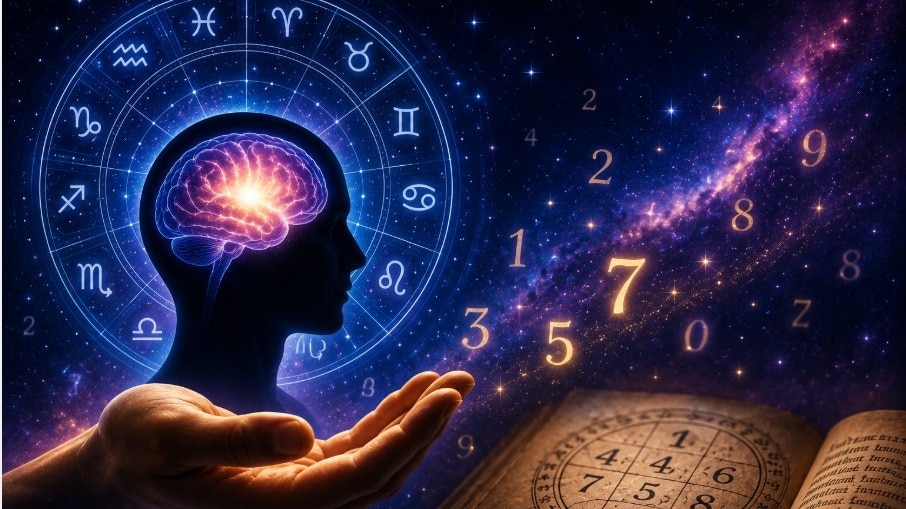
In 1948, a psychologist named Bertram Forer gave his students a personality test.
Later, he gave each student what seemed like a personal analysis of their personality.
But the trick was that every single student received the exact same description.
Forer built that description using sentences taken from an astrology book.
Even though the text was the same for everyone, the students said it described them very well.
This is called the 'That's Me' effect, also known as the Barnum effect.
It happens because our brains pay attention to things that seem to match us and ignore things that don't.
The descriptions use nice, a little vague, words that could fit almost anyone.
Horoscopes and numerology can feel extra special when they use your birthday, but the number being personal doesn't make the reading scientifically true.

In 1948, psychologist Bertram Forer gave his students an identical personality description assembled from an astrology book, and they generally rated it as highly accurate.
The experiment demonstrated the 'That's Me' effect, also known as the Barnum effect, in which people recognize themselves in broadly worded statements.
The effect works partly because people focus on information that seems relevant while ignoring details that do not fit them.
Confirmation bias and flattering, broad wording — such as 'untapped potential' or 'a desire to be understood' — make readings feel personal.
Numerology feels personal because it uses unique data like birth dates, but number-based specificity does not make personality claims scientifically valid.
- Who
- Psychologist Bertram Forer and his students, who took part in the 1948 personality test experiment.
- What
- An experiment demonstrating the 'That's Me' effect, in which students rated identical, astrology-based personality descriptions as highly accurate.
- When
- 1948, when the experiment was famously performed.
- Where
- Not specified in the article.
- Why
- Because people focus on personally relevant details, favor confirming evidence, and respond to flattering, broadly worded descriptions.
- Experiment
- 1948 personality test demonstration by psychologist Bertram Forer
- Phenomenon
- "That's Me" effect, also known as the Barnum effect
- Method
- Every student received the identical personality description assembled from astrology book statements
- Result
- Students generally rated the identical descriptions as highly accurate
- Key mechanisms
- Selective attention to relevant traits, confirmation bias, and flattering broad wording
- Numerology basis
- Personally unique information such as birth dates and birth-year digits
- Scientific view
- Feeling a reading is accurate is not evidence of predictive validity; personality research uses systematically tested measures