

Archive · 13 Aug 2026
Total solar eclipse wows millions across Spain, Iceland
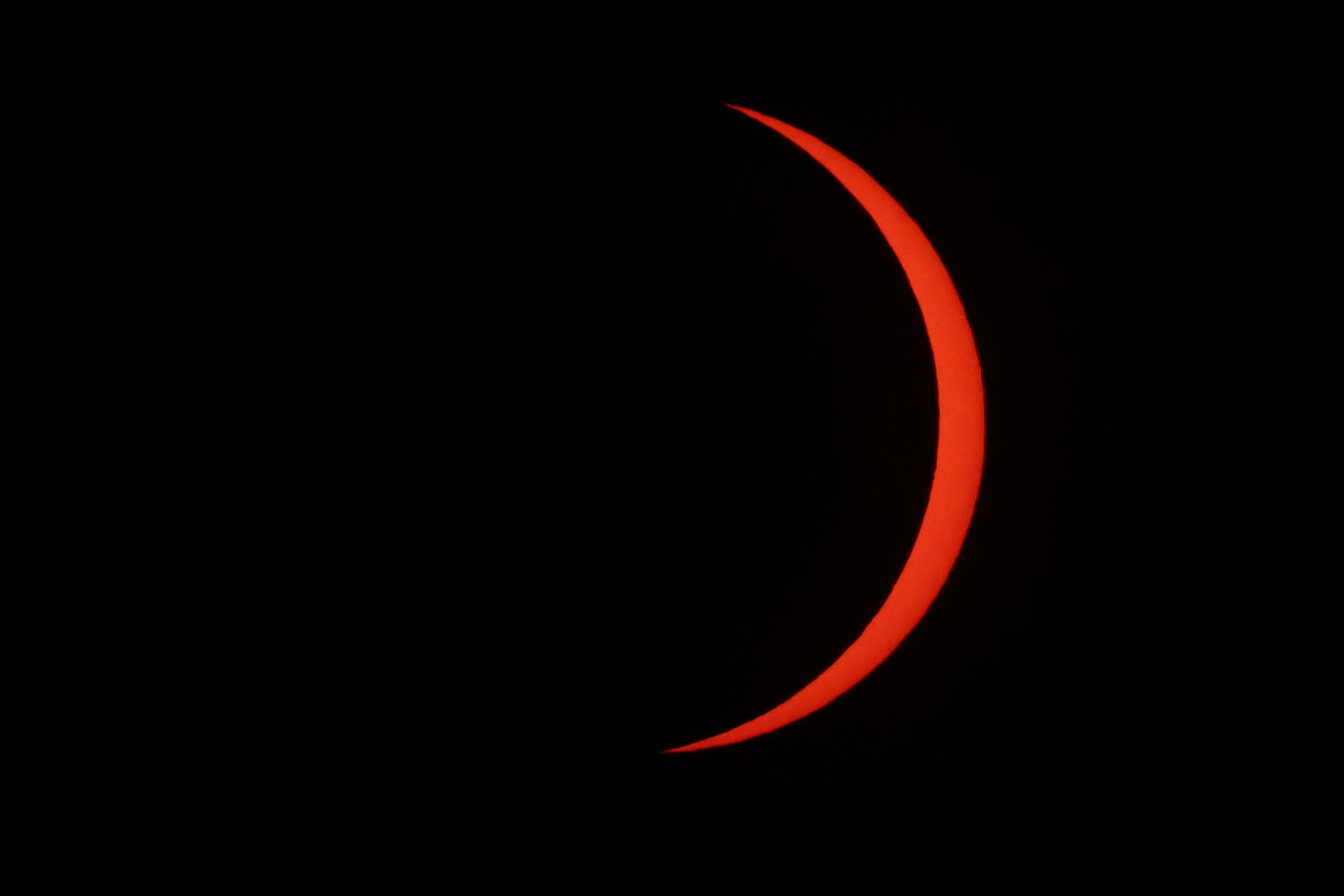
Sometimes the Moon moves right in front of the Sun, and for a little while the sky gets dark, almost like evening in the middle of the day.
This is called a total solar eclipse, and it is a very rare and exciting event.
On Wednesday, August 12, millions of people in Spain and Iceland watched one together.
It was the first total solar eclipse in Western Europe in 27 years.
The Moon's shadow reached Iceland's western coast at about 5:44 in the evening, and darkness lasted for up to 2 minutes and 13 seconds in the far west.
In Spain, the eclipse happened right before sunset, so the sky darkened and then the sun set soon after.
Everyone who watched had to wear special eclipse glasses so their eyes would not be hurt by looking at the Sun.
Spain expected up to 6 million visitors and put thousands of police officers on duty because the hot, dry weather made wildfires a big danger.
A small fire even started near one viewing spot in Peñíscola, but firefighters put it out.
NASA, the American space agency, planned to fly a high-altitude aircraft and launch balloons from Iceland to study what happens to the air when it suddenly gets dark and cold.

Millions of people gathered in Spain and Iceland on Wednesday, Aug. 12, to witness Western Europe's first total solar eclipse in 27 years.
Spain expected up to 6 million visitors and deployed 25,000 police officers (one report cited more than 33,500 law enforcement officers) plus nearly 100 planes and helicopters amid extreme wildfire risk.
In Spain the eclipse was quickly followed by sunset, and viewers in Buitrago de Lozoya saw Baily's beads just after 8:30 p.m. (1830 GMT).
Totality reached Iceland's westernmost coast at about 5:44 p.m. (1744 GMT), lasting up to 2 minutes and 13 seconds, as the country of roughly 400,000 people expected up to 80,000 visitors.
A small fire erupted near an eclipse viewing point in Peñíscola, Valencia, starting in a vehicle and spreading to 33 more before firefighters controlled it; no wildfire tied to eclipse chasers was reported.
- Who
- Millions of skywatchers, tourists and 'eclipse chasers' in Spain and Iceland, including Queen guitarist Brian May, singer Björk, NASA researchers, and Spanish officials Juan Cruz and Fernando Grande-Marlaska.
- What
- A total solar eclipse, during which the Moon passes directly between Earth and the Sun, briefly turning day into darkness or twilight.
- When
- Wednesday, Aug. 12, with totality reaching Iceland's westernmost coast at about 5:44 p.m. (1744 GMT) and Baily's beads seen in Buitrago de Lozoya, Spain, just after 8:30 p.m. (1830 GMT).
- Where
- Northern and central Spain, the Balearic Islands (including Mallorca) and Iceland, with partial views in Portugal and Greenland.
- Why
- It is a rare astronomical event - Western Europe's first total solar eclipse in 27 years and the first visible from the Iberian Peninsula since 1912 - attracting scientists, tourists and enthusiasts; Spain also used it to showcase seldom-visited regions and address overtourism concerns on the coast.
Eclipse tourism as opportunity
Eclipse tourism as risk
Tourism impact
Eclipse tourism as opportunity
Spanish officials see the eclipse as a chance to showcase seldom-visited regions and draw tourists from overcrowded beach resorts, helping ease concerns about overtourism on the coast.
Eclipse tourism as risk
The influx of up to 6 million visitors in Spain and 80,000 in Iceland brings heavy traffic warnings, safety risks and pressure on mostly rural areas.
Wildfire risk vs. spectacle
Eclipse tourism as opportunity
The event is a once-in-a-lifetime spectacle that drew crowds to the hundreds of observation points set up by authorities across rural areas.
Eclipse tourism as risk
Officials warn wildfire risk is extreme due to high temperatures and deployed 25,000 police officers plus nearly 100 planes and helicopters; a small fire near an eclipse viewing point in Peñíscola spread to 33 vehicles before being controlled.
- Event
- Total solar eclipse - Western Europe's first in 27 years
- Spain's expected visitors
- Up to 6 million
- Iceland's expected visitors
- Up to 80,000 (one report cited 20,000 additional overseas visitors)
- Iceland's population
- Roughly 400,000
- Maximum totality
- 2 minutes 13 seconds (far western Iceland)
- Last Iberian Peninsula total eclipse
- 1912
- Police deployment in Spain
- 25,000 officers; nearly 100 planes and helicopters (one report: more than 33,500 officers)
- Peñíscola fire
- Started in a vehicle, spread to 33 more before being controlled
Sources

Millions of people in Iceland and Spain set for ‘event of the century’ eclipse
Eclipse craze grips Spain, Iceland as millions get set for ‘event of the century’
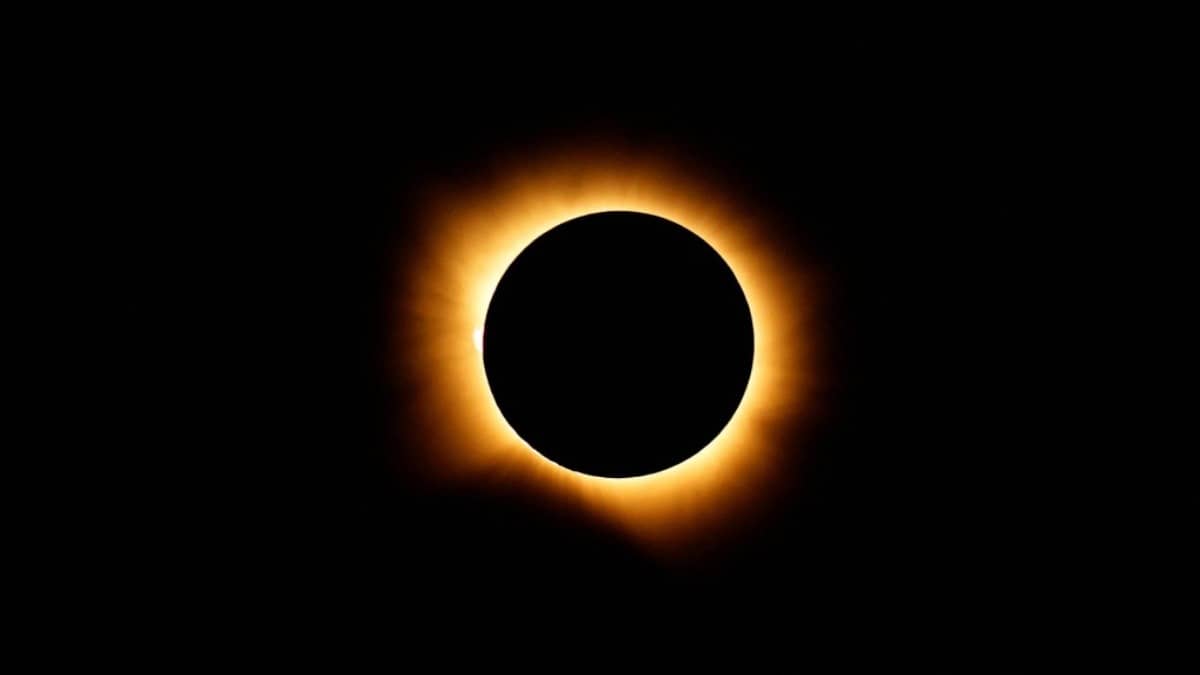
Total Darkness, Then Sunset As Full Solar Eclipse Wows Spectators in Spain