

Archive · 9 Aug 2025
Crop Burning's Impact: Biodiversity Crisis in North India
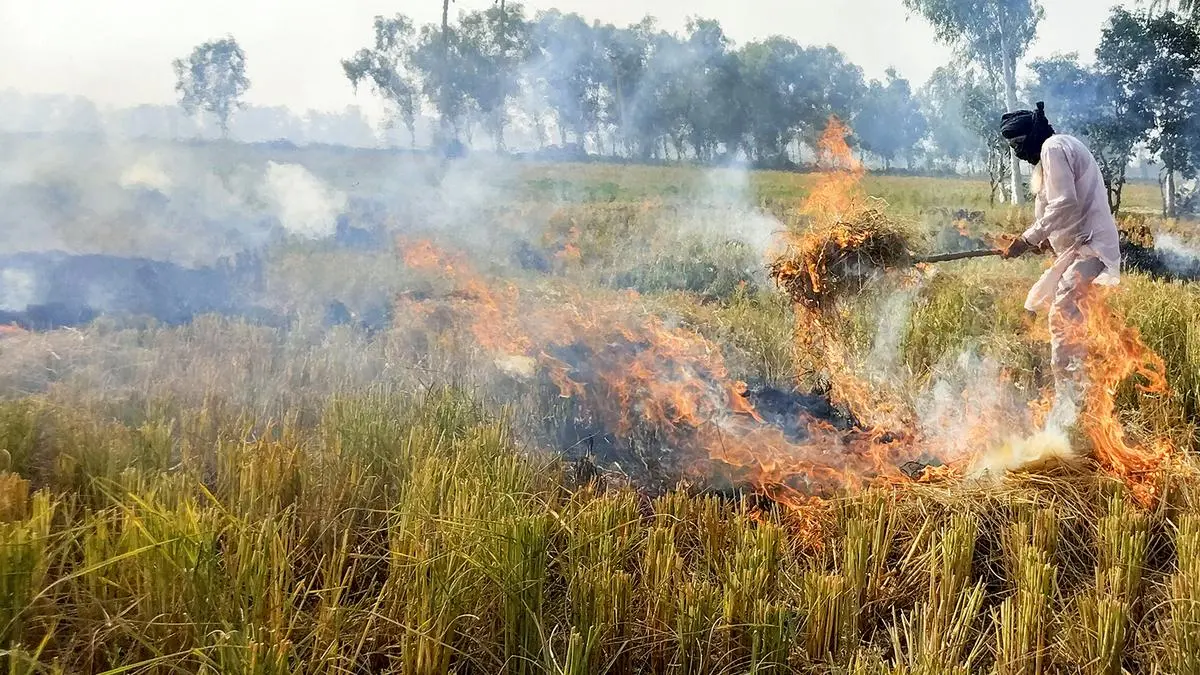
Imagine farmers burning their fields after harvest.
This causes terrible air pollution and is hurting the environment.
It's like destroying the homes of helpful bugs and animals.
To fix this, we need to encourage farmers to use better methods, like not burning the fields.
These methods would help the soil and the environment stay healthy.
They should be given incentives that are not only financial but also that recognise the ecological value of these actions, so everyone benefits in the long run.

Crop residue burning significantly contributes to air pollution and erodes agroecosystem biodiversity.
Current agricultural policies often overlook the impact of residue burning on agrobiodiversity.
Alternatives to burning include conservation agriculture, composting, and bioenergy, but adoption is low.
The broader ecological benefits of not burning residues, such as supporting beneficial organisms, are often ignored.
A three-pronged shift is proposed: include biodiversity in residue management, value biodiversity in the carbon market, and bundle incentives.
- Who
- Farmers, researchers from the International Maize and Wheat Improvement Center (CIMMYT), and the population of India.
- What
- The impact of crop residue burning on biodiversity and the need for alternative agricultural practices in India.
- When
- Published on August 8, 2025
- Where
- North India, particularly in regions like Punjab, Madhya Pradesh, and Andhra Pradesh.
- Why
- To highlight the ecological crisis caused by crop residue burning and propose solutions for sustainable agriculture.
Current Agricultural Practices
Sustainable Agricultural Methods
Residue Management
Current Agricultural Practices
Burning crop residue after harvest.
Sustainable Agricultural Methods
Adoption of conservation agriculture and sustainable alternatives.
- Main issue
- Crop residue burning in North India
- Contribution of crop burning
- Major driver of air pollution
- Impact of burning
- Erosion of agroecosystem biodiversity
- Alternative practices
- Conservation agriculture, composting, mulching, bioenergy, fodder, and biochar
- Proposed solution
- Include biodiversity in residue management, value biodiversity in the carbon market, and bundle incentives
- Authors Affiliations
- International Maize and Wheat Improvement Center (CIMMYT) and Sálim Ali Centre for Ornithology and Natural History
