Archive · 3 Sep 2026
Nepal Flood Exposes 38-Minute Warning and Cross-Border Gaps
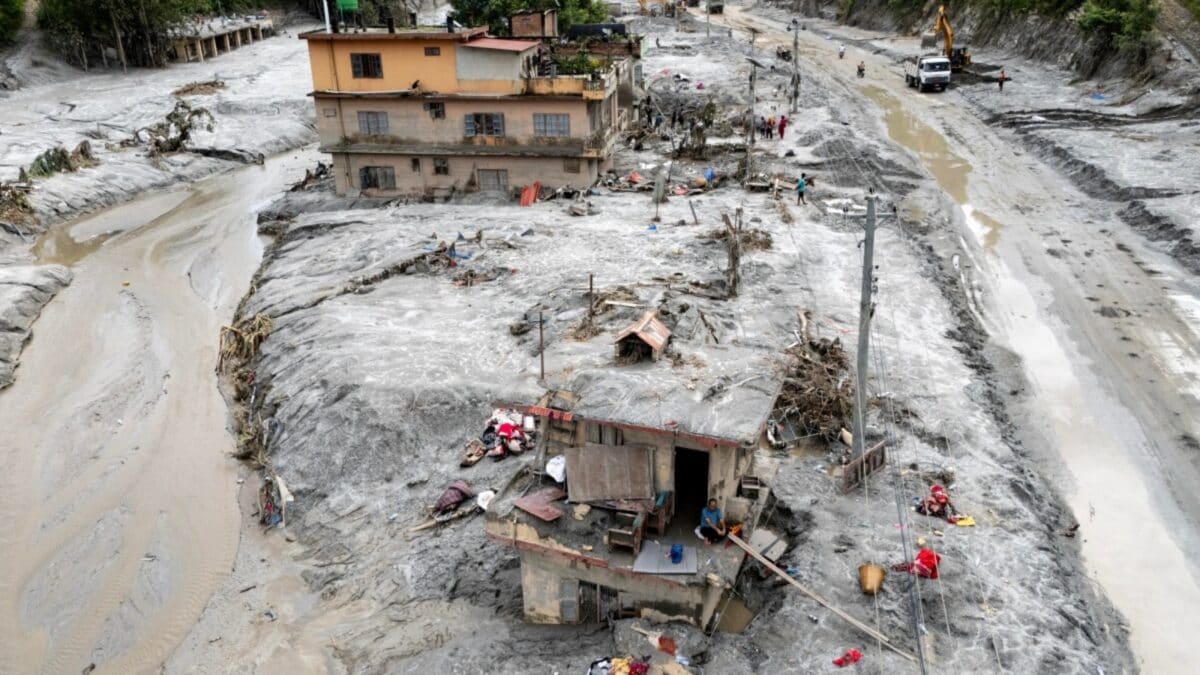
An avalanche made of ice, rocks and water struck near Nepal’s border with China.
It sent a very large flood down rivers and damaged communities.
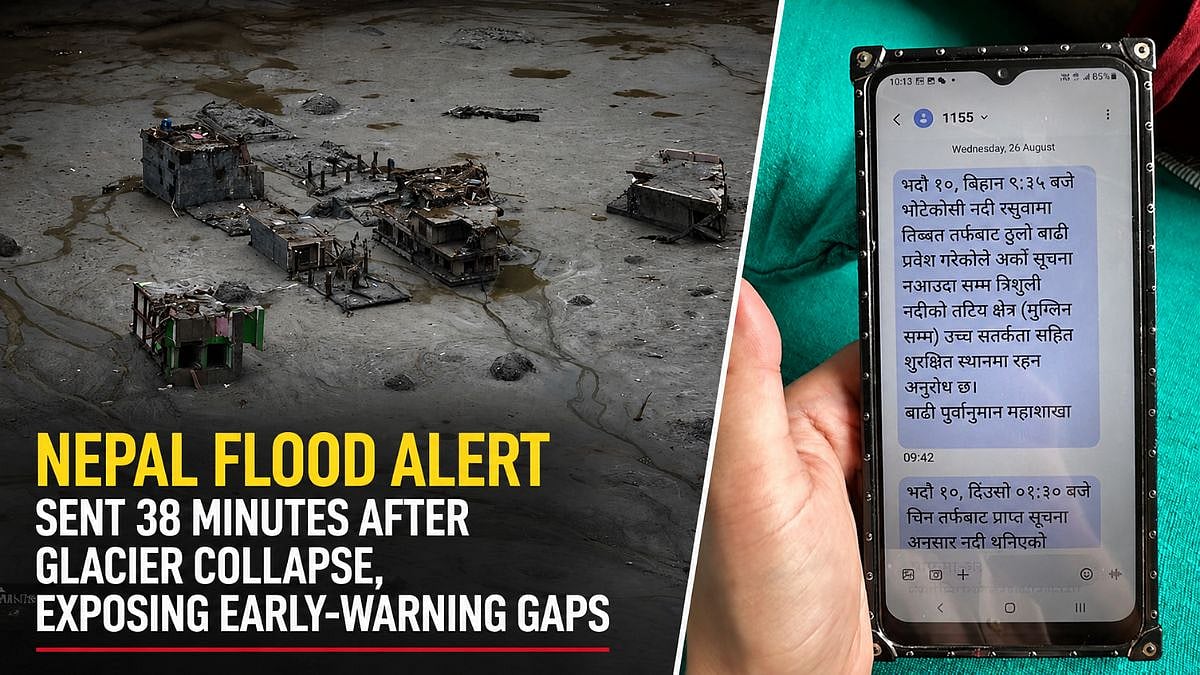
Nepal’s warning was sent 38 minutes after the avalanche happened.
Some people received the warning even later.
A river-measuring device was washed away, so officials lost important information.
Experts said sensors are not enough unless warnings quickly reach people through sirens and messages.
Rescue workers searched damaged areas, including hydropower tunnels.
Reports gave different numbers for deaths and missing people, depending on which countries and figures were counted.

An ice-and-rock avalanche struck Nepal’s Lhende valley near the China border at 8:37 a.m. on August 26, triggering flash floods.
Nepal issued an alert at 9:15 a.m., 38 minutes later, while some residents received it even later.
The Department of Mines and Geology recorded magnitude-4.4 seismic activity but did not classify it as an earthquake requiring an alert.
Flooding swept away the Syabrubesi river gauge at about 8:50 a.m., disrupting real-time monitoring and information flow.
Reported casualties varied: one account cited 1,127 deaths and 4,858 missing, while a later report cited 1,225 deaths and 4,757 missing across Nepal, China and India.
- Who
- Downstream communities, Nepalese authorities, rescue teams, experts, and people missing in Nepal and China were affected.
- What
- An ice-and-rock avalanche triggered deadly flash floods and exposed delays, monitoring failures, and cross-border warning gaps.
- When
- The avalanche and floods occurred on August 26, 2026, at about 8:37 a.m.; the reports were published September 2 and 3.
- Where
- The avalanche struck the Lhende valley in Rasuwa near the China border, with flooding spreading through Nepal’s Bhotekoshi river system and downstream areas including India.
- Why
- The disaster was not immediately recognized by Nepal’s earthquake-focused monitoring process, a river gauge was swept away, and Nepal lacked a comparable operational early-warning protocol with China.
Warning-System Critics
Officials and System Constraints
Was Nepal’s warning system adequate?
Warning-System Critics
Former disaster-management chief Anil Pokhrel said sensors alone do not constitute an early-warning system and called for real-time monitoring, automatic sirens, stronger communications, and better preparedness.
Officials and System Constraints
Officials said the seismic signal fell outside the Department of Mines and Geology’s usual earthquake-monitoring mandate, while difficult terrain and limited resources make remote Himalayan monitoring challenging.
Cross-border responsibility
Warning-System Critics
Experts and critics said Nepal, China, India, and other Himalayan countries need stronger real-time mechanisms to share information about glacier collapses and sudden floods.
Officials and System Constraints
The reports said the collapse occurred on the Tibetan side and that Nepal lacked a comparable operational early-warning protocol with China, limiting the possibility of an immediate automated warning.
How serious was the human toll?
Warning-System Critics
Reports described widespread destruction, delayed warnings, overflowing mortuaries, families providing DNA samples, and people potentially trapped in hydropower tunnels.
Officials and System Constraints
The reported figures differ substantially by source and coverage: one account gave Nepal’s toll as 1,127 dead and 4,858 missing, while another gave 1,204 recovered bodies in Nepal and a combined Nepal-China toll of 1,225 dead and 4,757 missing.
- Avalanche time
- The ice-and-rock avalanche struck at about 8:37 a.m. on August 26, 2026.
- Alert time
- Nepal issued an alert at approximately 9:15 a.m., 38 minutes after the avalanche; some residents received it later.
- Initial seismic reading
- The collapse produced a magnitude-4.4 reading, but officials said it did not match the pattern of an earthquake.
- Monitoring failure
- The Syabrubesi river gauge was swept away at about 8:50 a.m. as water levels rose.
- SMS warnings
- Authorities sent more than 600,000 SMS alerts across several downstream districts.
- Reported Nepal toll
- One report cited 1,127 deaths and 4,858 missing as of September 2; a later report cited 1,204 recovered bodies and 4,216 missing in Nepal.
- Reported combined toll
- The later report added China’s figures of 21 deaths and 541 missing, for a combined 1,225 deaths and 4,757 missing.
- Regional response
- Rescue teams searched debris and flooded hydropower tunnels, while calls grew for real-time Himalayan data sharing.