

Archive · 26 Sep 2025
Ladakh's Integration and Significance of Equinoxes and Solstices
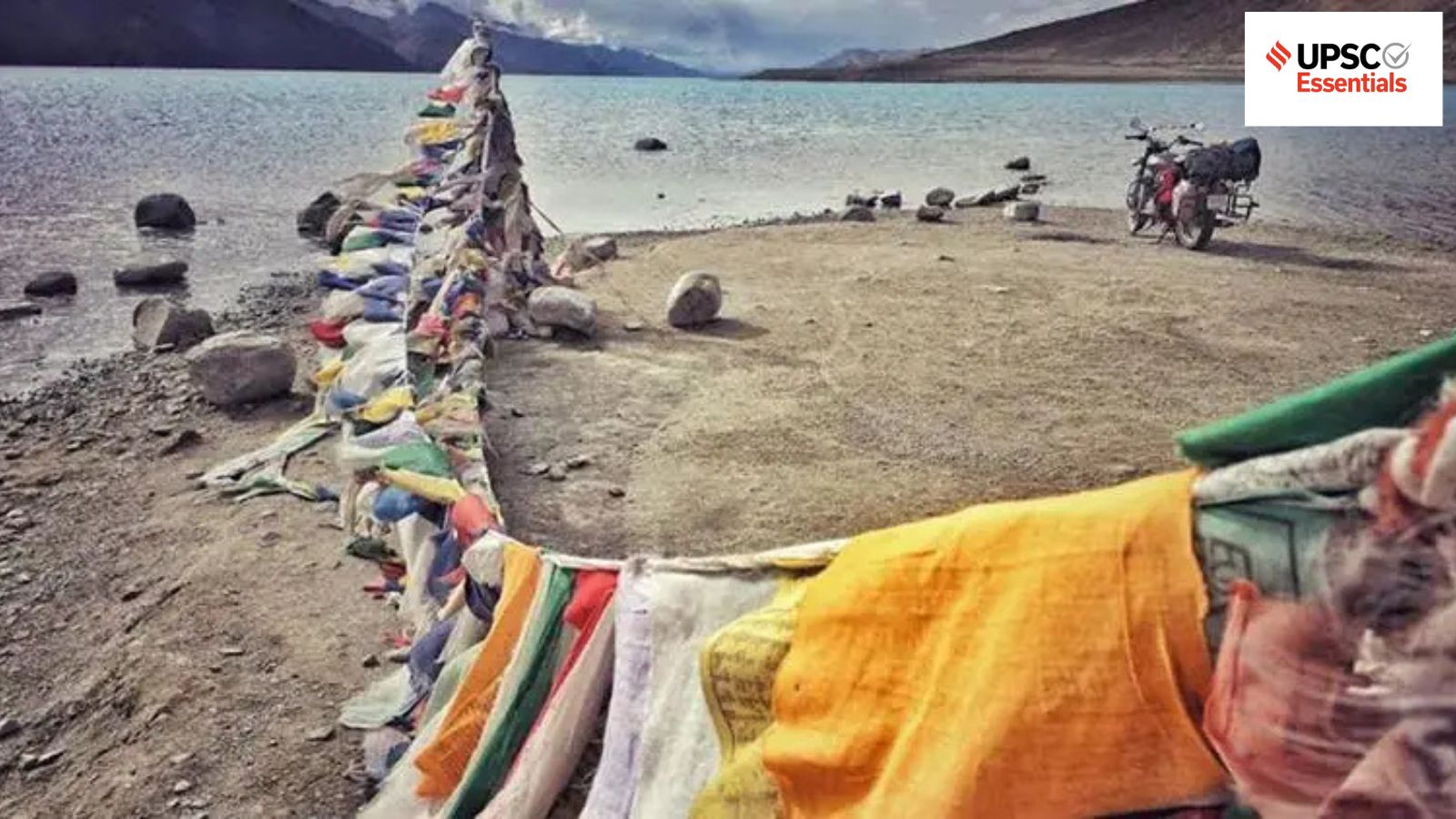
This article covers two topics: Ladakh's history and the Earth's seasons.
Ladakh, once an independent kingdom, became part of Jammu and Kashmir in the 1800s.
This changed the area's importance.
The second part explains equinoxes and solstices.
Equinoxes happen twice a year when day and night are equal lengths.
Solstices are when the days are longest or shortest, because of how the Earth tilts toward the sun.

Ladakh's integration into Jammu and Kashmir occurred in the 19th century.
Ladakh was an independent kingdom before its integration.
Equinoxes are when day and night are of equal length.
Solstices are days when the Earth is highly inclined towards or away from the Sun.
The articles discuss Ladakh and the Earth's seasons.
- Who
- The articles discuss Ladakh and the Earth
- What
- Ladakh's integration into Jammu and Kashmir, and the phenomena of equinoxes and solstices.
- When
- Ladakh's integration happened in the 19th century. Equinoxes happen in March and September.
- Where
- Ladakh, and the Earth.
- Why
- To understand Ladakh's history, its significance, and the Earth's seasons.
- Ladakh Integration
- Part of Jammu and Kashmir in 1834
- Geopolitical Shift
- Significant in the Himalayan region
- Equinoxes
- Occur twice a year
- Solstices
- Days of extreme tilt towards/away from the sun