

Archive · 23 Dec 2025
Parker Solar Probe Reveals Sun's Eruptions and Energy Return
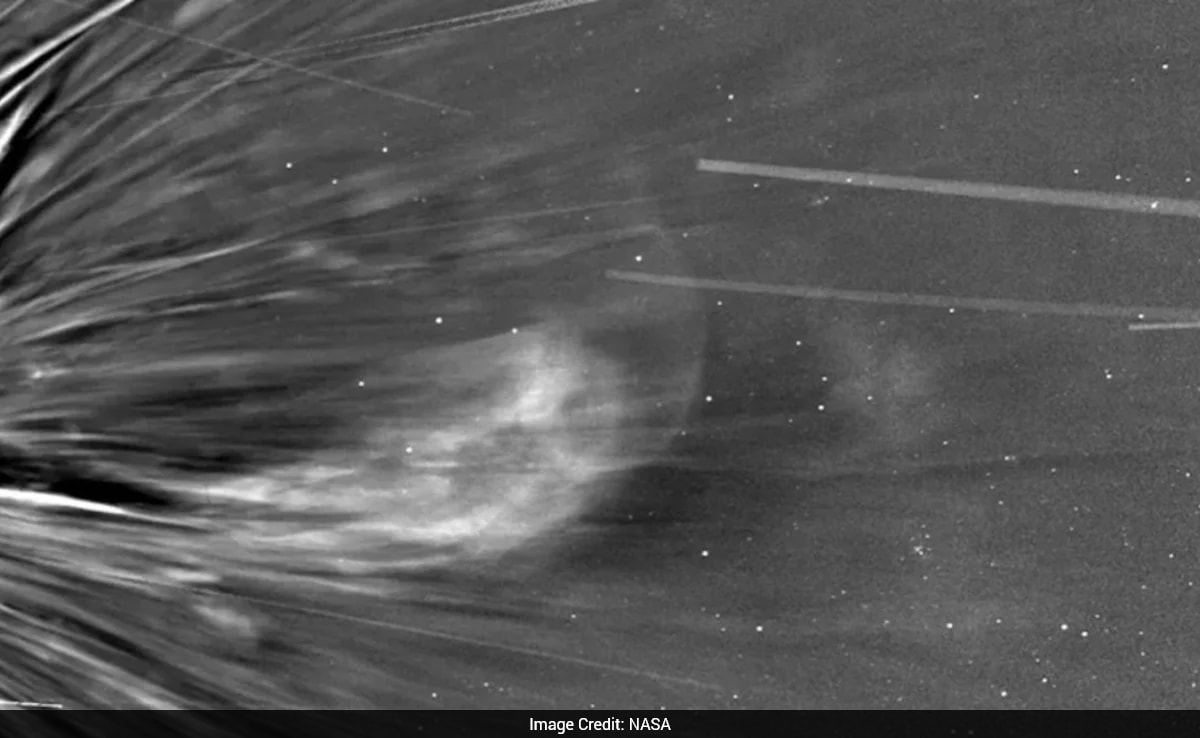
NASA's Parker Solar Probe got really close to the Sun and saw something amazing.
It watched hot stuff from the Sun shoot out and then some of it turn around and go back.
This helps scientists understand how the Sun uses its energy.
The probe was only 3.8 million miles from the Sun, which is super close!
This event is called a coronal mass ejection, and it can cause big problems on Earth like power outages and pretty auroras.
Scientists are excited because they've never seen this happen so clearly before.

Parker Solar Probe observed solar material erupting and partly returning to the Sun during a close flyby.
The event, a coronal mass ejection (CME), was witnessed 3.8 million miles from the Sun's surface on Christmas Eve 2024.
Magnetic field lines broke and reconnected, causing some material to curve back toward the Sun.
This observation helps scientists understand the Sun's energy reuse and improve space weather prediction.
CMEs can disrupt power grids, radio communications, and satellite navigation if directed toward Earth.
- Who
- NASA's Parker Solar Probe and scientists from the Johns Hopkins Applied Physics Laboratory
- What
- Observation of solar material erupting and partly returning to the Sun
- When
- Christmas Eve 2024
- Where
- 3.8 million miles from the Sun's surface
- Why
- To study the Sun's behavior and improve space weather prediction
- Spacecraft
- Parker Solar Probe
- Distance from Sun
- 3.8 million miles
- Event Type
- Coronal Mass Ejection (CME)
- Date of Observation
- Christmas Eve 2024
- Scientific Institution
- Johns Hopkins Applied Physics Laboratory