

Archive · 5 Jun 2025
Kutch Woman Weaves Eco-Friendly Movement from French Encounter
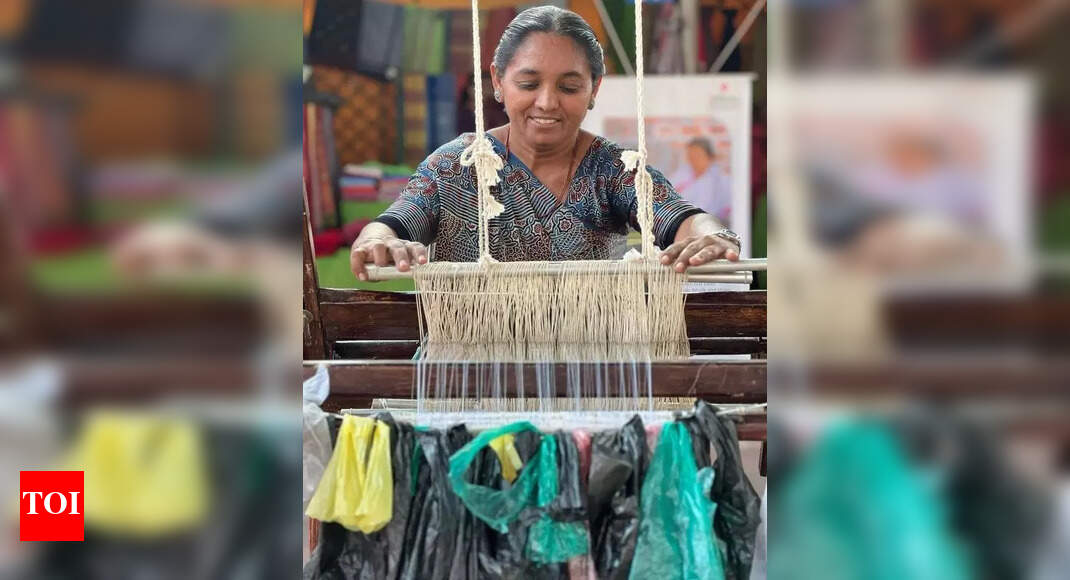
Imagine a woman named Rajiben in India who saw plastic trash everywhere, harming animals and the environment.
She met a French designer who showed her how to weave plastic into useful items.
Rajiben learned the skill and started her own business, teaching other women to do the same.
They collect plastic waste and turn it into things like bags and mats, giving the plastic a new life and helping the community.
The business grew, especially during the pandemic when they made new products and sold them online.
Now, many women are part of this eco-friendly project, learning about plastic pollution and working together to protect their environment.
The original designer will return to witness the growth that stemmed from their first meeting years ago, demonstrating the power of ideas and collaborations to address waste and create jobs.

A chance encounter in 2009 between a French eco-designer and a Kutch woman sparked the idea for a plastic waste initiative.
Rajiben Vankar, inspired by the encounter, learned to weave plastic waste at Khamir artisan centre for approximately three years.
In 2019, Rajiben launched her own brand, utilizing discarded plastic to create various products and providing employment.
The enterprise adapted during the COVID-19 pandemic by incorporating old clothes and textile waste to create new products.
The brand now involves around 100 women and educates them about the impact of plastic pollution.
- Who
- Rajiben Vankar, a woman from Kutch, with inspiration from French eco-designer Katell Gélébart.
- What
- A social enterprise that transforms discarded plastic into durable products, empowering local women.
- When
- The idea sparked in 2009; the independent brand launched in 2019.
- Where
- Kutch, Gujarat, India.
- Why
- To address plastic pollution, create employment for women, and promote sustainable practices.
- Enterprise Name
- Rajiben
- Founder
- Rajiben Vankar
- Location
- Kutch, Gujarat, India
- Focus
- Turning plastic waste into products
- Inception
- 2009 (idea), 2019 (independent brand)
- Key Collaboration
- Khamir artisan centre, Karigar Clinic
- Number of Women Involved
- Around 100 (excluding trainees)