

Archive · 2 Nov 2025
Mangrove Expansion Crucial for Cyclone Mitigation, Experts Say
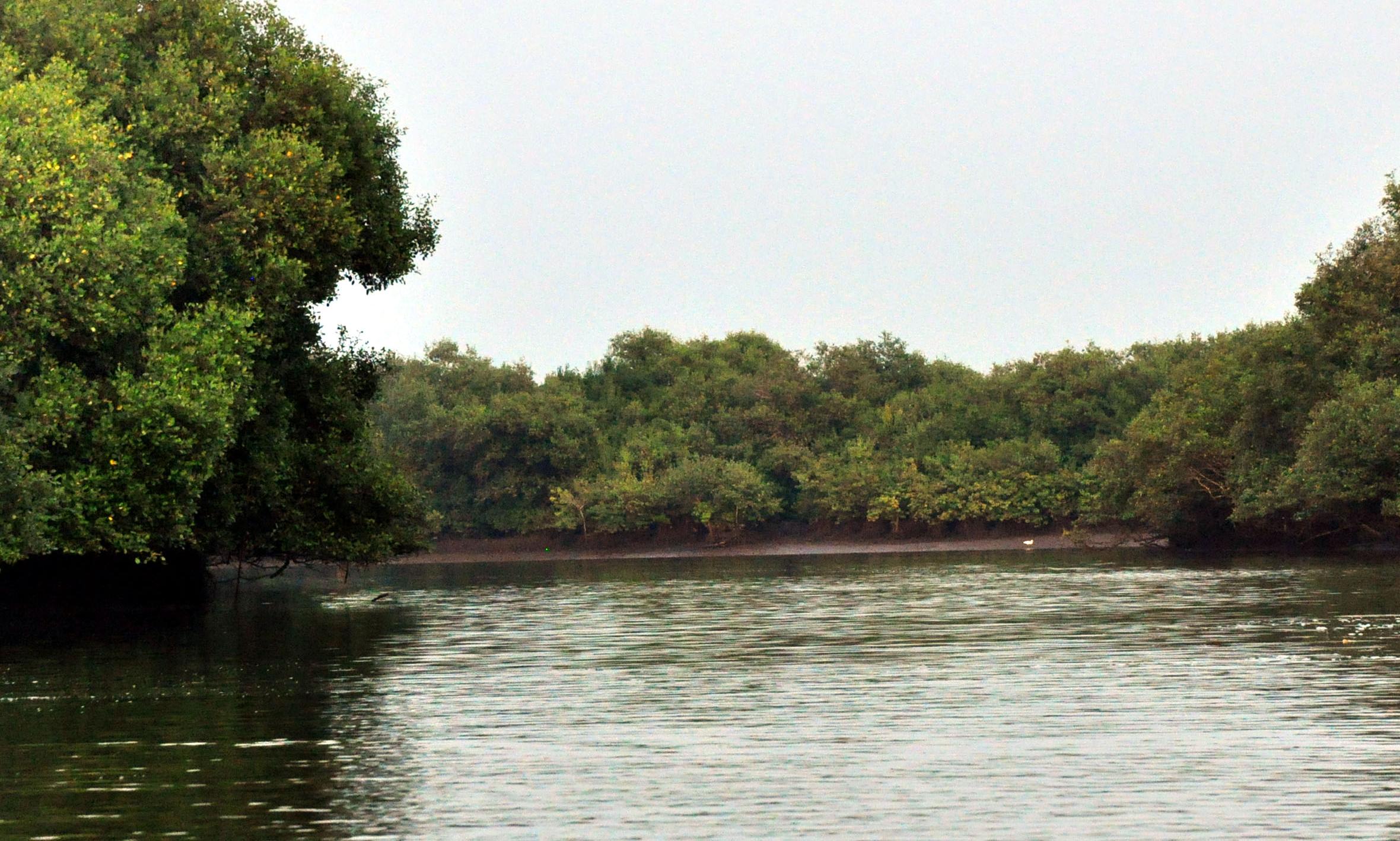
Imagine trees that live in salty water along the coast.
These special trees, called mangroves, are like superheroes for coastal towns.
When big storms called cyclones come, the mangroves stand strong.
They act like a giant sponge, soaking up the energy from strong winds and big ocean waves.
This helps protect the towns from getting flooded or damaged.
The expert says we need to plant even more of these mangrove trees.
They have helped protect places like Coringa before, and planting more will keep coastal areas safer from future storms.
It's like building a natural wall made of trees!

Mangrove specialist Ravishankar Thupalli stresses the need to increase mangrove cover for cyclone impact mitigation.
Mangroves act as natural barriers, reducing the force of gale winds and tidal waves during storms.
The Coringa mangrove forests, part of the 316 sq. km Godavari mangroves, effectively subdued wave impact during the 1996 cyclone.
Increased mangrove cover is attributed to community participation in restoration programs led by the Forest Department and M.S. Swaminathan Research Foundation.
Continued public and institutional efforts are urged to expand mangrove plantations to protect Andhra Pradesh's coast from future cyclones.
- Who
- International mangrove specialist Ravishankar Thupalli
- What
- Emphasized the importance of expanding mangrove cover to mitigate cyclone impact, acting as natural barriers.
- When
- Not explicitly stated, but in reference to past cyclones like the 1996 Coringa cyclone.
- Where
- Andhra Pradesh's coastal belt, specifically mentioning the Godavari mangroves and Coringa.
- Why
- To safeguard coastal areas from future cyclonic disasters by reducing the intensity of gale winds and tidal waves.
- Expert Name
- Ravishankar Thupalli
- Expert Affiliations
- UN FAO, UNDP, JICA, M.S. Swaminathan Research Foundation
- Mangrove Area (Godavari)
- 316 sq. km
- Key Example
- Coringa mangrove forests, 1996 cyclone