Archive · 11 Oct 2026
Pakistan Declares Emergency, Ends PTI Rule in Khyber Pakhtunkhwa
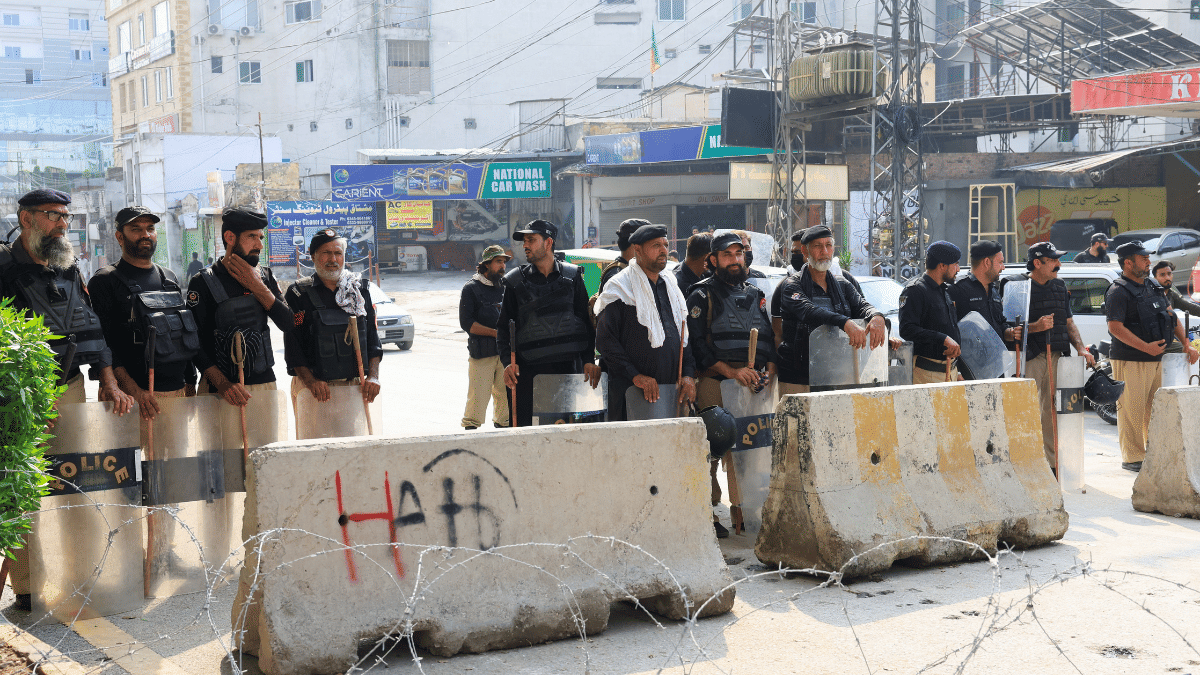
Pakistan’s president has declared an emergency in Khyber Pakhtunkhwa, a province governed by Imran Khan’s party, PTI.
The federal government says militant attacks and lawlessness have made the situation dangerous.
It also says the provincial government has not done enough to respond.
Under the emergency, federal authorities can direct the governor to take over some or all provincial duties.
Parliament may exercise powers normally held by the provincial assembly.
PTI says the decision is wrong and plans to challenge it.
The party’s protest march is calling for Khan’s release and access to medical care.
Talks between PTI and the federal government did not resolve their disagreement over when the protest should end and when Khan could be accessed.

President Asif Ali Zardari approved an emergency in Khyber Pakhtunkhwa on Sunday following a federal cabinet recommendation.
The proclamation allows the federal government to direct the governor to assume some or all provincial functions, including powers of the provincial assembly.
Federal officials cited militant attacks, worsening law and order, and what they described as the provincial government’s failure to tackle terrorism.
PTI rejects the decision and says it will challenge it through constitutional, legal and democratic forums; a party spokesman warned it could bring further bloodshed and instability.
The decision coincided with a PTI protest march seeking Imran Khan’s release and access to medical care; talks had broken down over whether Khan should be accessible before the protest ended.
- Who
- President Asif Ali Zardari approved the emergency on the federal cabinet’s recommendation; the decision affects the PTI-led government of Khyber Pakhtunkhwa.
- What
- An emergency and governor’s rule were declared, enabling federal authorities to direct the governor to exercise provincial functions.
- When
- Sunday; the proclamation took effect immediately.
- Where
- Khyber Pakhtunkhwa, Pakistan.
- Why
- The federal government cited militant violence, deteriorating law and order, and an alleged breakdown in the provincial government’s ability to function.
Federal Government’s Position
PTI’s Position
Rationale for emergency rule
Federal Government’s Position
The federal government says rising terrorist attacks, worsening law and order, and provincial inaction justify the emergency.
PTI’s Position
PTI disputes the move and says the provincial government’s proposals have been ignored; it plans to challenge the decision through constitutional, legal and democratic forums.
Counterterrorism policy
Federal Government’s Position
The federal government and Governor Faisal Kundi accuse the provincial administration of failing to confront militancy adequately.
PTI’s Position
Chief Minister Sohail Afridi has rejected military operations as a solution and says the province’s proposals have not been heeded.
Protest and negotiations
Federal Government’s Position
The federal government said protesters would not be allowed into Islamabad and insisted the demonstration end before access to Khan was considered.
PTI’s Position
PTI demanded access to Khan before calling off the protest and says there had been room for talks; a party spokesman warned the emergency could cause further bloodshed and instability.
- Province
- Khyber Pakhtunkhwa, Pakistan
- President
- Asif Ali Zardari
- Prime minister
- Shehbaz Sharif
- Provincial governing party
- Pakistan Tehreek-e-Insaf (PTI)
- Constitutional provisions cited
- Articles 232 and 234 of Pakistan’s Constitution
- Federal funding cited by Sharif
- At least PKR 800 billion over the past decade for counterterrorism and security
- Protest march
- Began in Lakki Marwat on October 4; organisers sought Imran Khan’s release and access to medical care