9 months ago
Trap Cameras Reveal Purulia's Biodiversity Thriller
Scientists set up special cameras in a forest in Purulia, West Bengal, to watch wild animals.
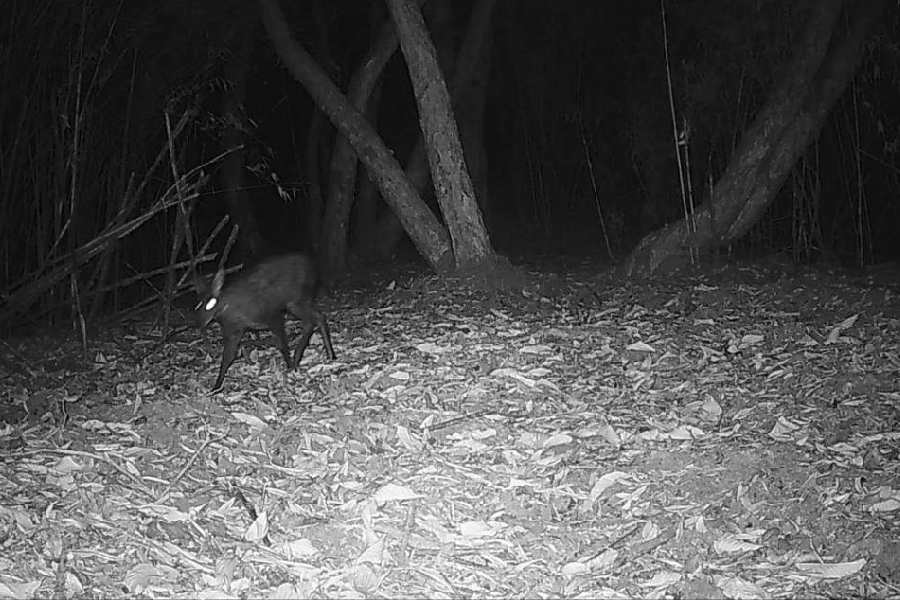
Over many months, these cameras took pictures and videos of many different animals, including deer, cats, bears, and even elephants.
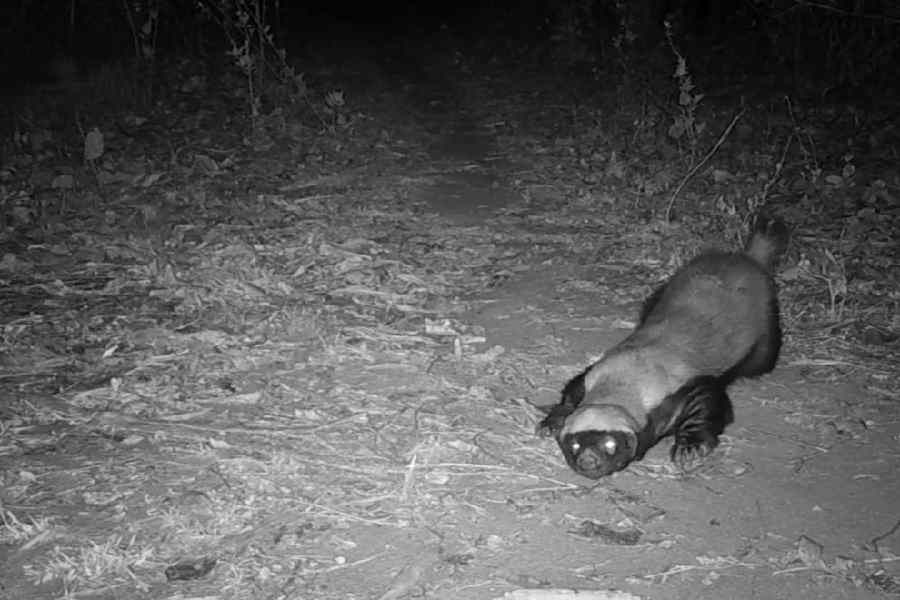
Some of these animals, like a tiny wild cat and a brave honey badger, had never been seen in this area before.
The scientists are excited because this shows that the forest is home to many kinds of animals.
They want to protect these animals and their homes.
The forest in Purulia is special because it has hills, which makes it harder for people to turn it into farms.
This helps the animals live safely.
The scientists are working with the local people to teach them about the importance of protecting these animals.

Trap cameras installed in Kotshila forest, Purulia, captured diverse wildlife including leopards, sloth bears, honey badgers, Indian pangolins, and a rusty-spotted cat.
The rusty-spotted cat and honey badger were documented in Bengal for the first time.
The project, led by Heal and supported by the Duleep Matthai Nature Conservation Trust, aimed to conserve pangolins and document biodiversity.
The cameras covered only 8sqkm of the 50sqkm Kotshila forest, revealing a rich variety of species in a small area.
Forest officials and researchers emphasize the need for a comprehensive census and conservation action plan to protect Purulia's wildlife.
- Who
- Human and Environment Alliance League (Heal), Duleep Matthai Nature Conservation Trust, Bengal Forest Department
- What
- Trap cameras captured diverse wildlife in Purulia's Kotshila forest
- Where
- Kotshila forest, Purulia, West Bengal, India
- When
- Cameras were installed in January and retrieved in September
- Why
- To document biodiversity and support pangolin conservation efforts
Key facts
- Location
- Kotshila forest, Purulia, West Bengal, India
- Camera Installation Period
- January to September
- Area Covered by Cameras
- 8 square kilometers
- Total Forest Area
- 50 square kilometers
- Organizations Involved
- Human and Environment Alliance League (Heal), Duleep Matthai Nature Conservation Trust, Bengal Forest Department
- Notable Species Documented
- Indian muntjac, Indian civet, leopard, sloth bear, honey badger, Indian pangolin, rusty-spotted cat, elephant
- First Formal Documentation in Bengal
- Rusty-spotted cat
- Project Focus
- Pangolin conservation and biodiversity documentation
Quotes
Bhaskar JV
Chief conservator of forests (wildlife, north)
“It is disappointing that the WII has not provided the details to us, even though we are the apex department in the state, and the national park is also located in our state.”
 telegraphindia.com
Animesh Bose
Wildlife researcher
“We would urge the state forest department to prioritise habitat protection and conservation for the musk deer. We also hope that Unesco will consider the proposal to recognise the national park as a world heritage site.”
telegraphindia.com
Bhaskar Das
Member of the governing council of the Indian Mountaineering Foundation
“Considering that it is an endangered species, an urgent assessment of its habitat in Neora Valley is needed. Also, entry into the park’s virgin forests for any purpose other than scientific research should be banned to strengthen the case for the Unesco recognition.”
telegraphindia.com