

Archive · 19 May 2025
Urban Environments Significantly Raise Asthma Risk, New Study Shows
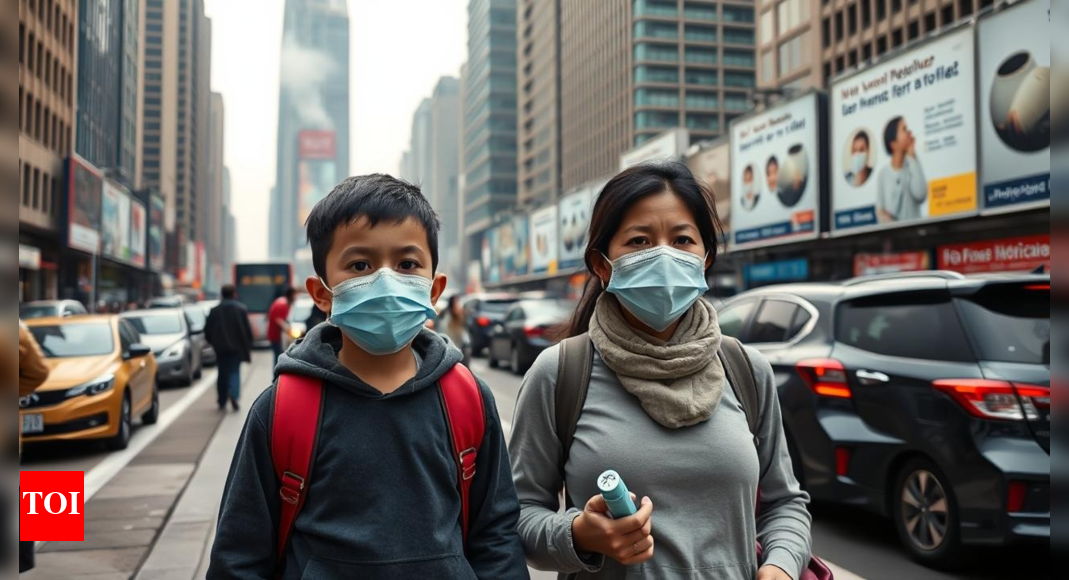
Scientists looked at how living in cities affects asthma.
They found that breathing dirty air, not having parks nearby, and living around lots of concrete and roads can make it more likely for kids and adults to get asthma.
Adults who live in areas with more pollution have a higher risk.
Also, kids who don't have parks near their home are more at risk.
The study looked at people from all ages, linking asthma to factors in their home environment.
This means that if cities try to make their air cleaner and have more green spaces, they can help to keep people from getting asthma and improve their health.

Study reveals joint impact of urban environmental factors on asthma risk.
Air pollution, lack of green spaces, and concrete/asphalt areas increase asthma risk.
Adults in high pollution areas have a 13% greater asthma risk; children, 18%.
Lack of green space raises asthma risk: 15% for adults, 38% for children.
Combined exposure to pollution, lack of green space, and concrete/asphalt can increase asthma risk by up to 35%.
- Who
- Researchers analyzed data from 349,037 participants in Europe.
- What
- Research on the impact of urban environments on asthma risk.
- When
- Study conducted across the lifespan of participants.
- Where
- Study focused on urban environments in Europe.
- Why
- To understand how multiple environmental factors in cities increase asthma risk.
- Participants
- 349,037
- Cohorts Studied
- 14
- Study Location
- Europe
- Key Factors Studied
- Air Pollution, Green Space, Built Environment
- Increased Asthma Risk
- Up to 35%