

Archive · 19 Jul 2026
Gold Prices Fall Amid West Asia Conflict
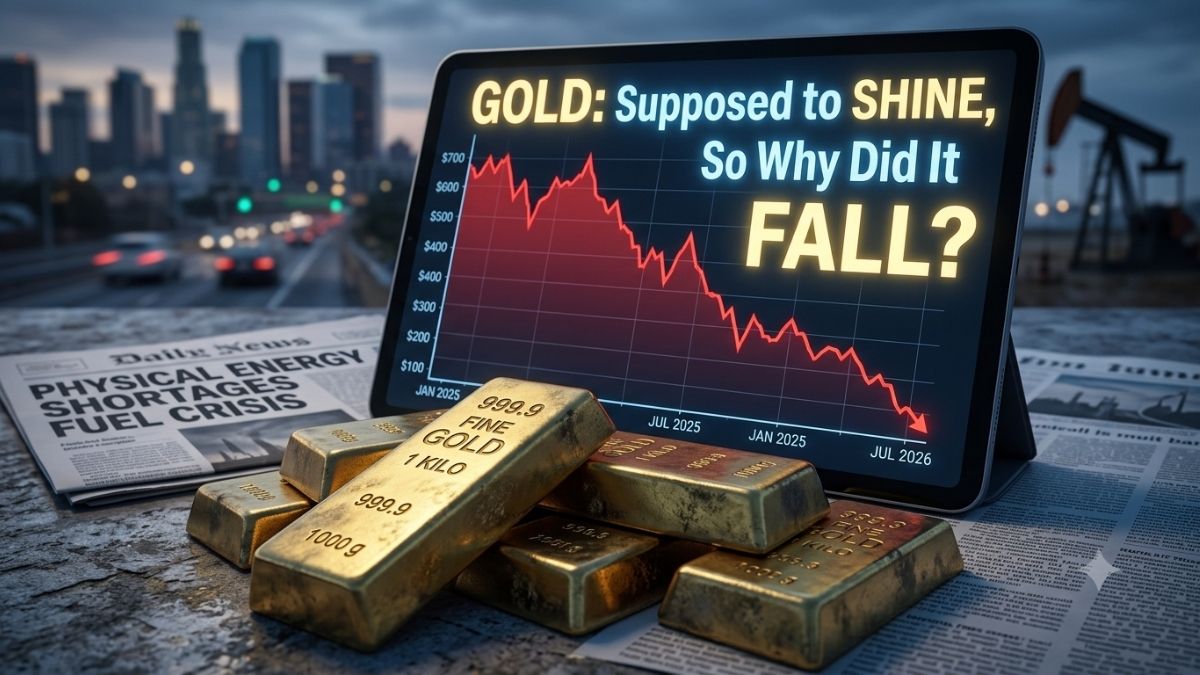
Gold and silver prices have fallen significantly despite the West Asia conflict.
Normally, gold is seen as a safe investment during crises because it protects against inflation.
However, the current crisis is different.
It's caused by shortages of essential commodities like oil and gas, not by financial market problems.
When energy prices go up, people spend more on energy and less on non-essential items like gold.
This has led to a big drop in gold imports and prices.
The situation could change if the economic crisis leads to inflation, but for now, gold prices remain low.

Gold prices declined by 27% and silver by 52% during the West Asia conflict.
Precious metals typically hedge against financial market crises and inflation.
Current crisis stems from physical shortages of essential commodities like oil and gas.
High energy costs reduce economic activity and investment in non-essential commodities like gold.
Gold imports have halved due to increased energy costs and higher taxes on gold imports.
- Who
- Investors and economists
- What
- Decline in gold and silver prices despite the West Asia conflict
- When
- Over the course of the West Asia conflict, with significant changes in April and June 2026
- Where
- Global markets, with a focus on Asia
- Why
- Gold and silver are not hedges against physical commodity shortages, which are the current economic crisis type
Gold as Inflation Hedge
Gold as Non-Essential Commodity
Role in Economic Crises
Gold as Inflation Hedge
Gold is a hedge against financial market crises and inflation, protecting investors from currency depreciation.
Gold as Non-Essential Commodity
Gold is not an essential commodity and demand decreases when energy prices rise, reducing economic activity and investment in non-essentials.
- Gold Price Decline
- 27%
- Silver Price Decline
- 52%
- Oil Price Peak
- $135
- Gold Imports Decline
- 50%
- Energy Import Spending Increase
- Significant
- Government Taxes on Gold Imports
- Increased