

Archive · 30 Aug 2026
India and Uzbekistan Elevate Strategic Partnership During Modi Visit
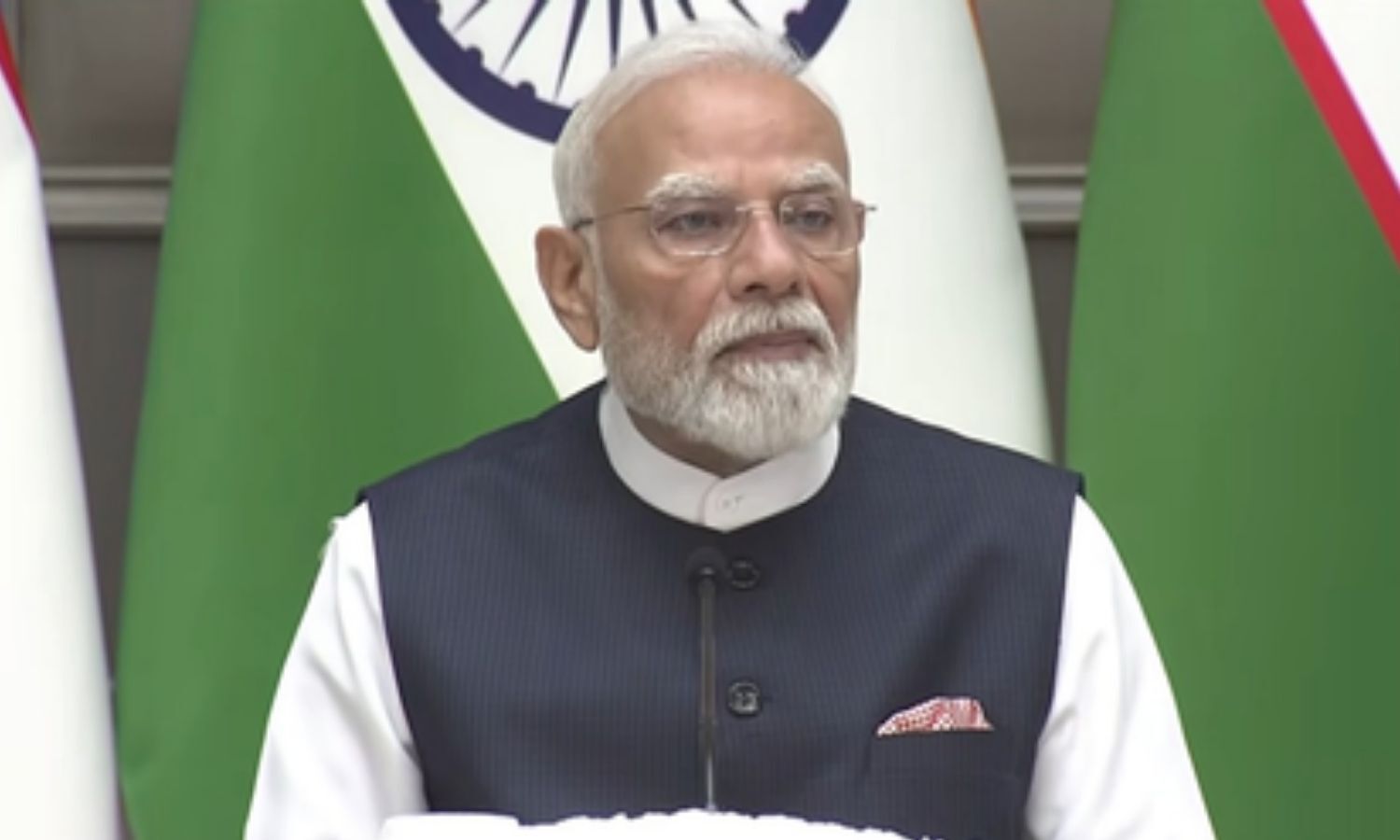
India and Uzbekistan are strengthening their friendship.
Prime Minister Narendra Modi met Uzbekistan’s President Shavkat Mirziyoyev in Tashkent.
Modi said Uzbekistan is very important to India’s work with Central Asia.
The countries want to cooperate more closely on defense and security.
They also oppose terrorism, extremism, and separatism.
Their trade is already worth more than $1 billion.
They want to increase trade to $5 billion by 2030.
India and Uzbekistan will also work together in areas such as medicine, education, tourism, and culture.

Prime Minister Narendra Modi said Uzbekistan is central to India’s engagement with Central Asia.
India and Uzbekistan agreed to elevate their relationship to a Comprehensive Strategic Partnership in 2026.
The countries plan greater defense-industry cooperation, including direct links, co-production, and co-development.
Bilateral trade has exceeded $1 billion, with a goal of reaching $5 billion by 2030.
The two sides agreed to expand cooperation in traditional medicine, connectivity, banking, education, tourism, and culture.
- Who
- Prime Minister Narendra Modi and Uzbekistan President Shavkat Mirziyoyev led the discussions.
- What
- India and Uzbekistan agreed to deepen cooperation and elevate their relationship to a Comprehensive Strategic Partnership.
- When
- The talks and joint press meeting took place on Sunday; 2026 will mark the 15th anniversary of the strategic partnership.
- Where
- Tashkent, Uzbekistan.
- Why
- The countries aim to strengthen strategic, security, economic, and people-to-people ties, including through increased trade and regional cooperation.
- Bilateral trade
- Trade between India and Uzbekistan has crossed $1 billion.
- Trade target
- The two countries aim to reach $5 billion in bilateral trade by 2030.
- Partnership status
- India and Uzbekistan decided to elevate ties to a Comprehensive Strategic Partnership.
- Strategic anniversary
- 2026 marks the 15th anniversary of the countries’ strategic partnership.
- Defense cooperation
- The countries plan direct linkages, co-production, and co-development between their defense industries.
- Shared security position
- Both countries expressed zero tolerance toward terrorism, extremism, and separatism.
- Other cooperation
- Planned cooperation includes traditional medicine, connectivity, banking, payments, education, tourism, culture, and city and state partnerships.