

Archive · 17 Nov 2025
Shimla Ropeway Project Clears Key Hurdle, 820 Trees to be Felled
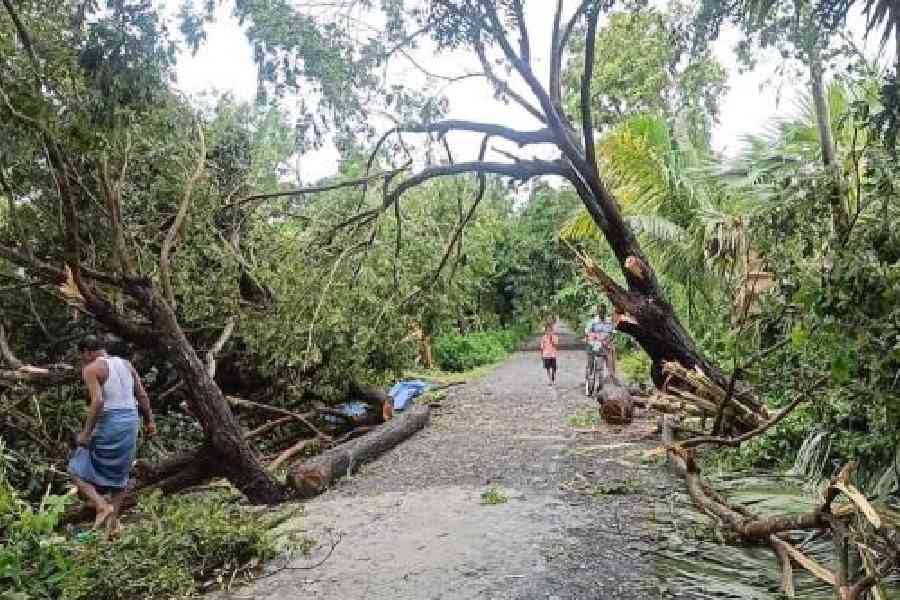
Imagine Shimla, a city on a hill, with lots of cars causing traffic jams.
To help people get around better, a plan was made to build a super long ropeway, like a ski lift but for the whole city!
This ropeway needs to be built on some forest land, which means about 820 trees will have to be cut down.
But, because trees are important, the rules say that for every tree cut, more new trees must be planted somewhere else.
So, the company building the ropeway has promised to plant over 4,000 new trees, mostly the same kind as those cut down, in a different forest area far away.
They will pay for all of this, which costs a lot of money.
This ropeway will have many stations and will make it much easier for people to travel across the city without using cars.

Approximately 820 trees are slated for felling across 6.1990 hectares of forest land for Shimla's Rapid Ropeway Transport System.
The Rs. 1,743.40 crore project received Stage-I forest clearance from the Ministry of Environment, Forest and Climate Change (MoEFCC).
Compensatory afforestation requires RTDC to plant nearly 4,125 saplings, at least double the diverted area, in Luhri, Kullu district.
The estimated cost for compensatory afforestation and maintenance, borne by RTDC, is between Rs. 19 crore and Rs. 21 crore.
The ropeway aims to alleviate Shimla's traffic and parking issues with a 13.79 km stretch and 13 stations.
- Who
- Ropeway and Rapid Transport System Development Corporation (RTDC), Ministry of Environment, Forest and Climate Change (MoEFCC), State Forest Department officials
- What
- The Shimla ropeway project has received Stage-I forest clearance, allowing for the felling of approximately 820 trees to construct the transport system, with mandatory compensatory afforestation required.
- When
- Stage-I forest clearance received; Stage-II clearance and final approval are pending.
- Where
- Shimla, Himachal Pradesh (forest land diverted across various city pockets and rural areas), with compensatory afforestation in Luhri, Kullu district.
- Why
- To ease Shimla's traffic and parking congestion by providing an efficient urban mobility solution.
Environmental Concerns & Regulations
Project Development & Mobility Needs
Tree Felling
Environmental Concerns & Regulations
Approximately 820 trees, including deodars, oaks, and pines, are marked for felling for the ropeway project, raising concerns about loss of forest cover.
Project Development & Mobility Needs
The project requires felling of trees to make way for steel towers and concrete stations essential for the ropeway's construction.
Compensatory Afforestation
Environmental Concerns & Regulations
Mandatory compensatory afforestation requires planting nearly 4,125 saplings, twice the area diverted, at a distant location (Luhri, Kullu district) due to lack of suitable land in Shimla.
Project Development & Mobility Needs
The Ropeway and Rapid Transport System Development Corporation (RTDC) has agreed to plant saplings and bear all associated costs, estimated between Rs. 19 crore and Rs. 21 crore, including maintenance.
Land Diversion
Environmental Concerns & Regulations
Over 6.1990 hectares of forest land is being diverted, with nearly 85 percent of this diversion occurring within city limits.
Project Development & Mobility Needs
Stage-I forest clearance has been received, allowing the state forest department to proceed with Stage-II land transfer, enabling project construction.
- Project Name
- Rapid Ropeway Transport System
- Project Cost
- Rs. 1,743.40 crore
- Total Trees to be Felled
- Approximately 820
- Forest Land Diversion Area
- 6.1990 hectares
- Compensatory Afforestation
- Planting 4,125 saplings (mostly deodar) across 12 hectares in Luhri, Kullu district
- Compensatory Afforestation Cost
- Rs. 19 crore to Rs. 21 crore (borne by RTDC)
- Ropeway Length
- 13.79 km
- Number of Stations
- 13
