

Archive · 9 Nov 2025
German Government Bans Islamic Groups for Spreading Radicalism Online
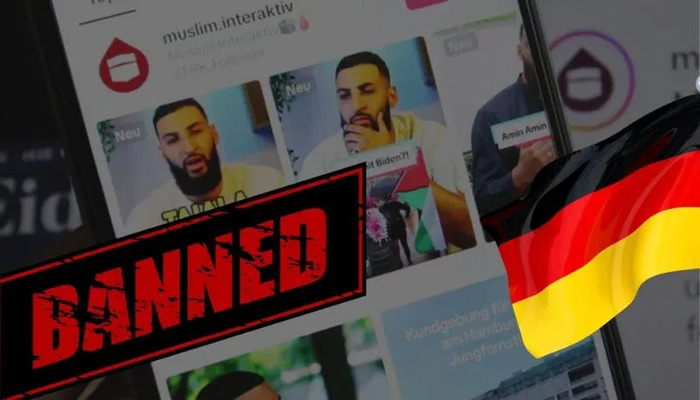
Imagine some groups in Germany are trying to tell young people that their religion wants them to have a ruler called a Caliph, instead of the government they have now.
These groups are using popular apps like TikTok to share their ideas through fun videos, but the government says these ideas are dangerous and go against Germany's laws.
So, the government has banned two of these groups, the Islamic Centre Hamburg (IZH) and Muslim Interactive, because they believe these groups are trying to spread radical thoughts and want to change the country's system of government.
This is part of Germany's effort to stop extremists from influencing people, especially young ones, and to protect their democratic way of life.
The government wants to make sure people practice their religion freely but also follow the country's rules and laws.

The German government has banned the Islamic Centre Hamburg (IZH) and Muslim Interactive for promoting Islamic radicalism and unconstitutional activities.
These groups are accused of using social media platforms like TikTok to spread radical ideas and call for a caliphate among young people, termed 'Modern TikTok Islamism'.
Actions taken include banning the groups, closing affiliated mosques, and confiscating assets.
The government states the ban aims to protect democracy and is not against the religious rights of Shia Muslims, but against extremists.
Germany has a history of banning radical Islamic organizations that threaten its society and democratic system.
- Who
- The German government
- What
- Banned two Islamic groups, Islamic Centre Hamburg (IZH) and Muslim Interactive, for spreading radicalism and engaging in unconstitutional activities.
- When
- Recent action taken, with reference to a police raid in November of the previous year and earlier bans dating back to 2003.
- Where
- Germany
- Why
- To safeguard democracy, combat Islamic radical activities, and prevent the spread of extremist ideologies, particularly among young people through social media platforms like TikTok.
German Government Stance
Concerns and Nuances
Purpose of the Ban
German Government Stance
The ban is a necessary measure to safeguard Germany's democracy, combat Islamic radical activities, and prevent the promotion of extremism, terrorism, hatred, and the establishment of Islamic rule.
Concerns and Nuances
The German government clarified that this action is not directed against the religious rights of Shia Muslims, but against Islamic extremists who misuse religion for political and radical purposes.
Target Audience and Methods
German Government Stance
Groups are using social media platforms like TikTok to spread radical ideas, call for a caliphate, and influence young people, a strategy described as 'Modern TikTok Islamism'.
Concerns and Nuances
These methods are particularly effective among teenagers and students who spend significant time on social media, with fast, catchy, and emotional videos convincing them that Western democracy is against their religion.
- Banned Organizations
- Islamic Centre Hamburg (IZH) and Muslim Interactive
- Accusations Against IZH
- Supporting Iran and Hezbollah, opposing democracy and human rights, aiming to establish Islamic rule in Germany, and spreading radical ideology among youth via social media.
- Related Groups
- Generation Islam and Reality Islam (under monitoring)
- Previous Bans
- Hizbut Tahrir (HuT) in 2003, Hezbollah in 2020, Hamas-backed Samedon-Palestinian Solidarity Network in 2023
- Methods of Radicalization
- Use of social media platforms like TikTok, Instagram, and YouTube to create influential videos targeting young people.
- Government Response
- Banning groups, closing mosques, confiscating assets, monitoring activities, conducting raids, and launching awareness campaigns.