

Archive · 22 Aug 2026
Panvel’s Airport-Led Realty Boom Adds 42,330 Homes, Outpacing Navi Mumbai
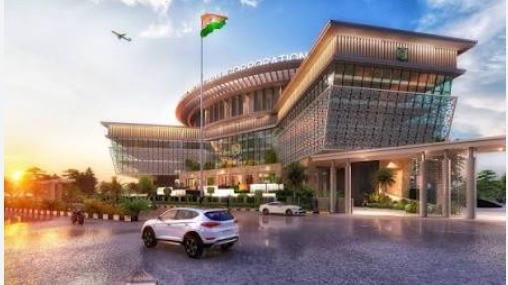
Panvel is getting many more new homes than before.
A total of 42,330 homes were added to its market.
Most of the homes are smaller one-bedroom or two-bedroom apartments.
This makes them more affordable for many buyers.
New roads, rail links and the Navi Mumbai International Airport are helping connect Panvel to nearby cities.
The airport may also create jobs in areas such as transport, hotels and shopping.
Home prices in Panvel have risen faster than in Navi Mumbai since 2021.
However, the area still needs infrastructure and jobs to grow as quickly as its housing supply.

Panvel added 42,330 homes as residential supply expanded sharply during the review period.
Panvel’s share of Navi Mumbai’s residential supply rose from 28% in 2021 to 46% in 2024, then eased to 42% in 2025.
One-bedroom and two-bedroom homes made up 85% of launches between 2021 and H1 2026.
Panvel’s residential price index reached 176 in H1 2026, compared with 164 for Navi Mumbai.
Infrastructure projects and employment prospects are supporting growth, but delays, costs and affordability remain concerns.
- Who
- Panvel’s residential developers, homebuyers and infrastructure agencies are involved.
- What
- Panvel added 42,330 homes and is experiencing an airport-linked residential realty boom.
- When
- The figures cover 2021 through H1 2026, with price data reported for H1 2026.
- Where
- Panvel, within the wider Navi Mumbai region of Maharashtra, India.
- Why
- Improved connectivity and expected employment from the Navi Mumbai International Airport and related developments are supporting housing demand.
Growth outlook
Risks and constraints
Housing demand
Growth outlook
The airport, improved connectivity and planned commercial and logistics developments could increase employment and housing demand.
Risks and constraints
Demand may not grow as expected if employment generation, infrastructure delivery or approvals are delayed.
Affordability
Growth outlook
One-bedroom and two-bedroom homes make up 85% of launches, and their ticket sizes indicate a relatively accessible market.
Risks and constraints
Rising land and construction costs could put pressure on affordability despite the focus on smaller homes.
Development pipeline
Growth outlook
The fact that 91% of available inventory was under construction suggests developers remain confident about future demand.
Risks and constraints
The large pipeline could create challenges if infrastructure and employment growth do not keep pace with new housing.
- New homes
- 42,330 homes entered the Panvel market.
- Supply share
- Panvel’s share of Navi Mumbai’s residential supply increased from 28% in 2021 to 46% in 2024, then stood at 42% in 2025.
- Popular configurations
- One-bedroom homes accounted for 43% and two-bedroom homes for 42% of launches between 2021 and H1 2026.
- Typical prices
- Indicative prices ranged from ₹52–82 lakh for 1 BHK homes, ₹82 lakh–₹1.12 crore for 2 BHK homes, and ₹1.12–₹1.56 crore for 3 BHK homes.
- Price index
- Panvel’s residential price index reached 176 in H1 2026, against 164 for Navi Mumbai, with 2021 set at 100.
- Inventory status
- As of H1 2026, 91% of Panvel’s available residential inventory was under construction and 9% was ready to move in.
- Key infrastructure
- Projects cited include Navi Mumbai International Airport, Atal Setu, the Mumbai–Pune Expressway, Sion–Panvel Highway, Panvel–Karjat rail corridor and emerging metro connectivity.