

Archive · 16 Aug 2025
ISRO-NASA NISAR Satellite Deploys Antenna in Space
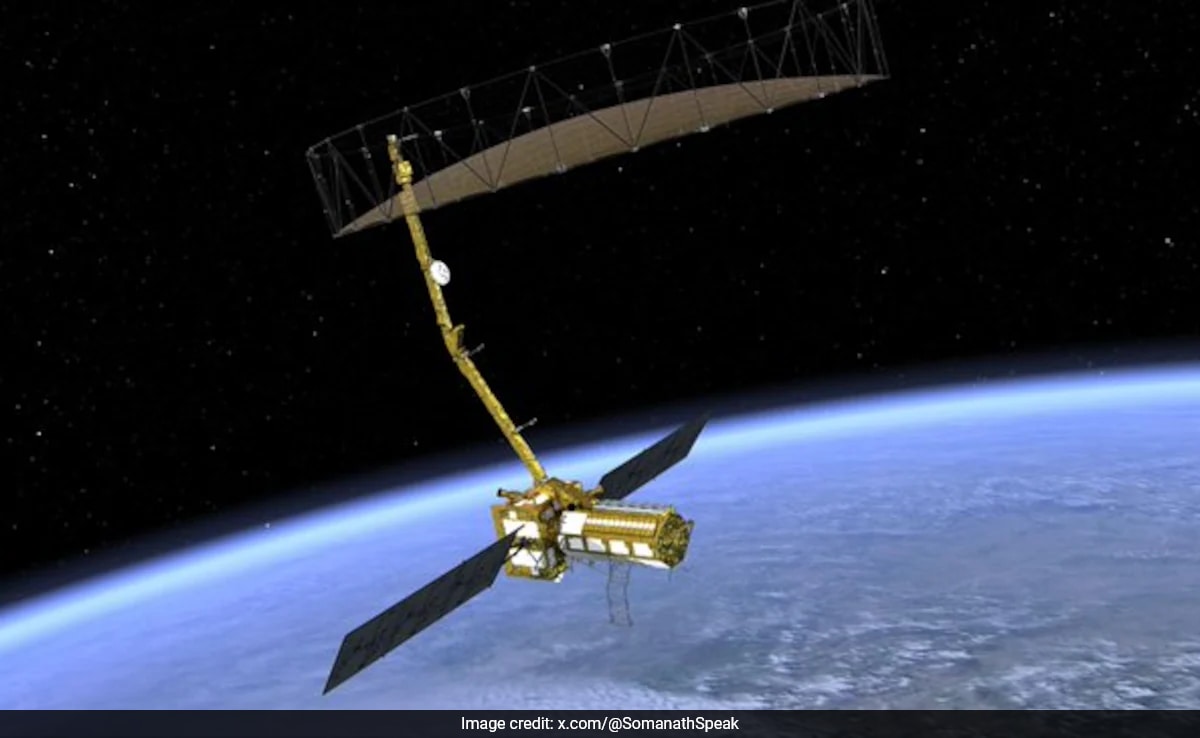
Imagine a giant eye in space, called NISAR, built by India and the US.
This eye has a huge antenna and will watch Earth very closely.
It's like having a super-powered camera that can see tiny changes on the ground, even through clouds!
Launched in July, it cost a lot of money.
Scientists will use it to study things like melting ice and help predict natural disasters.
The data will be available in a few months, helping us understand and protect our planet.

NISAR, a joint mission by ISRO and NASA, successfully deployed its 39-foot antenna reflector.
Launched on July 30, NISAR is the most expensive Earth observation satellite, costing $1.3 billion.
The satellite will track changes in Earth's solid, liquid, and frozen landforms.
NISAR is equipped with dual radar systems for all-weather imaging.
Data from NISAR is expected to be available in mid-October.
- Who
- A collaboration between the Indian Space Research Organisation (ISRO) and NASA.
- What
- NISAR, a joint ISRO-NASA satellite, deployed its antenna.
- When
- The antenna deployed on August 15, and data expected by mid-October, after launch on July 30.
- Where
- In orbit, with global data applications.
- Why
- To monitor changes on Earth, including ice sheets, glaciers, and natural disasters.
- Mission Name
- NISAR (NASA-ISRO Synthetic Aperture Radar)
- Cost
- $1.3 billion
- Launch Date
- July 30
- Antenna Diameter
- 39 feet
- Partners
- NASA and ISRO
- Primary Goal
- Track Earth surface changes
- Data Availability
- Mid-October
