Archive · 24 Sep 2026
Supreme Court Split Over CEC Appointment Larger Bench
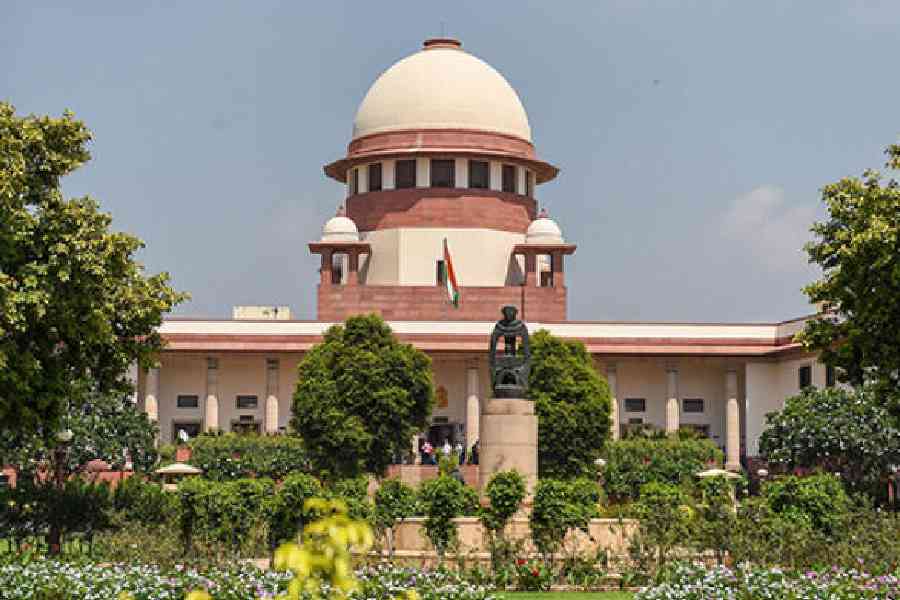
India’s Supreme Court considered a challenge to a law about choosing top election officials.
The law removed the Chief Justice of India from the selection group.
It replaced the Chief Justice with a Union Cabinet minister chosen by the Prime Minister.
Two judges heard the case for five days but disagreed about whether a larger group of judges should decide it.
Justice Dipankar Datta said an immediate referral was not necessary.
Justice Satish Chandra Sharma said the law raised important constitutional questions.
Both judges agreed that Chief Justice Surya Kant should arrange the next bench administratively.
Justice Datta said the Election Commission must be independent and must also look independent to the public.

Justices Dipankar Datta and Satish Chandra Sharma differed on referring challenges to the 2023 election appointments law to a five-judge Constitution Bench.
Justice Datta rejected the Centre’s request, while Justice Sharma said the law raised substantial constitutional questions requiring a larger bench.
Both judges sent the matter administratively to Chief Justice Surya Kant to decide the appropriate bench and consider a permanent Constitution Bench.
The challenged law replaced the Chief Justice of India with a Union Cabinet minister nominated by the Prime Minister on the selection panel.
Justice Datta said the Election Commission must be independent and also appear independent, while the commission said its decisions over the past year were unanimous.
- Who
- Justices Dipankar Datta and Satish Chandra Sharma considered petitions challenging the appointment law; Chief Justice Surya Kant will decide the next bench administratively.
- What
- The Supreme Court issued a split opinion on whether challenges to the 2023 law should go to a larger Constitution Bench.
- When
- The judges issued their opinions on Wednesday after hearing the matter for five days; the challenged law was enacted in 2023.
- Where
- The matter was heard by the Supreme Court of India.
- Why
- The petitions challenge the exclusion of the Chief Justice of India from the panel selecting the Chief Election Commissioner and Election Commissioners.
Refer to a Larger Constitution Bench
Do Not Refer Immediately
Need for a larger bench
Refer to a Larger Constitution Bench
Justice Sharma held that the 2023 law raised substantial constitutional questions and had to be considered by a Constitution Bench of at least five judges.
Do Not Refer Immediately
Justice Datta rejected the Centre’s submission that the petitions required immediate referral to a five-judge bench.
Selection panel independence
Refer to a Larger Constitution Bench
The challengers argued that replacing the Chief Justice with a minister nominated by the Prime Minister gives the executive an effective advantage and lacks an independent counterweight.
Do Not Refer Immediately
The 2023 law provides for a panel including the Prime Minister, the opposition leader, and a nominated Union Cabinet minister; the law’s ultimate validity remains to be decided.
Election Commission impartiality
Refer to a Larger Constitution Bench
Justice Datta said free and fair elections require the Election Commission to be independent and to be seen as independent, questioning whether the minister could act independently of the Prime Minister.
Do Not Refer Immediately
The Election Commission said its decisions during the previous year were unanimous and that differing views and observations are a normal part of institutional deliberation.
- Challenged law
- The Chief Election Commissioner and Other Election Commissioners (Appointment, Conditions of Service and Term of Office) Act, 2023.
- Current selection panel
- The Prime Minister, the Leader of the Opposition in the Lok Sabha, and a Union Cabinet minister nominated by the Prime Minister.
- Justice Datta’s position
- He rejected the Centre’s request for referral and emphasized that the Election Commission must be independent and perceived as independent.
- Justice Sharma’s position
- He said the law raised substantial constitutional questions and should be heard by a Constitution Bench of at least five judges.
- Next step
- Both judges agreed to place the matter before Chief Justice Surya Kant for an administrative decision on bench composition.
- Earlier ruling
- On March 2, 2023, a five-judge Constitution Bench prescribed a panel consisting of the Prime Minister, the opposition leader, and the Chief Justice of India until Parliament enacted a law.
- Election Commission statement
- The commission said all decisions taken during the previous year were unanimous and that differing views are normal in institutional deliberations.