

Archive · 6 Aug 2026
Stranded Strait of Hormuz ships risk invasive species 'biological apocalypse'
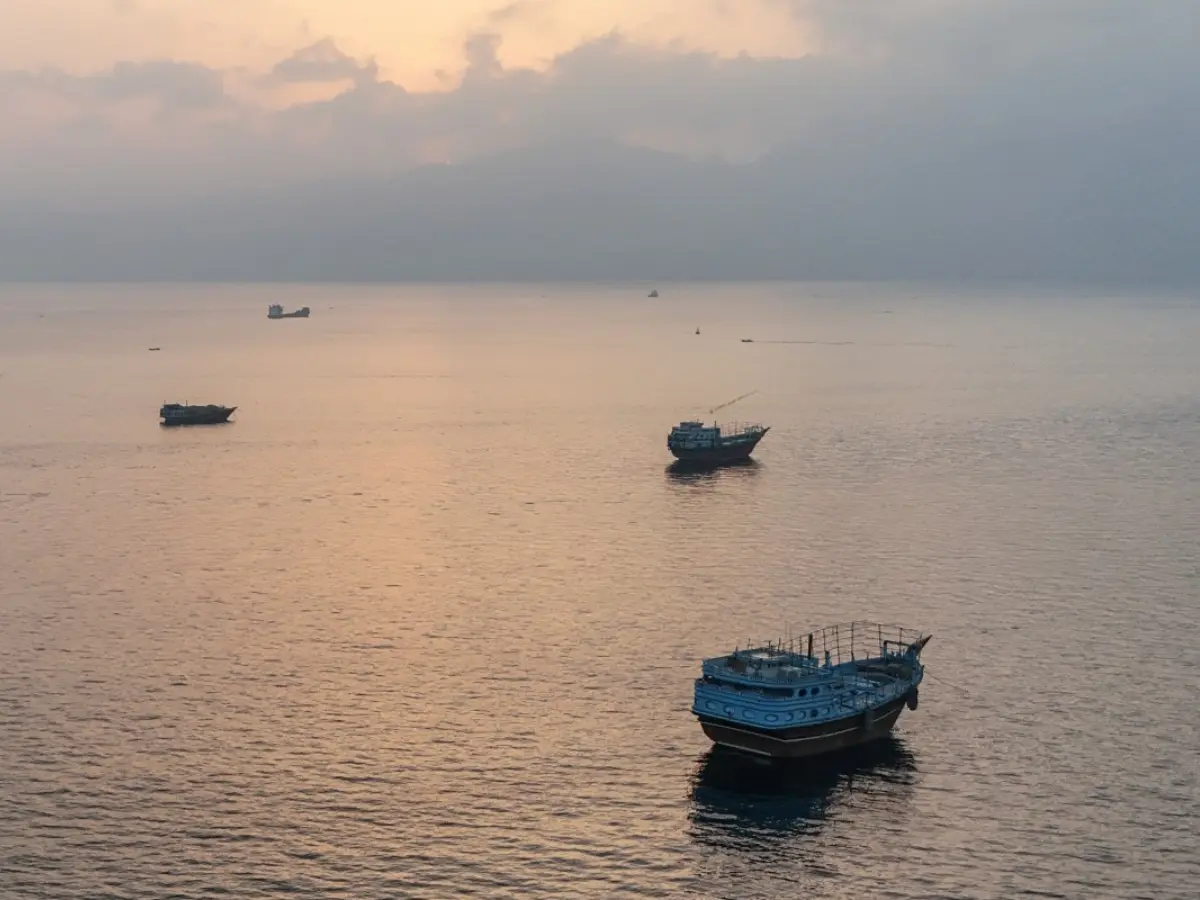
Many big ships got stuck in a narrow ocean passage called the Strait of Hormuz.
They stayed there for a very long time, much longer than usual.
While the ships waited, tiny sea animals like barnacles and mussels started growing on the bottoms of the ships.
Normally, ships move too often for these creatures to settle.
But because the ships sat still in warm water, the animals had plenty of time to attach themselves.
When the ships finally sail away, these tiny passengers will travel to new oceans.
In those new places, the creatures may take over and hurt the fish and animals that already live there.
Some of them might even spread diseases.
Scientists studied this problem and published a warning in a science journal.

More than 1,500 ships were left stranded in the Strait of Hormuz after the crucial oil waterway was closed.
Stagnant waters around the idle ships may create a major biofouling problem as organisms cling to vessel hulls.
A study led by the University of Maryland Center for Environmental Science warns the ships could spread invasive species.
Ships in the Gulf region remained idle for at least 40 times longer than their average stay, according to the study.
Researchers warn invasive organisms could colonize new regions, kill native species and possibly even reach humans.
- Who
- Researchers led by the University of Maryland Center for Environmental Science (UMCES).
- What
- A study warns that biofouling on more than 1,500 stranded ships could spread invasive marine species and trigger an ecological disaster.
- When
- The ships were stranded during the spring and summer months; the study was published in the journal Biological Invasions.
- Where
- The Strait of Hormuz and the Persian Gulf region.
- Why
- Prolonged idling in warm waters allowed organisms to breed and attach to ship hulls, so they could spread when the ships depart.
Study: Gulf organisms can spread across oceans
Skeptical view: organisms may not survive long voyages
Can biofouling organisms survive ocean crossings?
Study: Gulf organisms can spread across oceans
The study states that Persian Gulf organisms have evolved to tolerate industrial and urban stresses and surface temperatures above 38°C, allowing them to cross oceans and colonize new seas.
Skeptical view: organisms may not survive long voyages
One counterargument is that organisms living in hypersaline shallow waters could not survive long journeys or the warmer ocean waters found elsewhere.
- Stranded ships
- More than 1,500
- Location
- Strait of Hormuz, Persian Gulf
- Lead research team
- University of Maryland Center for Environmental Science (UMCES)
- Journal
- Biological Invasions
- Idle time
- At least 40 times longer than an average stay
- Time to colonize ship hulls
- About 10 days
- Organisms involved
- Algae, microbes, barnacles, mussels and other invertebrates
- Heat tolerance
- Surface temperatures over 38°C