

Archive · 12 Nov 2025
Pakistan's 27th Amendment Consolidates Military Power Under Army Chief
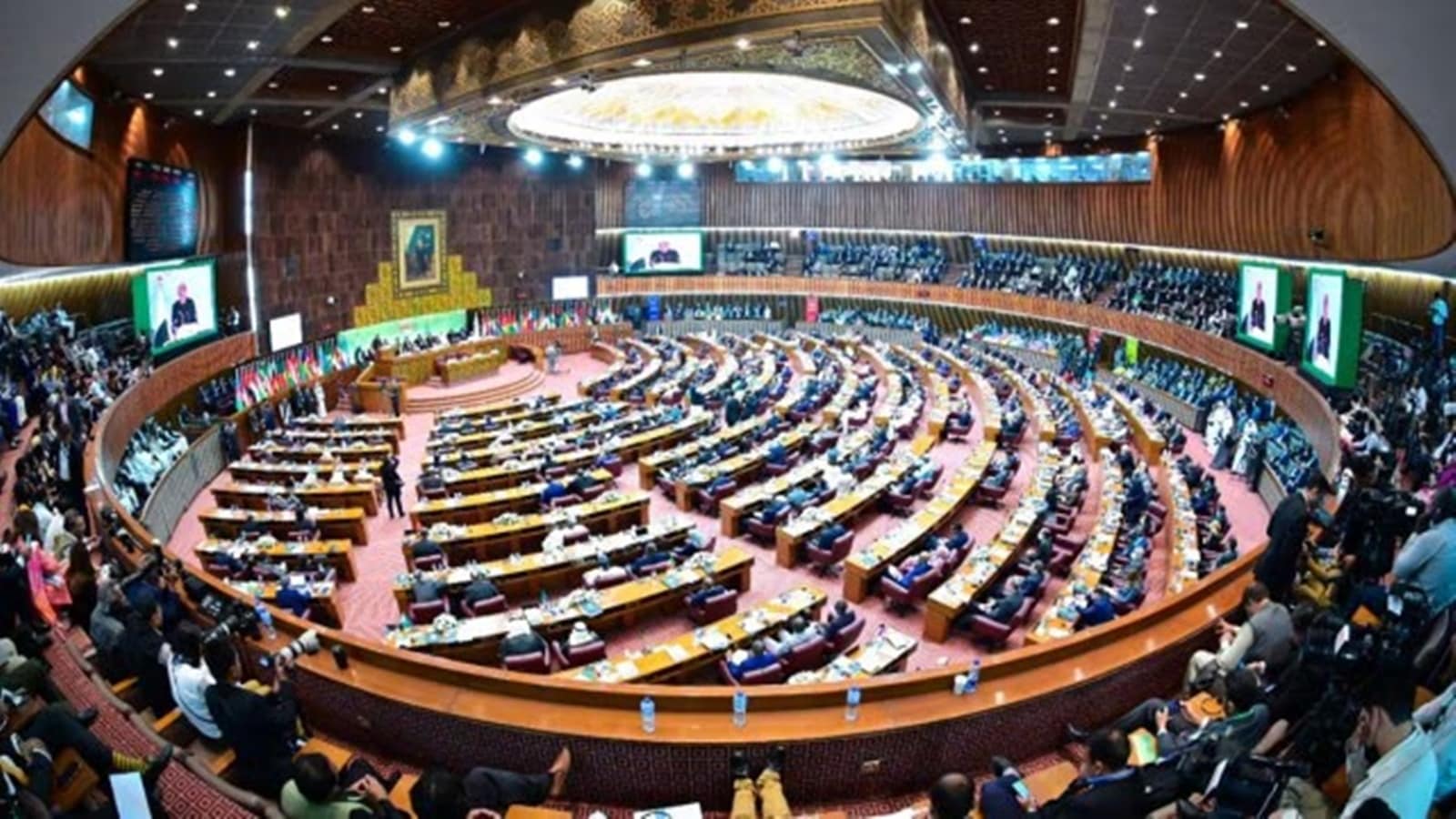
Pakistan is changing its rules, called the constitution, with a new amendment.
This new law creates a very important job called Chief of Defence Forces.
This person will be the main boss of all the military branches: the army, navy, and air force.
It's expected that the current Army Chief, Asim Munir, will get this job and stay in it for five years, which is longer than usual.
This new boss will also be in charge of the country's nuclear weapons.
Some people are worried that this gives too much power to one person and takes it away from the civilian government.
They also think this might give the army chief special protection from being sued for a long time, like a shield.
The government says these changes are needed because the military's job is changing.
There are also worries that this could make relationships with other countries, like India, China, and Iran, more difficult, especially concerning nuclear weapons and resources in areas like Balochistan.

Pakistan's 27th Constitutional Amendment Bill will create the powerful office of Chief of Defence Forces (CDF), consolidating command of the army, navy, and air force.
The amendment is expected to extend the tenure of the current Army Chief, Asim Munir, to five years and grant him lifelong immunity.
The nuclear command authority and strategic command authority will be brought under the purview of the CDF.
Critics argue the bill centralizes power, bypasses democratic processes, marginalizes civilian government, and may grant undue immunity to the army chief.
Concerns are raised about increased regional tensions and potential international ramifications, particularly regarding Pakistan's nuclear capabilities and resources in Balochistan.
- Who
- Pakistan's parliament, Army Chief Asim Munir, Prime Minister Shehbaz Sharif, and potentially the Pakistan People's Party (PPP).
- What
- The Senate is poised to approve the 27th Constitutional Amendment Bill, creating the office of Chief of Defence Forces (CDF) to consolidate military command under the Army Chief, along with changes to tenure and strategic command authority.
- When
- The bill is expected to be approved swiftly by the Senate and National Assembly, with the current Chairman Joint Chiefs of Staff Committee retiring on the 27th of the month.
- Where
- Pakistan
- Why
- To consolidate military command, extend the tenure of the Army Chief, potentially grant lifelong immunity, and respond to perceived evolved defense requirements, amid political maneuvering and concerns about future leadership.
Critics and Concerns
Government and Proponent Views
Centralization of Power and Immunity
Critics and Concerns
Critics argue the amendment centralizes power in Army Chief Asim Munir, creating the Chief of Defence Forces (CDF) role and extending his tenure, potentially granting him lifelong immunity. Lawmakers accuse the government of bypassing democratic processes and suggest the move is to protect Munir from potential future legal actions, reminiscent of past military dictatorships. There's a fear this benefits an individual rather than the defense structure.
Government and Proponent Views
The amendment is presented as a response to evolved 'defense requirements' and was allegedly developed through 'mutual consultation' with the military. The Law Minister stated the Army Chief would be given constitutional protection as 'the hero of the entire nation,' linking it to his perceived role following a conflict with India.
Military Control Over Strategic Assets
Critics and Concerns
The amendment brings the nuclear command authority and strategic command authority under the purview of the Chief of Defence Forces, effectively placing all strategic and nuclear decision-making under the army's command. This concentrates power in one person and could lead to a circumscribed, blinkered view of domestic and foreign issues, potentially exacerbating regional tensions.
Government and Proponent Views
The government states the changes are due to evolved 'defense requirements,' implying a strategic rationale for unifying command structures. The Defence Minister mentioned 'mutual consultation' with the military as a basis for the changes.
Judicial Independence and Power Hierarchy
Critics and Concerns
The amendment abolishes the Chairman Joint Chiefs of Staff Committee and creates a new Chief of Defence Forces. Critics believe this consolidates power within the army, further marginalizing the civilian government and diminishing democratic oversight. They argue that Prime Minister Shehbaz Sharif's position is dependent on the army's support, and the election results were manipulated.
Government and Proponent Views
The government claims sufficient parliamentary numbers for approval, suggesting confidence in the democratic process. The article mentions the Pakistan People's Party (PPP) had a bargain related to the inclusion of the President, implying a political negotiation rather than unilateral military action.
International Perceptions and Relations
Critics and Concerns
Israel reportedly does not want Pakistan to retain nuclear weapons. There is speculation that the US, under the Trump administration, might seek access to or control over Pakistan's nuclear assets. Concerns are also raised that US access to critical minerals in Balochistan, near the Iranian border, would be viewed negatively by Iran and China.
Government and Proponent Views
The article does not provide a specific government stance on these international relations aspects, beyond general statements about evolved defense needs. However, China has reacted by implementing export control orders on machinery used for mineral exports from Pakistan, indicating displeasure with regional developments.
- Bill Name
- 27th Constitutional Amendment Bill
- Proposed New Office
- Chief of Defence Forces (CDF)
- Consolidated Command
- Army, Navy, and Air Force under CDF
- Current Army Chief
- Field Marshal Asim Munir (expected to be CDF)
- Tenure Extension
- Likely 5 years for CDF (from current 3 years)
- Strategic Authority
- Nuclear command and strategic command brought under CDF
- Office Abolished
- Chairman Joint Chiefs of Staff Committee
- Key Benefit (Critics' View)
- Potential lifelong immunity for the CDF
Sources
Pakistan’s 27th amendment bill, which aims to bring sweeping changes in judicial & military structure, set to be tabled in National Assembly

Inside The 'Amendment' That May Make Asim Munir Pak's Supreme Authority

Munir takes all: Democracy, Sharif sidelined in Pakistan’s 27th amendment shock

Pakistan Puts Asim Munir's Army Above State: What It Means
