

Archive · 7 Oct 2026
Nuclear Power’s Tariff Rules Could Shape Private Investment
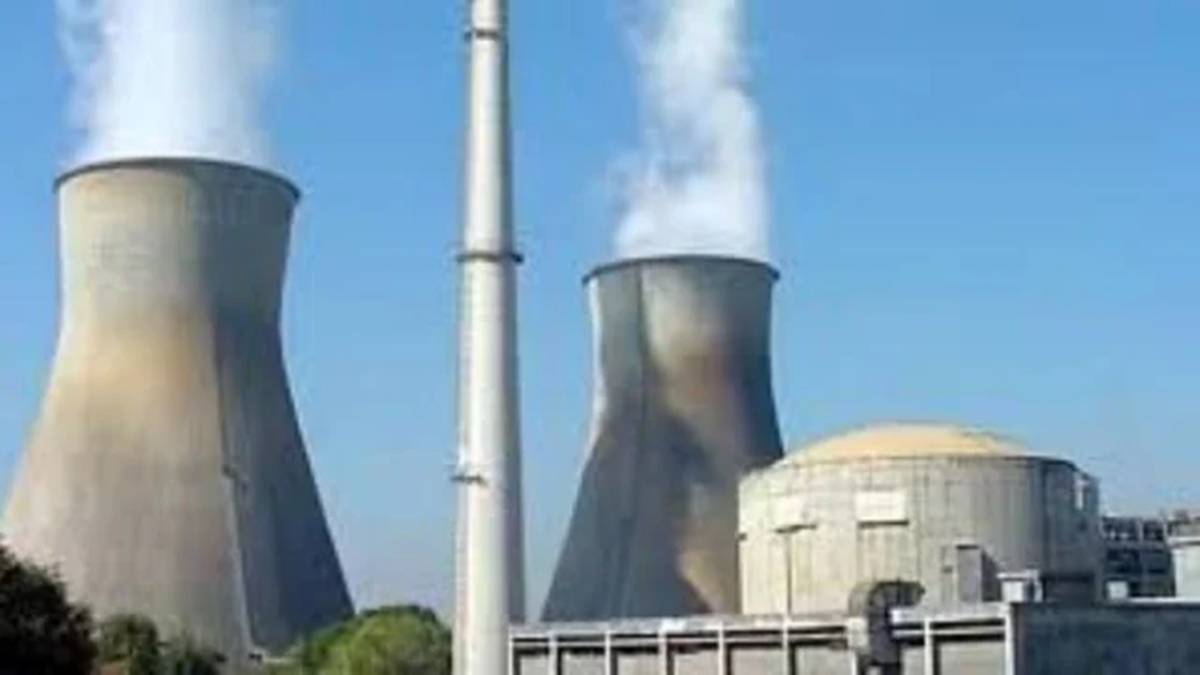
India has made draft rules for a law that could let private companies build nuclear power plants.
The rules explain some things, such as licensing and insurance for accidents.
But they do not yet explain how the price of nuclear electricity will be decided.
Nuclear plants cost a lot to build, but their running costs are relatively low.
That could help them get chosen to produce power when electricity is needed.
Still, buyers may prefer coal power if it costs less overall.
The article says clear rules about prices are important so companies will invest.
India has set a goal of reaching 100 gigawatts of nuclear power by 2047.

Draft rules under India’s SHANTI Act clarify licensing, accident-liability cover and eligibility for foreign reactor technology.
The rules do not explain how private nuclear generators’ tariffs will be set or how their power will be dispatched.
The article says nuclear plants have high capital costs but low variable costs, potentially making them competitive in merit-order dispatch.
Buyers may compare nuclear’s total generation cost with coal, which can be cheaper, and avoid signing power-purchase agreements.
The author argues tariff clarity is needed to support India’s target of 100 GW of nuclear capacity by 2047.
- Who
- Private companies considering nuclear generation in India, along with electricity buyers and regulators.
- What
- Draft rules clarify several parts of the SHANTI Act but leave nuclear power tariffs and dispatch arrangements unresolved.
- When
- The draft rules relate to the SHANTI Act, 2025; the capacity target is 100 GW by 2047.
- Where
- India.
- Why
- The article argues that tariff uncertainty could deter power-purchase agreements and private investment in nuclear plants.
Generator and investment concerns
Buyer and cost concerns
How tariffs should work
Generator and investment concerns
Generators need tariff rules that make it possible to recover high fixed construction costs; a two-part tariff separates fixed and variable costs.
Buyer and cost concerns
Buyers may focus on total generation cost and compare nuclear power with coal, which the article says can have a lower levelised cost.
How nuclear power should be dispatched
Generator and investment concerns
Generators would favor must-run status; the article says nuclear’s low variable cost could also place it early in merit-order dispatch, absent transmission bottlenecks.
Buyer and cost concerns
Buyers may be concerned about bearing fixed costs even when they do not need the plant’s power, particularly under a two-part tariff.
- Legislation
- Sustainable Harnessing and Advancement of Nuclear Energy for Transforming India (SHANTI) Act, 2025
- Capacity target
- 100 GW of nuclear capacity by 2047
- Licence
- A composite licence is to cover the project life cycle, including decommissioning.
- Accident-liability cover
- Operators must maintain insurance, financial security, or both; cover must last until spent fuel is removed and is reviewed every five years.
- Capital cost comparison
- The article estimates about Rs 15 crore per MW for a 700-MW nuclear reactor, compared with about Rs 9 crore per MW for coal.
- Plant lifespans
- The article gives 60 years for nuclear plants and 40 years for coal plants.
- Nuclear plant load factors
- The article says plants operated at 75%–87% PLF over the past 10 years; full capacity charge was raised to a 72.5% PLF for 700-MW units in 2022–23.