

Archive · 20 Jul 2026
X-ray scanner reveals secrets of ancient cuneiform letters
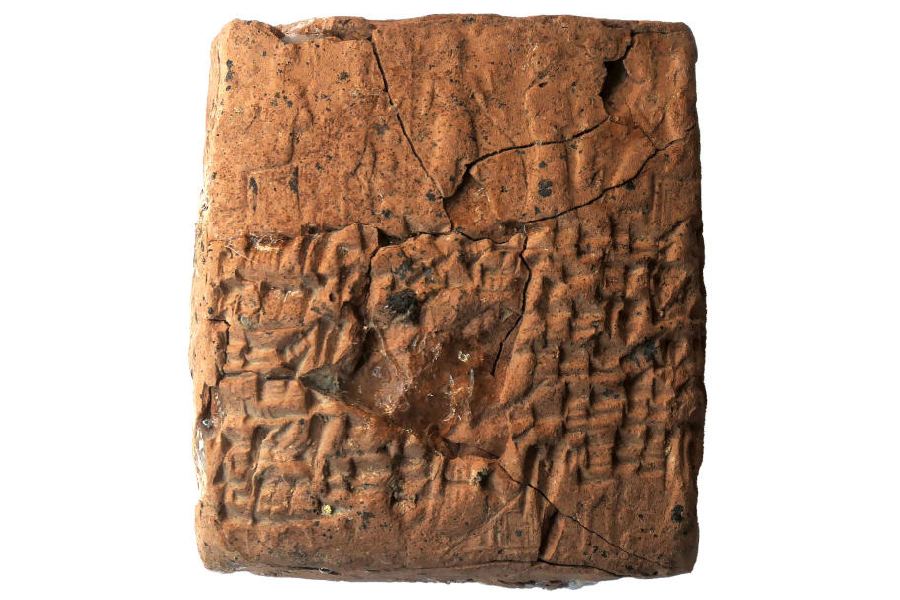
Scientists have created a special X-ray machine that can read ancient letters written in a script called cuneiform.
These letters are over 4,000 years old and come from places like Iraq, Syria, and Turkey.
The letters were wrapped in clay envelopes, and before, people had to break these envelopes to read the letters inside.
This often damaged the letters.
The new X-ray machine can read the letters without breaking the envelopes, which is great because it keeps the ancient artefacts safe.
The machine can even tell the difference between different people's handwriting.
The scientists have used this machine in museums in France, Germany, and Turkey and have read over 100 letters.
These letters tell us about daily life and the relationships between men and women a long time ago.
For example, they talk about a merchant getting textiles and a woman trying to pay a debt for her husband who was away.
This new technology is a big step forward because it lets scientists read these ancient letters without harming them.

Researchers developed a portable X-ray scanner to read sealed cuneiform letters without damaging them.
The scanner can resolve cuneiform script, differentiate handwriting styles, and determine the number of clay layers in envelopes.
Over 100 sealed tablets have been analysed, revealing details about daily life and gender roles in ancient Anatolia.
The technology is portable and can be taken to museums, making it more accessible for analysis.
The scanner has been used in museums in France, Germany, and Turkey, providing new insights into ancient trading practices and social structures.
- Who
- Researchers led by Cécile Michel and Christian Schroer
- What
- Developed a portable X-ray scanner to read sealed cuneiform letters
- When
- Recently published findings
- Where
- Museums in France, Germany, and Turkey
- Why
- To preserve artefacts and reveal historical information without destruction
Traditional Archaeological Methods
Modern Technological Approaches
Method of Analysis
Traditional Archaeological Methods
Traditionally, archaeologists would physically break open clay envelopes to read the cuneiform letters inside, which often destroyed the artefacts.
Modern Technological Approaches
The new X-ray scanner allows for non-destructive analysis, preserving the integrity of the artefacts while revealing their contents.
Accessibility of Technology
Traditional Archaeological Methods
Traditional methods required artefacts to be transported to specialized labs, which was often impractical and risky.
Modern Technological Approaches
The portable X-ray scanner can be taken to museums, making the technology more accessible and reducing the need for artefact transportation.
- Script Type
- Cuneiform
- Age of Letters
- 4,000 years old
- Number of Artefacts
- Over 500,000
- Countries of Origin
- Iraq, Syria, Turkey
- Technology Used
- Portable X-ray scanner
- Research Team
- Cécile Michel and Christian Schroer
- Journal of Publication
- npj Heritage Science