Archive · 12 Nov 2025
Bihar's Economic Predicament: Debt-Fueled Growth and Fiscal Stagnation
Imagine Bihar is like a person who wants to buy many things but doesn't earn enough money.
So, they borrow a lot.
For every 100 rupees they make, they owe 40 rupees.
Most of the money they get comes from someone else (the central government), not from their own job (Bihar's taxes).
This borrowed money is used to pay for everyday things like salaries and pensions, not to build new houses or businesses.
Bihar's economy isn't producing many goods or services because most jobs are informal and industries are weak.
This makes it hard to collect taxes.
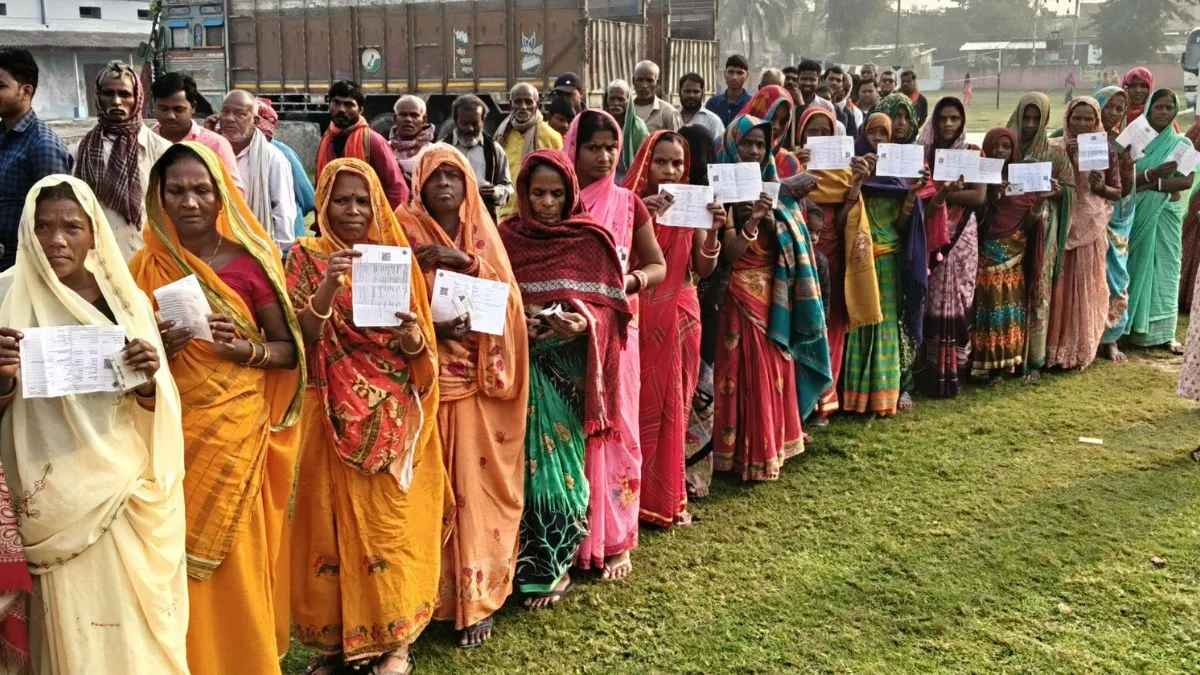
The government gives out many helpful programs, especially to women, which makes them more likely to vote.
But these programs are running on borrowed money.
If the money stops coming, the progress made could be lost.
Bihar needs to learn to earn more by creating things and businesses, not just by borrowing and spending.
This requires brave leaders who will focus on long-term growth instead of just popular promises.

Bihar's economy is characterized by growth fueled by debt, with nearly 40% of its production owed as debt.
The state relies heavily on central government transfers, with its own revenues forming only a third of its income.
Borrowing is primarily used to cover salaries, pensions, and interest payments, rather than investments in infrastructure or assets.
A predominantly informal economy and underdeveloped industries contribute to a shallow tax base, limiting Bihar's fiscal autonomy.
While welfare programs have had social benefits and influenced voting patterns, their sustainability is threatened by dependence on borrowed funds.
- Who
- The state of Bihar.
- What
- Struggling with a fiscal cycle where debt sustains expenditure but rarely builds assets, leading to stagnation despite growth.
- When
- The current fiscal situation and its implications.
- Where
- Bihar, India.
- Why
- A shallow tax base, underdeveloped industries, and dependence on central transfers hinder asset creation and necessitate borrowing for essential expenses and welfare programs.
Fiscal Prudence and Long-Term Growth
Populist Promises and Short-Term Survival
Economic Development Strategy
Fiscal Prudence and Long-Term Growth
Bihar needs to break away from a consumption-led economy to one driven by creation, by investing in capital expenditure, rationalizing subsidies, and broadening the tax base through economic diversification.
Populist Promises and Short-Term Survival
The state's current model relies on debt to fund welfare programs and subsidies, particularly for women, which have yielded social dividends and influenced electoral arithmetic.
Sustainability of Welfare Programs
Fiscal Prudence and Long-Term Growth
Empowerment anchored on borrowed money is inherently unstable; social progress risks reversal with any fiscal shock or political realignment. True progress requires durable economic expansion.
Populist Promises and Short-Term Survival
Welfare programs and subsidies, while financed by central transfers and borrowing, have undeniably boosted female voter turnout and signaled a shift in electoral dynamics.
Political Will and Economic Policy
Fiscal Prudence and Long-Term Growth
Breaking the cycle requires political courage to resist short-term populism and invest in institution-building, focusing on productivity rather than transfers to ensure renewal.
Populist Promises and Short-Term Survival
The current pattern of dependence on central transfers and borrowing allows the state to maintain welfare commitments and policy flexibility, crucial for survival in a competitive federal system.
- Debt Burden
- For every 100 rupees produced, nearly 40 are owed in debt.
- Revenue Composition
- Central transfers dominate, with Bihar's own tax and non-tax revenues accounting for barely a third of total income.
- Fiscal Deficit
- More than double the prudential benchmark.
- Expenditure Funding
- Borrowing primarily funds salaries, pensions, and interest, not new infrastructure or productive investments.
- Economic Structure
- Predominantly informal economy with underdeveloped industries, leading to a shallow tax base.
- Capital Expenditure Target
- Needs to be raised above 20% of total spending.