

Archive · 23 Sep 2025
Balanced Advantage Funds Increase Equity Holdings Amid Market Shifts
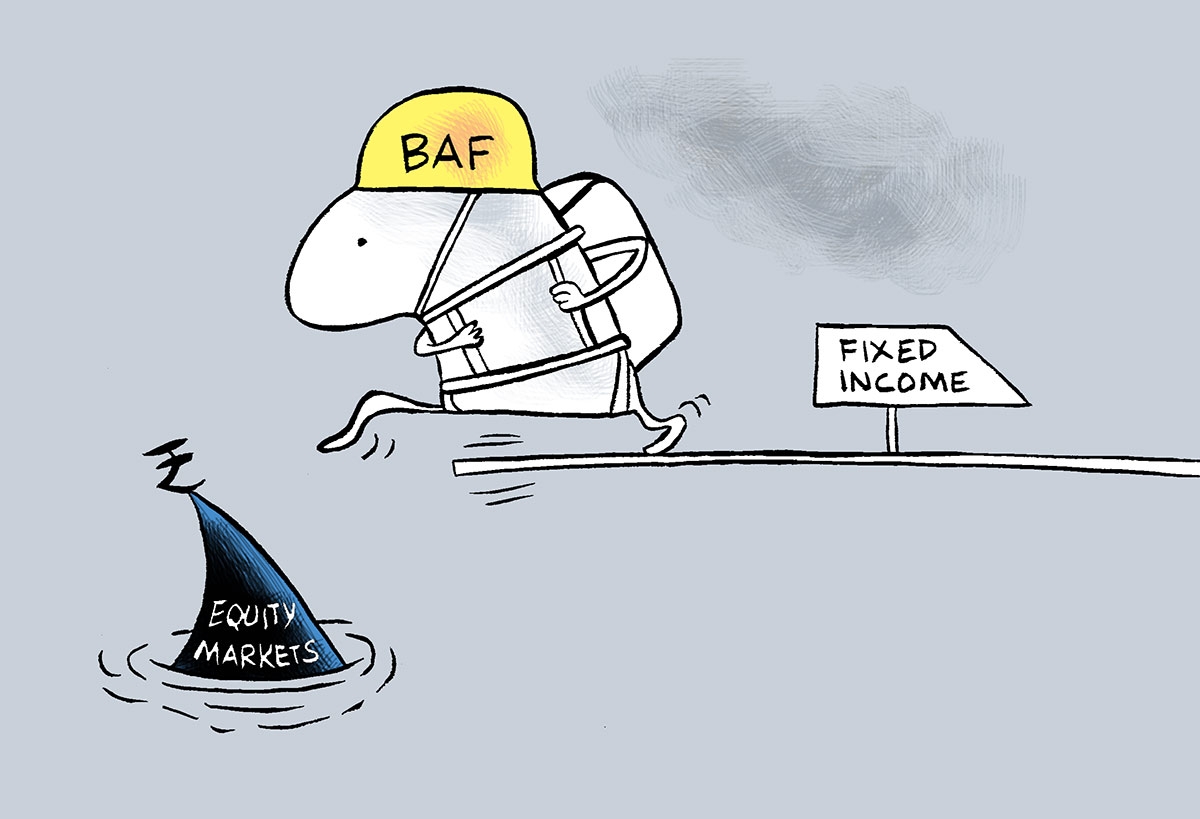
Imagine funds that decide where to put your money - in stocks (which can grow fast) or bonds (which are safer).
These funds, called Balanced Advantage Funds, have been putting more money in stocks recently.
They use computer models to decide this, looking at things like how expensive stocks are.
When stocks seem cheaper, the funds buy more.
Over the past year, the funds have increased their stock holdings significantly, and the average return was positive.
The funds aim to balance the potential to grow your money with the goal of minimizing risk.

Balanced Advantage Funds (BAFs) have increased equity holdings.
Most schemes now have a majority of their investments in equities.
Equity exposure has risen significantly in the past year.
Models use equity valuations and other factors to determine allocation.
BAFs are recommended for cautious investors seeking growth with limited risk.
- Who
- Balanced Advantage Funds (BAFs)
- What
- Increased their equity holdings
- When
- Over the past year
- Where
- N/A
- Why
- Due to model-driven signals, lower price-to-earnings ratios, and market expectations of continued growth
- Category Definition
- Funds adjusting between stocks and bonds
- Average Equity Exposure (August)
- 55.5%
- Equity Exposure 12 Months Prior
- 42.8%
- Primary Driver of Increased Allocation
- Declining equity valuations
- Trailing 12-Month P/E Ratio (Nifty 500)
- 24.3
- Average Return (Past Year)
- 3%