Archive · 9 Oct 2026
CSIR-NGRI Advances Groundwater Exploration and Skills Training
CSIR-NGRI uses special tools to study where groundwater is and how it moves.
This work is especially important in places that face water shortages.
The institute is running a 10-day programme called BhuNEER 2026.
Students, researchers and professionals learn practical ways to explore groundwater.
They practise using geophysical tools and learn how data can be studied with AI and machine learning.
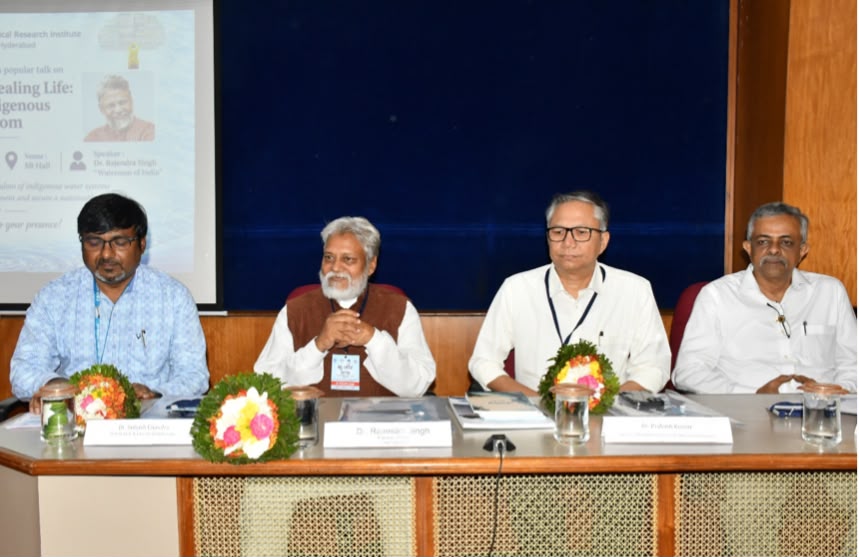
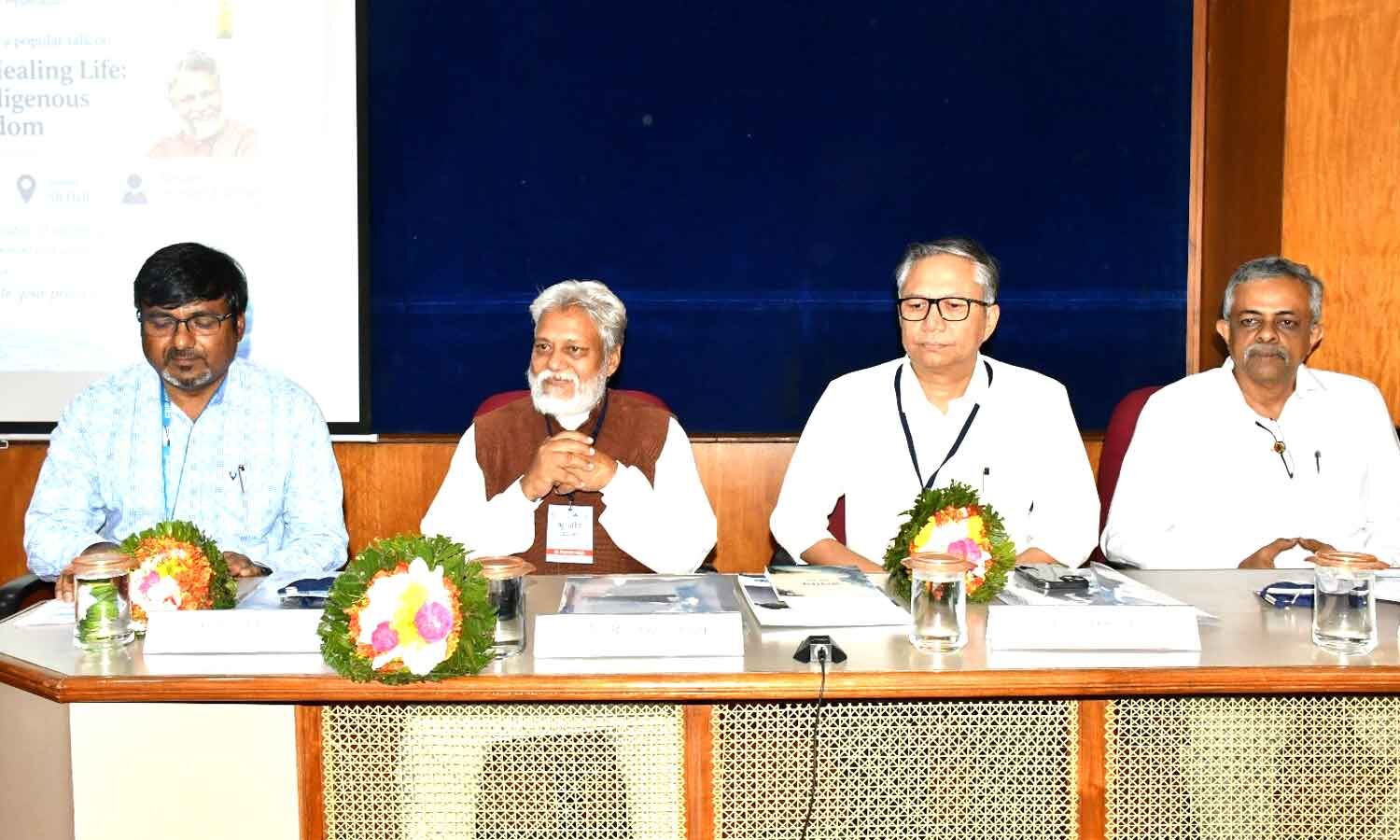
Water-conservation advocate Dr. Rajendra Singh visited the institute and spoke about storing water underground by recharging aquifers.
He said technology is useful, but communities and farmers also need to take part.
He also described how locally built check dams helped revive rivers and wells.

CSIR-NGRI is applying geophysical technologies to identify and assess groundwater, particularly in water-stressed regions.
Its 10-day BhuNEER 2026 programme offers students, researchers and professionals practical groundwater exploration training under Skill India.
Training includes ERT, EVRI, Ground TEM, Towed TEM, field data methods and AI/ML applications.
Dr. Rajendra Singh advocated scientific aquifer recharge, underground water banking and active community participation, especially by farmers.
Singh said nearly 15,800 locally built check dams contributed to reviving several rivers and about 2.5 lakh wells.
- Who
- CSIR-NGRI, BhuNEER 2026 participants, and visiting water conservationist Dr. Rajendra Singh.
- What
- The institute is advancing groundwater exploration and providing practical geophysical training through BhuNEER 2026.
- When
- During the 10-day BhuNEER 2026 programme; one report says Singh’s visit took place on Wednesday.
- Where
- CSIR-NGRI in Hyderabad, India.
- Why
- To build groundwater exploration skills and support sustainable groundwater management, including in water-stressed regions.
Technical measures
Community participation
Approach to groundwater conservation
Technical measures
CSIR-NGRI’s work emphasizes geophysical investigation, groundwater mapping, scientific assessment and systematic aquifer recharge.
Community participation
Dr. Rajendra Singh said engineering interventions alone are insufficient and stressed active community participation, particularly by farmers.
- Programme
- BhuNEER 2026
- Duration
- 10 days
- Organiser
- CSIR-National Geophysical Research Institute (CSIR-NGRI)
- Training audience
- Students, researchers and professionals
- Programme framework
- Skill India initiative
- Technologies covered
- Electrical Resistivity Tomography (ERT), EVRI, Ground TEM and Towed TEM
- Other training
- Field data acquisition, processing, interpretation and integration, plus AI/ML applications
- Water conservation figures cited
- Nearly 15,800 locally built check dams; contributions to reviving several rivers and approximately 2.5 lakh wells