

Archive · 24 Sep 2026
UN Reports Detail Rising Gender-Based Violence in Gaza
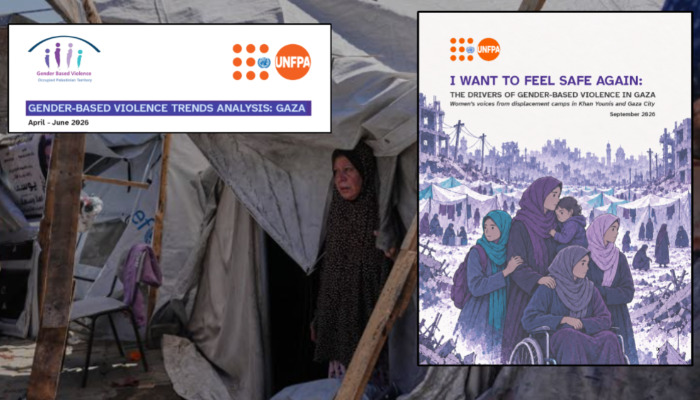
United Nations reports say women and girls in Gaza are facing many kinds of violence.
The reports cover incidents recorded from April to June 2026 and interviews conducted earlier.
Reported cases increased compared with the previous three months.
Some women were denied money, food, medicine, shelter or other help.
Others experienced harassment, physical attacks, sexual violence or abuse at home.
The reports also describe girls and women being forced into marriages, sometimes after rape or in exchange for resources.
Displacement and crowded living conditions have made people more vulnerable.
Many survivors are afraid to report abuse because they may be blamed or punished.
The reports say support groups are helping survivors, but serious dangers and barriers to justice remain.

UNFPA reported a 27% rise in reported gender-based violence incidents from April–June 2026 compared with January–March.
Denial of resources, psychological violence and physical assault were the most commonly reported forms of abuse.
Forced and early marriage cases rose 123% in absolute numbers, while sexual-violence cases increased 61%.
Reports described harassment, rape, domestic abuse, exploitation and denial of food, shelter, medicine and other assistance.
Women and girls remain especially vulnerable amid displacement, poverty, weak protection systems, victim-blaming and entrenched gender norms.
- Who
- Women and girls in Gaza, especially adults aged 18–59, were the primary reported survivors; UNFPA and partner organisations documented the cases.
- What
- United Nations reports documented rising gender-based violence, including resource deprivation, psychological and physical abuse, sexual violence, domestic violence and forced marriage.
- When
- The main data covered April–June 2026 and was compared with January–March 2026; a separate study drew on discussions held from December 2025 to January 2026.
- Where
- Incidents were reported across Gaza’s five governorates, with the largest shares in Gaza City and Deir El Balah; interviews were conducted in Gaza City and Khan Younis.
- Why
- The reports link heightened vulnerability to displacement, poor living conditions, economic deprivation, ongoing conflict, entrenched gender norms and limited access to survivor-centred justice.
- Reporting period
- April–June 2026
- Overall reported increase
- 27% compared with January–March 2026
- Largest incident categories
- Denial of resources and opportunities: 32.7%; psychological and emotional violence: 30.9%; physical assault: 30.5%
- Most affected age group
- Women aged 18–59 accounted for 68% of reported survivors
- Forced and early marriage
- 2.6% of registered cases, with a 123% increase in absolute numbers from the previous quarter
- Sexual violence
- The report describes a 61% increase in case numbers; the article gives shares of 2.4% in one passage and 2.7% in another, compared with 2.2% and 2.1% respectively in earlier-quarter comparisons
- Geographic distribution
- Gaza City: 36%; Deir El Balah: 25%; North Gaza: 19%; Khan Younis: 19%