Archive · 9 Nov 2025
US Visa Fee Hike Impacts Midcap IT Less Than Feared
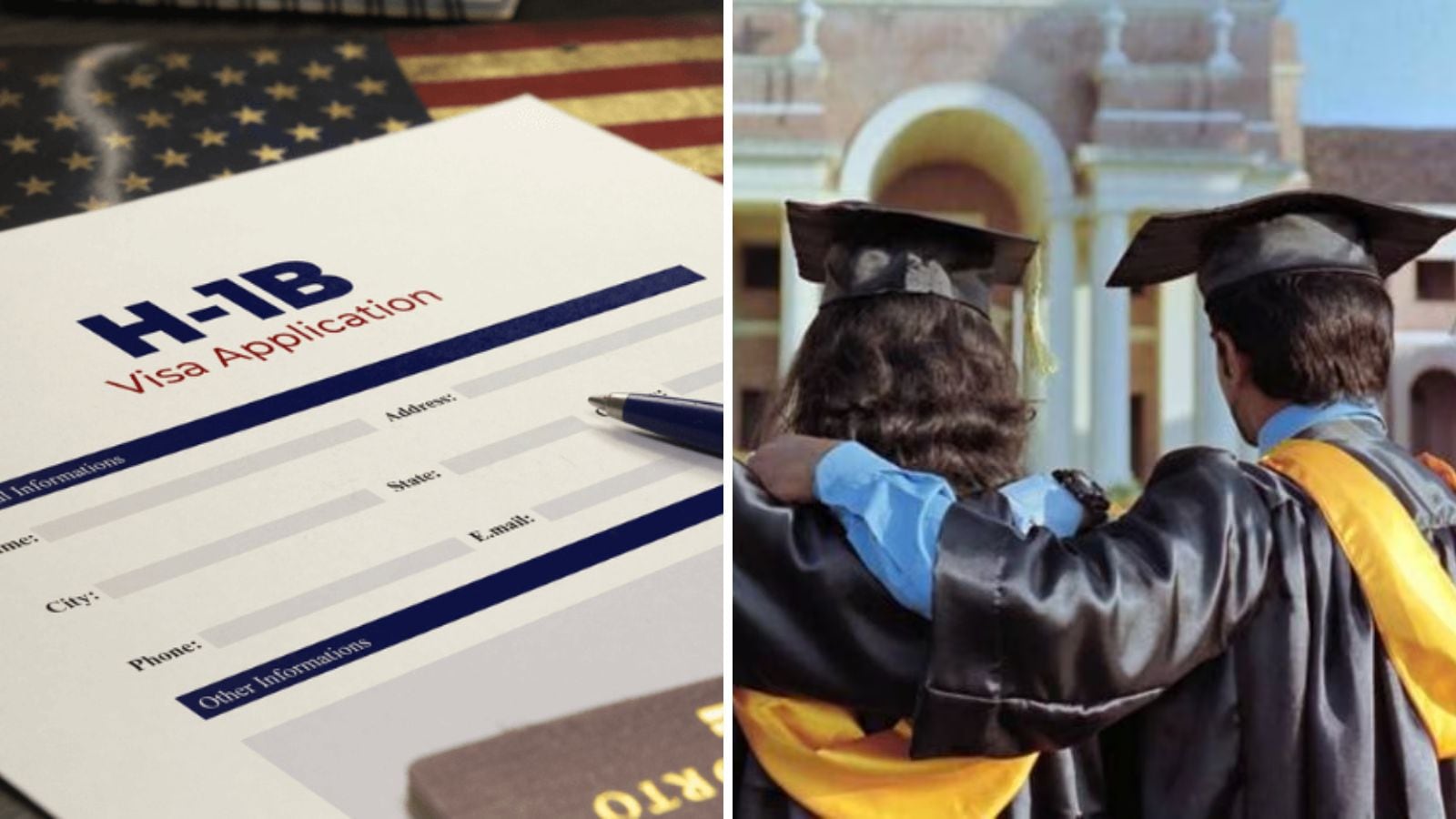
Imagine the US government made it much more expensive for companies to bring workers from other countries using a special visa called H-1B.
Many big tech companies that do work for US clients were worried this would cost them a lot of money.
However, smaller and mid-sized tech companies in India, like Tech Mahindra, found they weren't using many of these H-1B visas anyway.
They already had many of their workers in India or in nearby countries like Canada.
So, for them, the big change in visa costs wasn't a major problem.
Larger Indian tech companies had already started reducing their reliance on H-1B visas years ago because it was already getting difficult.
They are now hiring more people locally in the US or in places closer to the US.
This means while the H-1B visa cost went up, it mainly affects companies that heavily relied on that specific visa, not so much these Indian IT firms.

US H-1B visa fee hikes are expected to have a limited impact on mid-cap IT firms due to their lower dependence on these visas.
Mid-cap firms like Tech Mahindra and Mphasis are strategically reducing reliance on H-1B visas by increasing offshore, nearshore (Canada, Mexico, Brazil), and local US hiring.
The revised H-1B fee structure primarily affects new petitions, with full implementation around April 2026, allowing for gradual adjustments.
Larger IT companies have been decreasing H-1B visa usage since 2018, proactively adapting to processing challenges and macro headwinds.
The rise of Global Capability Centers (GCCs) in India has also reduced US enterprises' reliance on visa-enabled workforces.
- Who
- Mid-cap IT firms (e.g., Tech Mahindra, Mphasis), large-cap IT firms (e.g., TCS, Infosys, Wipro, HCLTech), US administration, US enterprises, tech research firms, staffing specialists.
- What
- US significantly increased H-1B visa fees, but mid-cap IT firms are less affected due to lower dependence on these visas and strategic shifts towards offshore/nearshore and local hiring.
- When
- The H-1B visa fee hike was announced earlier this year, with full effects expected around April 2026. Discussions around H-1B challenges intensified since 2018.
- Where
- Primarily concerning IT services operating between India and the United States, with expansions into Canada, Mexico, and Brazil.
- Why
- Mid-cap firms have proactively reduced H-1B reliance through offshoring, nearshoring, and local hiring. Larger firms had already adapted to challenges since 2018. The fee hike is a cost escalation for US companies using H-1B visas.
Midcap IT Firms' Perspective
Broader Industry Context
H-1B Visa Dependence
Midcap IT Firms' Perspective
Mid-cap IT firms like Tech Mahindra and Mphasis report structurally low dependence on H-1B visas, with less than 1% of global workforce on H-1B (Tech Mahindra) and clients with their own workforces not expressing concern.
Broader Industry Context
The broader tech outsourcing industry, including large-cap IT firms like TCS, Infosys, Wipro, and HCLTech, has been actively reducing visa reliance since 2018 due to earlier H-1B processing challenges and other macro headwinds, with TCS expecting to need significantly fewer H-1B visas in the current year compared to the previous one.
Impact of Fee Escalation
Midcap IT Firms' Perspective
Midcap firms find the H-1B fee hike 'manageable' and are mitigating risks by identifying critical onsite roles, increasing local hiring in the US, and expanding nearshore delivery presence in Canada, Mexico, and Brazil.
Broader Industry Context
While the revised H-1B fee structure applies primarily to new petitions, allowing firms time to adjust until April 2026, the overall trend for large IT firms has been a strategic shift away from H-1B dependence due to sustained processing challenges and evolving business needs.
- US H-1B New Petition Filing Charge
- Up to $100,000
- Tech Mahindra H-1B Workforce Percentage
- < 1%
- Tech Mahindra US Visa Dependence
- < 30%
- GCCs in India
- Reducing reliance on visa-enabled travel for US enterprises
- H-1B Fee Hike Effective Period
- Around April 2026 for full effect
- TCS H-1B Visa Requirement (Current Year)
- ~500 visas
- TCS H-1B Visa Requirement (Previous Year)
- > 5,000 visas