

Archive · 28 Jul 2025
Parker Probe Captures Images Deep Inside Sun's Atmosphere
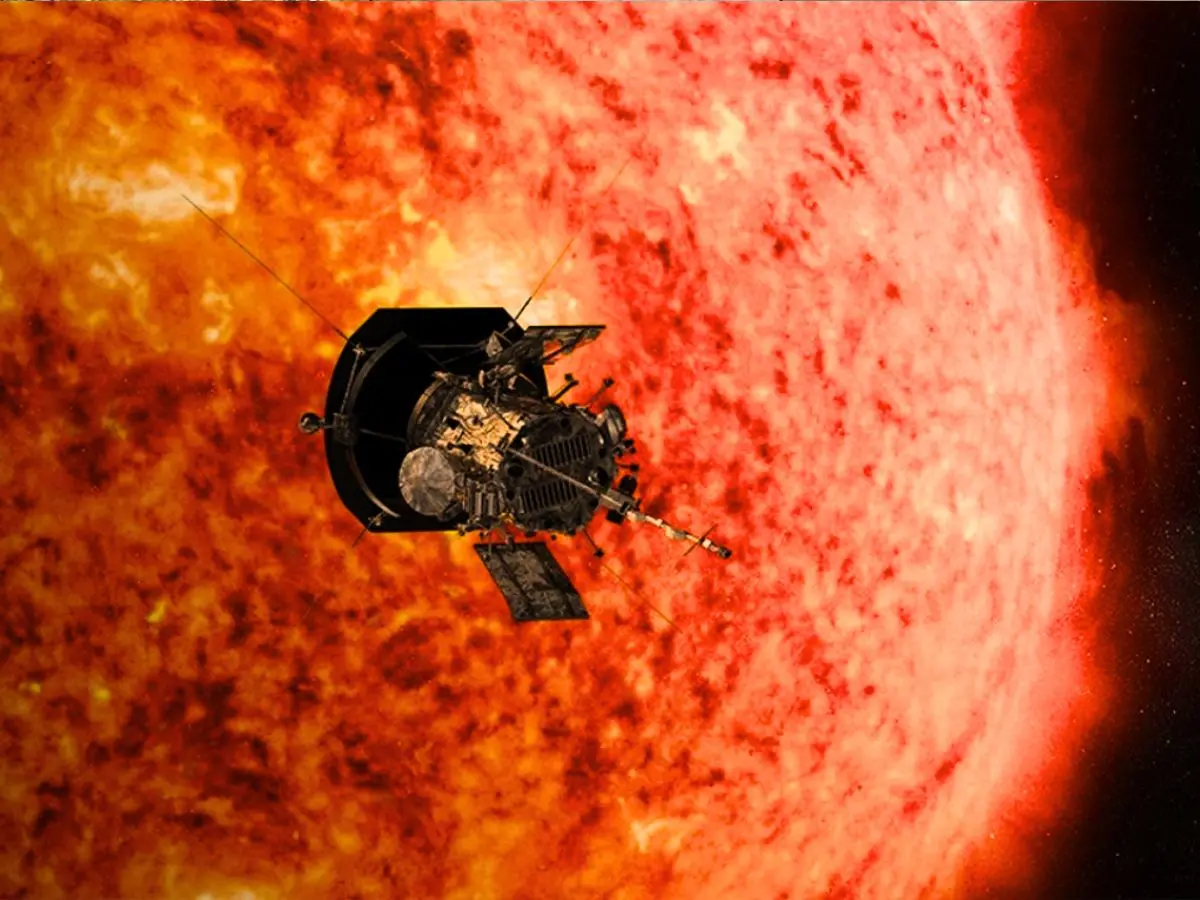
NASA's Parker Solar Probe is getting closer to the Sun than ever before, taking amazing pictures and gathering crucial data.
It's like the probe is taking a super-close look at the Sun's outer atmosphere.
The probe has found out more about solar wind.
It has witnessed giant eruptions of charged particles colliding.
The probe is also studying how 'switchbacks' in the magnetic field boost solar wind speed.
The Probe also looks into how the slow solar wind is made.
Scientists hope to better predict space weather, which can affect satellites, astronauts, and power grids on Earth.

Parker Solar Probe flew closer to the Sun than any previous spacecraft.
The probe captured high-resolution images of the solar wind and coronal structures.
Scientists observed coronal mass ejections (CMEs) colliding and merging.
Parker Solar Probe revealed magnetic 'switchbacks' play a key role in accelerating the fast solar wind.
The probe is studying the origins of the slow solar wind and its relationship to helmet streamers.
- Who
- NASA's Parker Solar Probe.
- What
- NASA's Parker Solar Probe captured images and data while orbiting close to the Sun.
- When
- December 2024 the probe made a close flyby; Launched in 2018
- Where
- The Sun's corona and surrounding space.
- Why
- To study the Sun's atmosphere, solar wind, and space weather to improve predictions and protect technology.
- Spacecraft
- Parker Solar Probe
- Launched
- 2018
- Closest Approach
- 3.8 million miles from solar surface
- Instrument
- WISPR (Wide‑Field Imager for Solar Probe)
- Observed Phenomena
- CMEs, magnetic switchbacks