

Archive · 16 Jan 2026
India's wool economy faces twin threats from tariffs
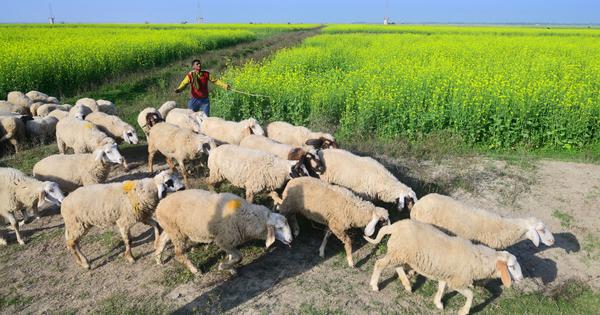
India's wool economy has faced two big challenges.
First, in 1991, India opened up to global trade, which hurt the wool industry because cheaper imports came in.
Many people who worked with wool lost their jobs, and the price of wool dropped a lot.
Now, in 2025, the US has started putting higher taxes on some Indian goods, which makes it harder for Indian wool producers to sell there.
This affects the people who raise sheep and make wool.
The story shows how changes in trade rules can hurt small businesses and farmers, even if they were not the main focus of those rules.
It's important for India to support its wool industry and the people who work in it.

India's wool economy was worth Rs 4,500 crore in 1991 but dropped to Rs 600 crore today due to changing tariffs.
Liberalisation in 1991 led to a flood of cheaper imports, causing the wool price to drop from Rs 300 per kg to Rs 45-50 per kg.
US protectionism in 2025 has raised tariffs on Indian goods to 50-60%, making it hard for Indian wool producers to compete.
Pastoralists, who rely on wool as a seasonal cash source, are the most affected by these policy changes.
India's policies favor synthetic fabrics over natural wool, further hurting the domestic wool industry.
- Who
- Indian wool producers, pastoralists, and the wool industry
- What
- The impact of changing tariffs on India's wool economy
- When
- 1991 (liberalisation) and 2025 (US protectionism)
- Where
- India, with a focus on pastoralist communities in Rajasthan, Himachal Pradesh, Jammu and Kashmir
- Why
- Changes in trade policies and global protectionism
- Wool economy value in 1991
- Rs 4,500 crore
- Wool economy value in 2001
- Rs 2,800 crore
- Wool economy value today
- Rs 600 crore
- Wool price in early 1990s
- Rs 300 per kg
- Wool price today
- Rs 45-50 per kg
- US tariffs on Indian goods
- 50-60%
- Duty on raw wool imports
- 4%
- Main income sources for pastoralists
- Meat and live animal sales