1 hr ago
Sterlite Technologies’ AI Fibre Rally Faces Ambitious Growth Test

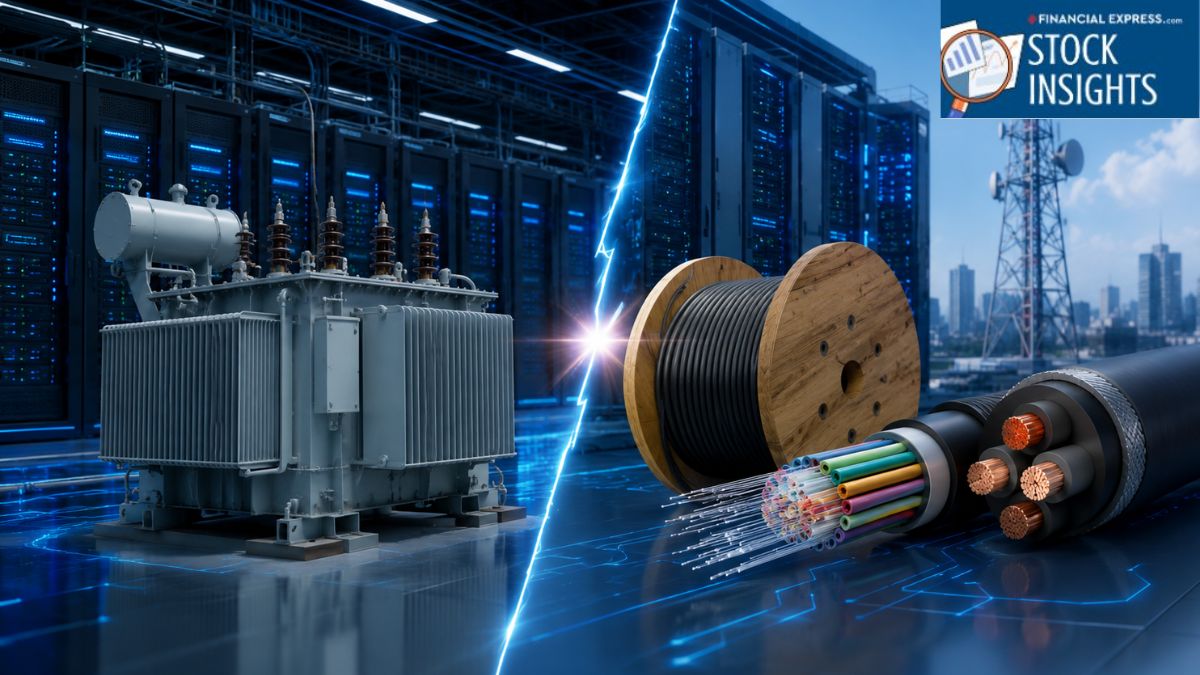
Sterlite Technologies makes fibre and connectivity equipment used by telecom networks and data centres.
Its share price fell sharply when telecom companies delayed fibre projects and the company reported losses.
Demand is now rising because AI data centres need far more fibre to connect their computer chips.
The company reported its strongest-ever quarter in Q1 FY27, with revenue of Rs 1,910 crore.
It also received a large contract from a global hyperscaler and built a record order book.
Sterlite plans to grow revenue to Rs 20,000 crore by FY29.
It plans to spend about Rs 3,000 crore on new capacity over three years.
The company also reduced debt and reported a net cash position.
However, the share price already reflects high expectations, and the growth plan may be difficult to deliver.

Sterlite Technologies rose from a 52-week low of Rs 84.65 to a high of Rs 910.
Q1 FY27 revenue increased 87% year-on-year to Rs 1,910 crore, while EBITDA rose 184%.
A USD 1.11 billion hyperscaler contract and record Rs 18,618 crore order book support future growth.
The company’s Lakshya plan targets Rs 20,000 crore revenue and at least 27% EBITDA margins by FY29.
Analysts face execution, capacity, supply-chain and valuation risks as the stock prices in much of the plan.
- Who
- Sterlite Technologies Limited, its management, institutional investors and global hyperscaler customers.
- What
- The company’s stock has sharply recovered as AI-driven fibre demand, new orders, stronger results and balance-sheet repair have improved its outlook.
- Where
- Sterlite operates across India, North America and Europe, with planned connectivity manufacturing capacity in India and the United States.
- When
- The stock reached Rs 84.65 on January 27, 2026, and Rs 910 on September 15, 2026; Q1 FY27 results and the Lakshya plan were also discussed.
- Why
- AI data centres require substantially more optical fibre, while Sterlite has received major orders and expects capacity expansion to support its growth targets.
Growth and AI Demand Case
Execution and Valuation Risk Case
AI-driven fibre demand
Growth and AI Demand Case
AI data centres require much more fibre per rack, while data-centre interconnections increase as campuses expand.
Execution and Valuation Risk Case
The demand outlook depends on continued AI infrastructure spending and favourable trade and supply-chain conditions.
Growth targets
Growth and AI Demand Case
The USD 1.11 billion hyperscaler contract, record order book and Q1 FY27 performance provide support for the Lakshya plan.
Execution and Valuation Risk Case
Reaching Rs 20,000 crore revenue by FY29 would require more than fourfold growth from FY26 revenue after a recent recovery from a downturn.
Current valuation
Growth and AI Demand Case
Improving margins, cash generation, institutional ownership and a net cash position could justify a higher valuation if targets are achieved.
Execution and Valuation Risk Case
At around Rs 867 in the article’s discussion, the stock is pricing in substantial FY29 success; execution delays, capacity constraints and raw-material costs could undermine that expectation.
Key facts
- 52-week stock range
- Rs 84.65 low on January 27, 2026; Rs 910 high on September 15, 2026
- Q1 FY27 revenue
- Rs 1,910 crore, up 87% year-on-year
- Q1 FY27 EBITDA
- Rs 397 crore, with a 20.8% margin
- Hyperscaler contract
- USD 1.11 billion, with deliveries through FY29
- Order book
- Rs 18,618 crore, including Rs 13,100 crore of Q1 FY27 orders
- Lakshya FY29 target
- Rs 20,000 crore revenue and EBITDA margins of at least 27%
- Balance sheet
- A Rs 1,500 crore QIP and debt reduction helped produce a reported net cash position of Rs 483 crore
Sources
Related news

CLSA Sees 46% Upside for Sterlite Technologies on AI Demand
TD Power and Sterlite Target AI Data Centre Boom

Sterlite Technologies Surges 700% as FY29 Growth Plan Fuels Rally
Indian Stocks Move Sharply on Company-Specific Developments

Sterlite Tech’s Sevenfold Rally Faces Earnings Expectations Test

India’s AI Data-Centre Boom Puts Three Stocks in Focus

Crisil Raises Metropolis Healthcare’s Credit Outlook to Positive

Expert shares outlook on IREDA, Ola Electric and stocks
Nearly 40% of Indian Power Plants Face Coal Shortages
Edelweiss Launches ₹300 Crore NCD Issue Offering Up To 10%