

Archive · 21 Dec 2025
Thousands Gather for Winter Solstice at Stonehenge
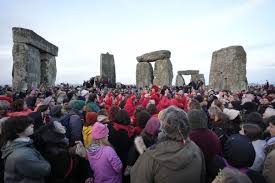
A lot of people went to Stonehenge, a very old place with big stones, to celebrate the winter solstice.
They waited in the dark and cold before the sun came up.
Some sang, played drums, and danced.
The stones were built a long time ago to line up with the sun's movement.
This day is special because it's the shortest day of the year in the Northern Hemisphere, but after this day, the sun will start rising a little earlier each day.
People think it's a time of renewal.
In the Southern Hemisphere, it's the longest day of the year and the start of summer.

Thousands gathered at Stonehenge to celebrate the winter solstice.
Many attendees dressed in costumes and participated in singing and drumming.
Stonehenge is an ancient monument aligned with the sun's movement on solstices.
The winter solstice marks the shortest day of the year in the Northern Hemisphere.
After the solstice, days will gradually get longer until late June.
- Who
- Thousands of people, many in costume
- What
- Winter Solstice celebration at Stonehenge
- When
- Sunday (specific date not mentioned)
- Where
- Stonehenge, southwest England
- Why
- To celebrate the winter solstice and experience the spiritual significance of the ancient monument
- Location
- Stonehenge, southwest England
- Event
- Winter Solstice celebration
- Date
- Sunday (specific date not mentioned)
- Time of Day
- Sunrise
- Monument Age
- 3,500 to 5,000 years old
- Significance
- Alignment with sun's movement on solstices
- Hemisphere Impact
- Shortest day in Northern Hemisphere, longest in Southern Hemisphere
- Cultural Significance
- Spiritual experience for many attendees