

Archive · 31 Aug 2026
Study Finds 219 Hanging Glaciers in Uttarakhand, Many Unstable
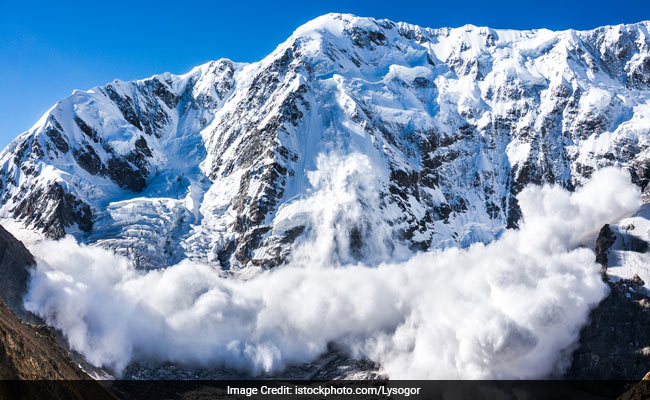
Scientists found 219 glaciers sitting on very steep slopes in Uttarakhand’s Alaknanda basin.
These are called hanging glaciers because they do not rest safely on valley floors.
Their steep position can make them more likely to break apart.
The study estimates that about one-third of the ice in these glaciers is hanging ice.
Scientists say rising temperatures are making Himalayan glaciers less stable.
If large pieces of ice fall, they could create dangerous floods and affect communities downstream.
Indian agencies are studying and monitoring glaciers and glacial lakes in Uttarakhand.
The state has already experienced major glacier-related disasters, including the 2013 Kedarnath and 2021 Chamoli disasters.
The new inventory is intended to help improve risk monitoring and planning.

A study identified 219 hanging glaciers in Uttarakhand’s Alaknanda basin.
The glaciers cover about 71.7 ± 3.5 square kilometres and contain roughly 2.39 ± 0.42 cubic kilometres of ice.
Researchers estimate that 0.74 ± 0.14 cubic kilometres of the ice is hanging and potentially unstable.
The study warns that rapid Himalayan warming could increase the risk of sudden ice collapses and downstream damage.
Authorities and research institutes are monitoring glaciers and 13 glacial lakes across Uttarakhand for related hazards.
- Who
- Researchers, including Ashim Sattar of IIT Bhubaneswar, mapped the glaciers; Indian government and scientific agencies are monitoring related hazards.
- What
- A basin-scale inventory identified 219 hanging glaciers, including an estimated 0.74 ± 0.14 cubic kilometres of hanging ice.
- When
- The study was published in the journal Natural Hazards in April 2026; monitoring of some Uttarakhand glaciers began as early as 1991.
- Where
- The glaciers are in the Alaknanda basin of Uttarakhand, in the Garhwal Himalayas.
- Why
- Researchers say rapid warming and climate change are increasing glacier instability and the risk of ice collapses affecting downstream areas.
Researchers’ Warning
Monitoring and Mitigation Efforts
Level of risk
Researchers’ Warning
Researchers warn that rapid warming is making hanging glaciers less stable and could trigger sudden ice collapses with serious downstream effects.
Monitoring and Mitigation Efforts
Indian authorities and scientific institutions are assessing glaciers and glacial lakes to identify risks and support mitigation efforts.
Need for action
Researchers’ Warning
The study indicates that Uttarakhand needs stronger monitoring of melting and unstable glaciers and better downstream risk planning.
Monitoring and Mitigation Efforts
The government says the Uttarakhand State Disaster Management Authority and the Wadia Institute of Himalayan Geology are already assessing 13 glacial lakes, while the institute continuously monitors selected sites.
- Mapped glaciers
- 219 hanging glaciers
- Study region
- Alaknanda basin, Uttarakhand
- Combined glacier area
- 71.7 ± 3.5 square kilometres
- Estimated total ice volume
- 2.39 ± 0.42 cubic kilometres
- Estimated hanging ice
- 0.74 ± 0.14 cubic kilometres, or roughly one-third of the total ice
- Glacial lakes under assessment
- 13 lakes across Pithoragarh, Chamoli, Tehri, Uttarkashi and Bageshwar
- Study model
- GlabTop2