

Archive · 18 Aug 2025
US Squirrels Face Viral Outbreak; No Threat to Humans
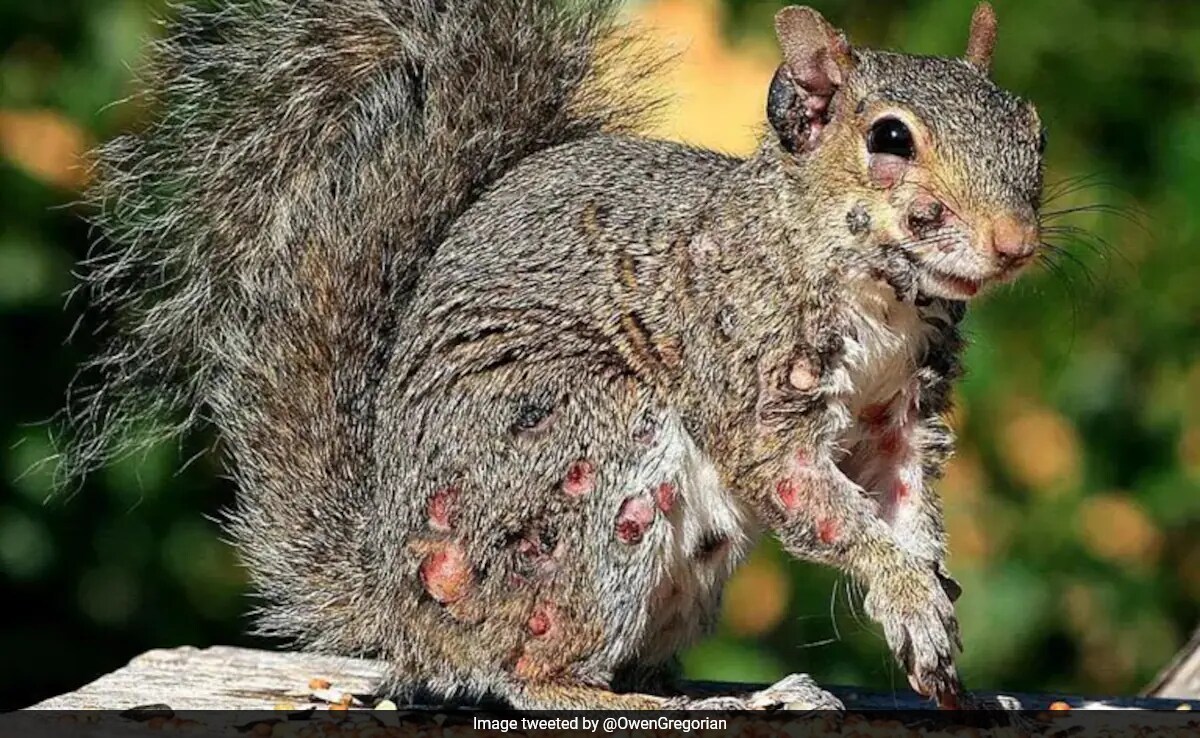
Some squirrels in the US are getting a skin disease that causes them to look like they have warts and bald patches.
It's caused by a virus called squirrel fibromatosis, which spreads when squirrels touch each other or share saliva.
The squirrels look pretty scary, earning them the nickname "zombie squirrels."
But don't worry, it's not dangerous to people or pets.
Wildlife experts say the squirrels will likely get better on their own, so it's best to leave them alone.
This is similar to how people get herpes.
There's also another virus affecting rabbits in Colorado, causing black growths, so it's wise to avoid those animals too.

Images of grey squirrels with wart-like tumors and bald spots have gone viral on social media.
The squirrels are likely infected with squirrel fibromatosis, a leporipoxvirus.
The virus spreads through direct contact or infected saliva.
While alarming in appearance, the virus does not pose a threat to humans, pets, or birds.
Experts advise against interfering with infected squirrels, as the condition usually resolves on its own.
- Who
- Grey squirrels are primarily affected.
- What
- Grey squirrels in the US are affected by squirrel fibromatosis, a viral skin disease causing wart-like tumors and hair loss.
- When
- Sightings of infected squirrels have increased since mid-2023, especially during the summer.
- Where
- The squirrels have been spotted across the US, particularly in states like Maine, and in parts of Canada.
- Why
- The virus is transmitted through direct contact or saliva, and while the appearance is alarming, it is not a threat to humans or pets.
Public Concerns
Expert Reassurance
Safety Concerns
Public Concerns
Public has concerns about the health implications of the virus.
Expert Reassurance
The virus poses no threat to humans, pets, or birds.
- Disease Name
- Squirrel Fibromatosis
- Virus Type
- Leporipoxvirus
- Symptoms
- Wart-like tumors, bald spots, oozing sores
- Transmission
- Direct contact, saliva
- Human/Pet Risk
- None
- Treatment
- None needed; condition resolves naturally