

Archive · 11 Jun 2025
Tardigrades to ISS: Studying Water Bears' Resilience in Space
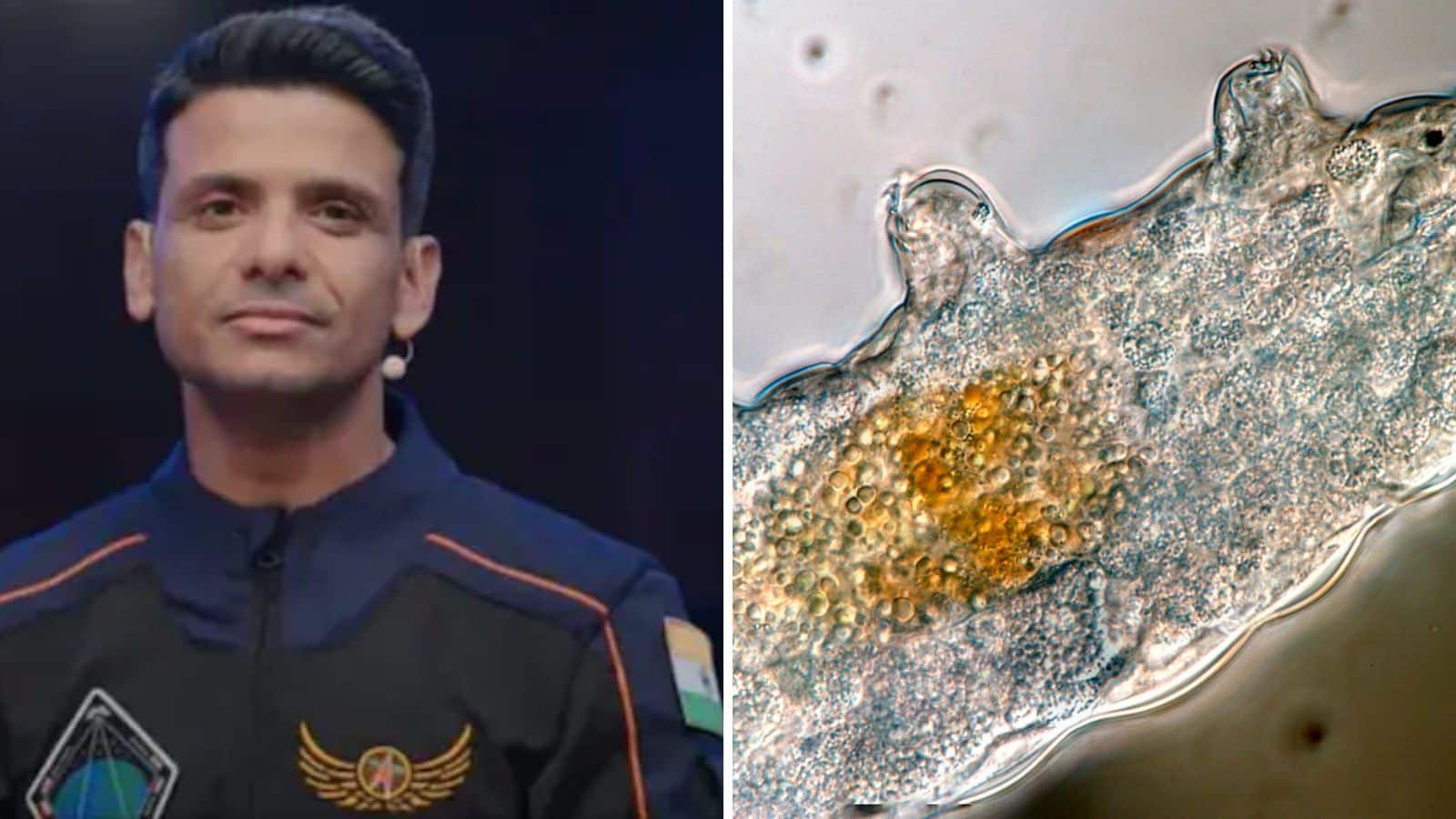
Imagine tiny creatures called tardigrades, also known as water bears, that can survive in the harshest places, like space!
Scientists are sending these little animals to the ISS with astronaut Shubhanshu Shukla to study them.
Tardigrades are super tough and have survived a long time.
They can handle extreme cold, heat, and radiation.
Scientists want to know what makes them so strong.
By studying them in space, they hope to learn how to protect astronauts and create better medicines, stronger materials, and ways to preserve tissues for transplant.
They were even sent to space before and reproduced!

Tardigrades, or water bears, are microscopic organisms with remarkable resilience.
Astronaut Shubhanshu Shukla will study tardigrades on a two-week mission at the ISS.
Tardigrades have survived all five mass extinction events.
Scientists aim to understand the genes that make them resilient to benefit space exploration.
Studying tardigrades could lead to advancements in medicine and material science.
- Who
- Shubhanshu Shukla and scientists
- What
- Studying tardigrades to examine the effects of space radiation and microgravity
- When
- During a two-week mission
- Where
- International Space Station (ISS)
- Why
- To understand how to protect astronauts and advance medicine
- Creature Name
- Tardigrades (water bears/moss piglets)
- Discovery Year
- 1773
- Size
- 0.5 mm (fully grown)
- Habitat
- Mosses, lichens, highest mountains to deepest oceans
- Notable Abilities
- Survive extreme temperatures, radiation, and pressure
- Space Mission Purpose
- Study the effects of space on tardigrades' resilience
- Potential Applications
- Space medicine, genetics, biomaterials, and cryopreservation