

Archive · 25 Jan 2026
Is Sooji Healthier Than Maida?
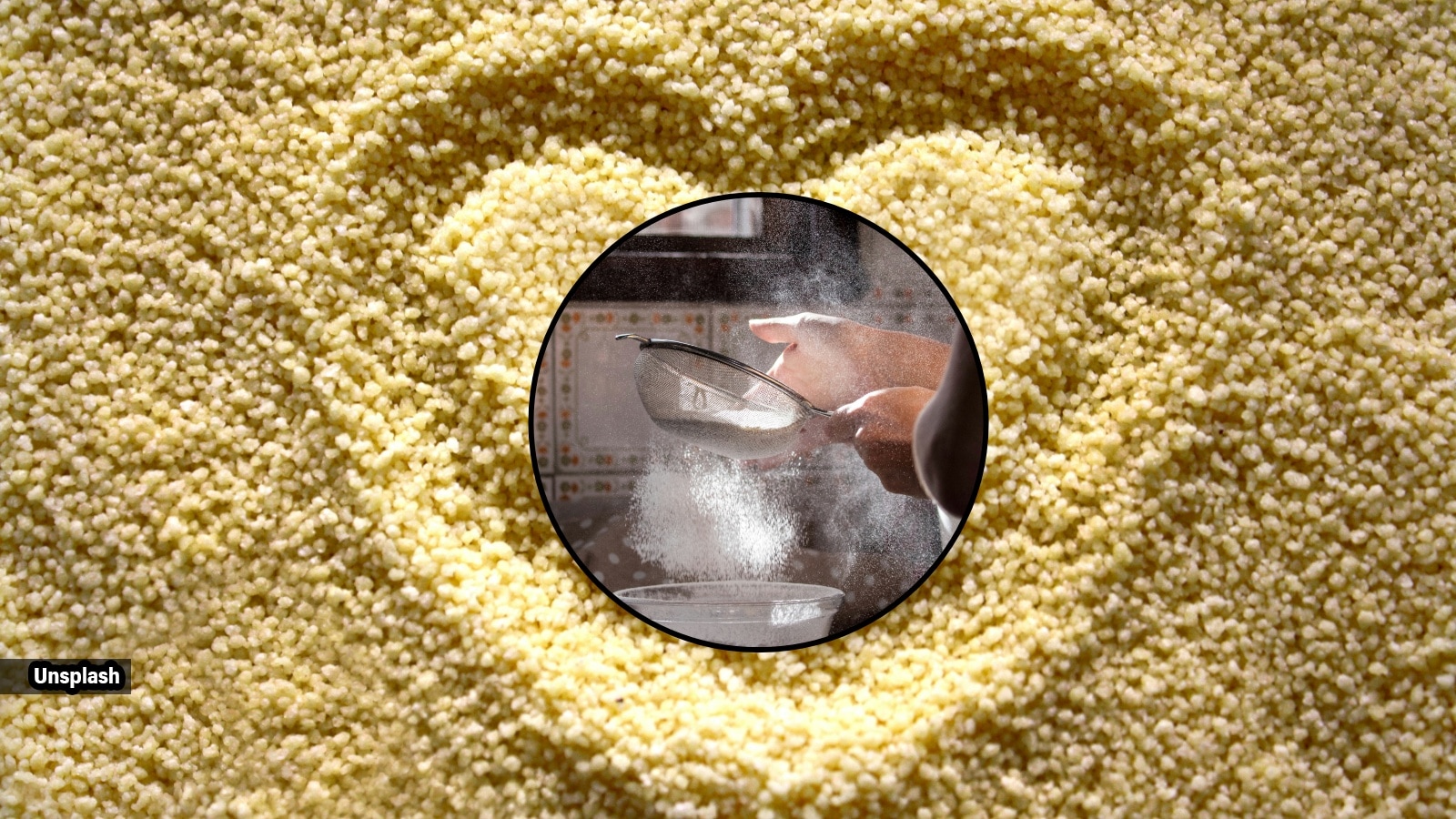
Sooji, also known as semolina, is often considered a healthier alternative to maida (all-purpose flour) in Indian cooking.
However, some argue that sooji is just a slightly better version of maida because it has a high glycaemic index and low fibre content.
A nutritionist explains that while sooji is not as refined as maida, it is not a whole grain either.
She suggests that sooji can be a healthier choice when eaten with vegetables, legumes, or healthy fats, but it should not replace whole grains like millets or oats in your regular diet.
Sooji can cause blood sugar fluctuations if consumed in large quantities and is not suitable for people with gluten intolerance.

Sooji is a coarser product made from wheat, retaining slightly more protein and structure than maida.
Maida is a refined flour with most fibre and micronutrients removed, making it less nutritious.
Sooji has a moderately high glycaemic index, similar to maida but slightly lower, and low fibre content.
Nutritionist Ashlesha Joshi suggests that sooji can be a healthier alternative to maida when paired with fibre-rich foods, but it should not replace whole grains regularly.
Regular consumption of sooji, especially in large quantities, may contribute to blood sugar fluctuations and reduced satiety, and it contains gluten, making it unsuitable for those with celiac disease or gluten intolerance.
- Who
- Akriti, an engineer-turned-medical student, and Ashlesha Joshi, a fitness dietician and nutritionist.
- What
- A debate on the health benefits of sooji compared to maida.
- When
- The debate was recently highlighted by Akriti on social media.
- Where
- The discussion was published in an article on indianexpress.com.
- Why
- To clarify the nutritional differences and health implications of consuming sooji versus maida.
- Sooji
- A coarser product made from wheat, retaining slightly more protein and structure than maida.
- Maida
- A refined flour made from the endosperm of wheat, with most fibre and micronutrients removed.
- Glycaemic Index
- Sooji has a moderately high glycaemic index, similar to maida but slightly lower.
- Fibre Content
- Sooji has low fibre content compared to whole grains.
- Health Benefits
- Sooji can be a healthier alternative to maida when paired with fibre-rich foods, but should not replace whole grains regularly.
- Gluten Content
- Sooji contains gluten, making it unsuitable for those with celiac disease or gluten intolerance.