Archive · 3 Dec 2025
IIT Bombay study reveals TB bacteria's antibiotic resistance mechanism

Scientists from IIT Bombay found out how the bacteria that cause tuberculosis (TB) can survive when we try to treat them with medicines.
These bacteria have a special outer layer made of fats that changes when the bacteria are not active.
This change makes it harder for the medicines to work.
The scientists found that when the bacteria are in a resting state, their outer layer becomes very stiff and blocks the medicines.
They also found that there are many different types of fats in this outer layer.
The scientists think that if we can make this outer layer less stiff, the medicines can work better and kill the bacteria.
This is important because TB is a very serious disease that affects millions of people around the world, and it can be hard to treat.

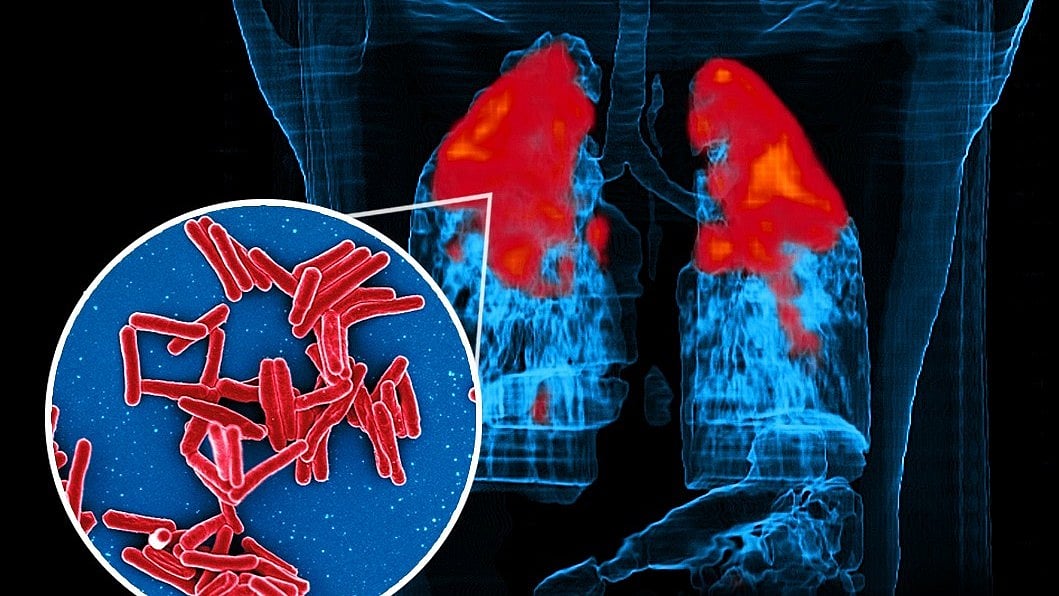
Mycobacterium tuberculosis bacteria can survive antibiotic treatment by changing their outer fat coating.
The study found that dormant TB bacteria require 2 to 10 times higher drug concentrations to be stopped compared to active ones.
The reduced drug sensitivity in dormant bacteria is linked to their membrane coats, not genetic mutations.
The team identified over 270 distinct lipid molecules in bacterial membranes, with differences between active and dormant cells.
Weakening the rigid outer membrane of dormant bacteria could make antibiotics more effective.
- Who
- Researchers from IIT Bombay
- What
- Study on TB bacteria's antibiotic resistance mechanism
- When
- Published on Wednesday, Dec 3, 2024
- Where
- India, with global implications
- Why
- To understand how TB bacteria survive antibiotic treatment and develop drug tolerance
- Bacteria
- Mycobacterium tuberculosis
- Disease
- Tuberculosis (TB)
- Global TB cases (2024)
- 10.7 million
- Global TB deaths (2024)
- 1.23 million
- India's TB cases (2024)
- 2.71 million
- Study journal
- Chemical Science
- Key drugs tested
- Rifabutin, moxifloxacin, amikacin, clarithromycin
- Lipid molecules identified
- 270+ distinct lipid molecules