

Archive · 13 Nov 2025
Google DeepMind Develops AI to See Like Humans
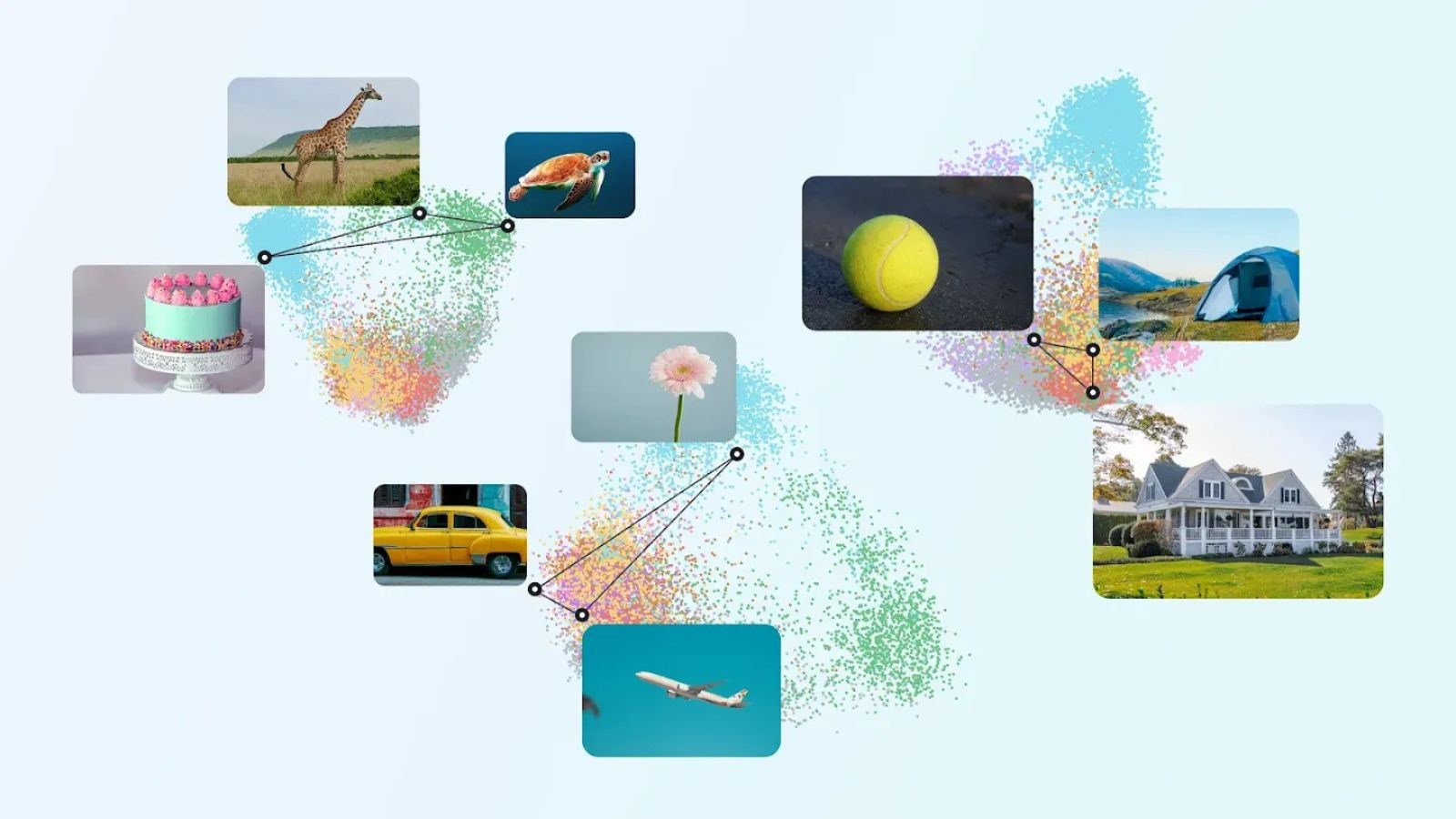
Imagine teaching a computer to see.
Normally, computers are good at putting things that look alike together, like different pictures of cats.
But they sometimes struggle to understand that a car and an airplane are both big vehicles, even though they look very different.
Google DeepMind has created a new way to teach computers to see more like people do.
They used special tests where people and computers had to pick out the odd picture from a group.
They found that computers often made different choices than people.
So, they used this information to create a new, massive dataset to retrain the computer's 'eyes'.
This helps the AI understand connections between things better.
It also makes the AI more sure of itself when it's not totally certain, like people can be.
This could make things like face recognition more accurate and fairer.

Google DeepMind developed a new technique to make AI vision models perceive and organize visual information more like humans.
The method aims to address AI blind spots, such as recognizing connections between objects of different categories.
This alignment technique has been shown to improve AI performance in tasks like few-shot learning and handling distribution shifts.
The AI models developed using this method exhibit human-like uncertainty in their predictions.
The research involved creating a new dataset called AligNet to fine-tune AI models based on human-like judgments.
- Who
- Google DeepMind researchers
- What
- Developed a new technique to help AI vision models perceive and organize the visual world more like humans, improving performance on various tasks and achieving human-like uncertainty.
- When
- Published as a technical paper in the science journal Nature and discussed in a blog post on Tuesday, November 11.
- Where
- Not specified, but research was conducted by Google DeepMind.
- Why
- To address AI vision models' limitations, such as inability to detect connections between objects of different categories, and to improve their reliability and accuracy.
Potential Benefits
Potential Risks
Bias and Accuracy
Potential Benefits
Aligning AI vision models more closely with human vision could make AI-powered facial recognition tools more accurate and less biased.
Potential Risks
However, aligning AI vision models more closely with human vision can end up reinforcing our biases and blind spots, such as the crow syndrome.
- Research Institution
- Google DeepMind
- Publication
- Nature
- New Dataset
- AligNet
- AI Model Used in Initial Fine-tuning
- SigLIP-SO400M
- Key Human Judgement Dataset Used
- THINGS dataset